

| KonMari sort order | Clothes → Books → Papers → Miscellaneous → Sentimental |
| FIFO best use areas | Pantry, refrigerator, medicine cabinet |
| Container method core rule | The container defines the limit - not a count or estimate |
| One-in-one-out trigger | Activated at point of purchase or acquisition, not after |
| Four-box method decisions | Keep, Donate, Trash, Relocate - no 'maybe' box |
Why Learning the Terminology Matters
Walk into any home organization conversation - online, in a book, or with a professional organizer - and you'll encounter a shorthand that can feel impenetrable. KonMari. FIFO. The container method. One-in-one-out. These aren't buzzwords for their own sake; each label describes a structured approach with its own logic, strengths, and ideal use cases.
Understanding the frameworks helps you borrow selectively. You don't need to adopt any single system wholesale. Instead, you can mix principles that suit your space, habits, and household. If you're just getting started, the foundational guide to decluttering from scratch covers the mindset shifts that make these systems stick.
The glossary below defines the most widely referenced organizational frameworks in plain language, with a brief note on where each one tends to work best.
KonMari Method
A decluttering framework developed by organizing consultant Marie Kondo that involves sorting belongings by category (not room) and keeping only items that 'spark joy.' The method emphasizes a one-time, intensive sort followed by assigning every remaining item a dedicated home.
FIFO
Short for First In, First Out - a rotation principle borrowed from inventory management. New items are placed behind or beneath existing stock so older items get used first. It's especially effective in pantries, refrigerators, and medicine cabinets to reduce waste and expired goods.
Container Method
An approach where the available physical container - a drawer, shelf, bin, or basket - defines the absolute limit of how much you keep. When the container is full, nothing new comes in until something leaves. It removes ambiguity about 'how much is too much.'
One-In-One-Out Rule
A maintenance principle: every time a new item enters a category, one existing item must leave. It prevents gradual accumulation in areas that have already been organized and works best in closets, bookshelves, and toy collections.
Zoning
The practice of assigning specific areas of a room or home to specific activities or item types. A kitchen zone might separate baking supplies from everyday cooking tools. Zoning reduces the decision fatigue of where to return items and makes shared spaces more navigable.
The Four-Box Method
A decluttering technique using four labeled containers: Keep, Donate, Trash, and Relocate. It forces a decision on every item encountered during a sort, preventing the common habit of setting things aside to 'deal with later.'
Paper Flow System
A framework specifically for managing incoming paper - mail, documents, school forms, and receipts. Typically involves an inbox tray, an action folder for items needing a response, a filing system for items to keep, and a shred/recycle station. The goal is to handle each piece of paper only once.
Habit Stacking
A behavioral strategy (adapted from habit research) that pairs a new tidying behavior with an existing daily habit. For example, wiping down the stovetop immediately after cooking. It reduces the need for willpower by anchoring upkeep tasks to existing routines.
Applying Frameworks Across Your Home
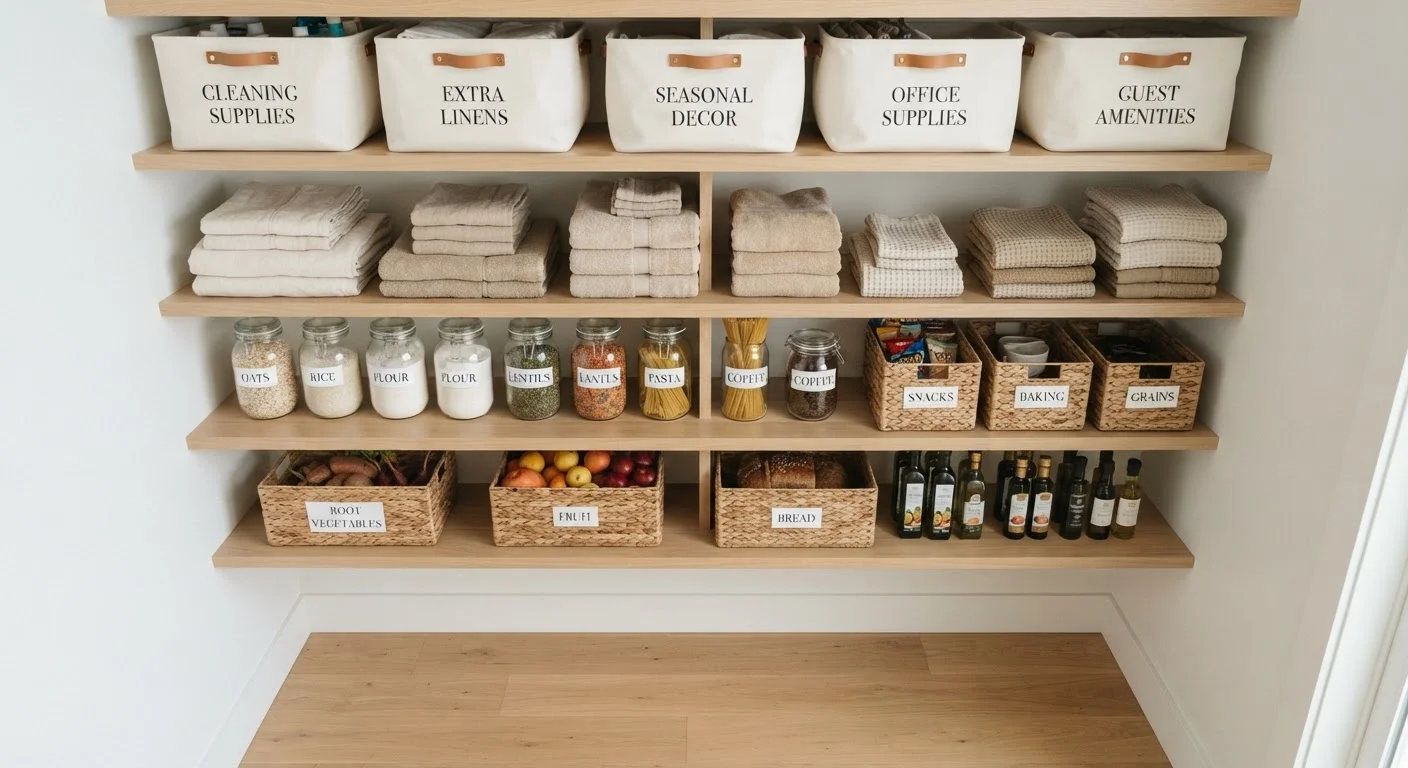
Most homes benefit from a hybrid approach - different frameworks for different zones. FIFO works well in a pantry or medicine cabinet where item rotation prevents waste. The container method shines in children's rooms or shared spaces, because the physical boundaries are visible to everyone. One-in-one-out is most effective in high-accumulation areas like closets and bookshelves.
| KonMari sort order | Clothes → Books → Papers → Miscellaneous → Sentimental |
| FIFO best use areas | Pantry, refrigerator, medicine cabinet |
| Container method core rule | The container defines the limit - not a count or estimate |
| One-in-one-out trigger | Activated at point of purchase or acquisition, not after |
| Four-box method decisions | Keep, Donate, Trash, Relocate - no 'maybe' box |
The KonMari method is best applied as a one-time sorting event rather than an ongoing system - it's a reset, not a routine. Once you've sorted by category, you'll want a secondary system (like zoning or the container method) to maintain order day-to-day. For a room-by-room view of how these frameworks translate into practice, see the complete room-by-room organization walkthrough.
Households with multiple people require extra attention to shared standards. A system that one person finds intuitive may frustrate another entirely. Strategies for organizing a home when everyone has different habits can help bridge those gaps without conflict.
It's also worth revisiting your systems periodically - life changes, households shift, and what worked two years ago may no longer fit. The annual home organization audit checklist is a practical tool for identifying where things have quietly slipped. And if a framework you've heard about seems too good to be true, check whether it contradicts the common home organization myths that actually work against you.
No Single System Works for Everyone
Organizational frameworks are tools, not rules. A system that works beautifully in a minimalist single-person apartment may be completely unworkable in a household with young children or roommates with different habits. Use these definitions to evaluate which principles align with your actual lifestyle - not an idealized version of it. Mixing two or three complementary frameworks is often more realistic than following one strictly.