Key Takeaways
- Start with one small zone, not the whole house, to build momentum without overwhelm.
- Decluttering and organizing are two separate steps - always declutter first.
- You don't need to buy storage products before you know what you're keeping.
- Simple, consistent habits matter more than a single big cleanout.
- Every household is different - systems should fit your actual life, not an ideal one.
Start here
Why 'Never Organized' Is Actually a Fresh Start
Next
The Right Mindset Before You Touch Anything
Then do this
Your First Decluttering Session: A Step-by-Step Framework
Build on it
Building Simple Systems That Actually Stick
Stay on track
Common Pitfalls - and How to Avoid Them
Why 'Never Organized' Is Actually a Fresh Start
If your home has never had a real organizational system, you're not behind - you simply haven't started yet. Unlike someone who built habits around a flawed system and now has to unlearn them, you're working with a blank slate. That's a genuine advantage.
The absence of prior organization means you get to design something that fits your real life, not an inherited arrangement that never quite worked. The goal isn't a magazine-perfect home; it's a functional one where you can find what you need, move freely, and feel at ease.
It helps to understand that decluttering and organizing are two distinct activities. Decluttering means deciding what belongs in your home at all. Organizing means finding logical homes for the things that stay. Mixing them together - trying to sort and store simultaneously - is one of the most common reasons people stall out. Do them in sequence, and the process becomes far more manageable.
Decluttering
The process of deciding which items belong in your home and removing those that don't. It happens before any organizing begins.
Organizing
Assigning logical, accessible homes to the items you've chosen to keep, so your space functions efficiently day to day.
Decision fatigue
Mental exhaustion from making too many choices in sequence, which makes later decisions harder and less effective. A common reason decluttering sessions stall.
Like with like
An organizing principle where similar items are stored together - for example, all batteries in one spot - making things easier to find and inventory.
Functional storage
Storage solutions designed around how you actually use a space, not how it looks. Prioritizes access and ease over aesthetics alone.
The Right Mindset Before You Touch Anything
Before moving a single item, reframe what success looks like. Perfection is not the benchmark - progress is. A home that is 70% more functional than it was last month is a real win, even if it doesn't look like a styled interior photo.
Emotional attachment to objects is normal and not a character flaw. Many items carry memory, guilt, or obligation. Acknowledging this honestly - rather than pushing through or dismissing it - leads to better decisions. A useful question to ask yourself: Does keeping this item serve my current life, or am I keeping it out of obligation?
Also worth checking: the belief that you need to do everything at once. That pressure is often what prevents people from starting at all. You might be surprised by how many popular assumptions about tidying are counterproductive - our piece on home organization myths addresses several that commonly derail beginners.
Start with a 15-Minute Timer
If getting started feels impossible, set a timer for just 15 minutes and commit only to that. Most people find that once they begin, momentum carries them further than they expected. Even if you stop when the timer goes off, you've made real progress - and you've proven to yourself that starting is possible.
Your First Decluttering Session: A Step-by-Step Framework
A structured first session prevents the chaos of pulling everything out and not knowing how to proceed. Follow this sequence:
- Choose one small zone. A bathroom cabinet, a kitchen junk drawer, or a single closet shelf. Avoid starting with sentimental items like photos or keepsakes - those require more decision-making energy than practical objects.
- Remove everything from the zone. Place it all on a clear surface so you can see what you actually have.
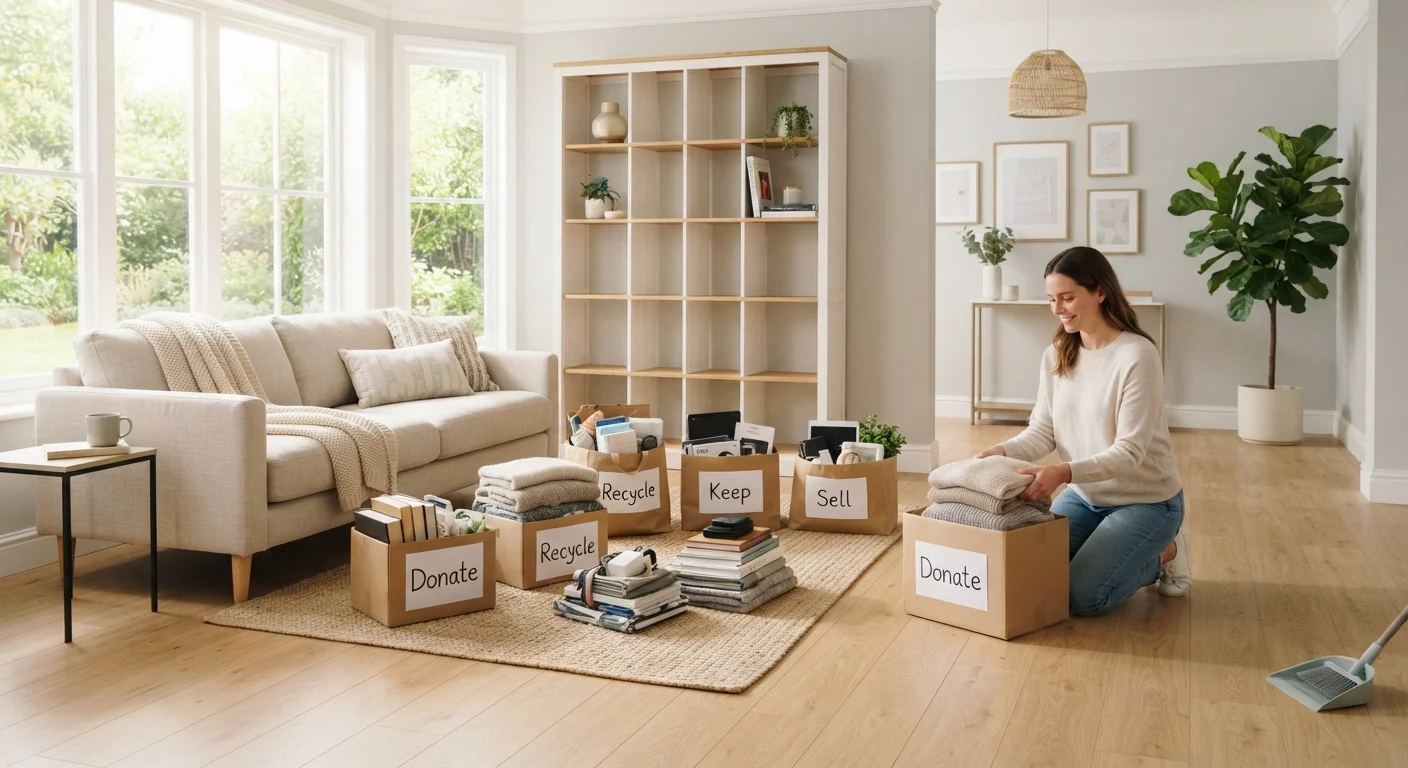
- Sort into four categories: Keep, Donate, Recycle, and Trash. Make quick decisions on clear cases first, and set aside anything you genuinely need more time to consider.
- Return only the Keep items. As you put things back, group like with like - all batteries together, all cleaning supplies together - so items are easy to find later.
- Remove the discards immediately. Bag donations and take them to your car or door. Don't let them linger; items left in limbo often drift back into the home.
Once you've completed your first zone, pause and notice how it feels. That sense of clarity is the motivation to continue. When you're ready to scale up, our room-by-room organization walkthrough provides a comprehensive roadmap for tackling every space in your home.
Building Simple Systems That Actually Stick
Effective organization systems share one trait: they work with how you actually behave, not how you think you should behave. If you consistently drop your keys on the kitchen counter, a hook near the kitchen door will serve you better than a decorative bowl in the entryway.
Start with these foundational principles:
- Every item needs a home. Clutter accumulates where things have no designated place. Assign a specific spot to every category of item you use regularly.
- Store things where you use them. Scissors belong near where you wrap packages; medicine belongs near where you take it. Friction between need and access causes things to be left out.
- Visible storage for frequently used items, concealed for rarely used ones. This keeps surfaces calm while still keeping necessities accessible.
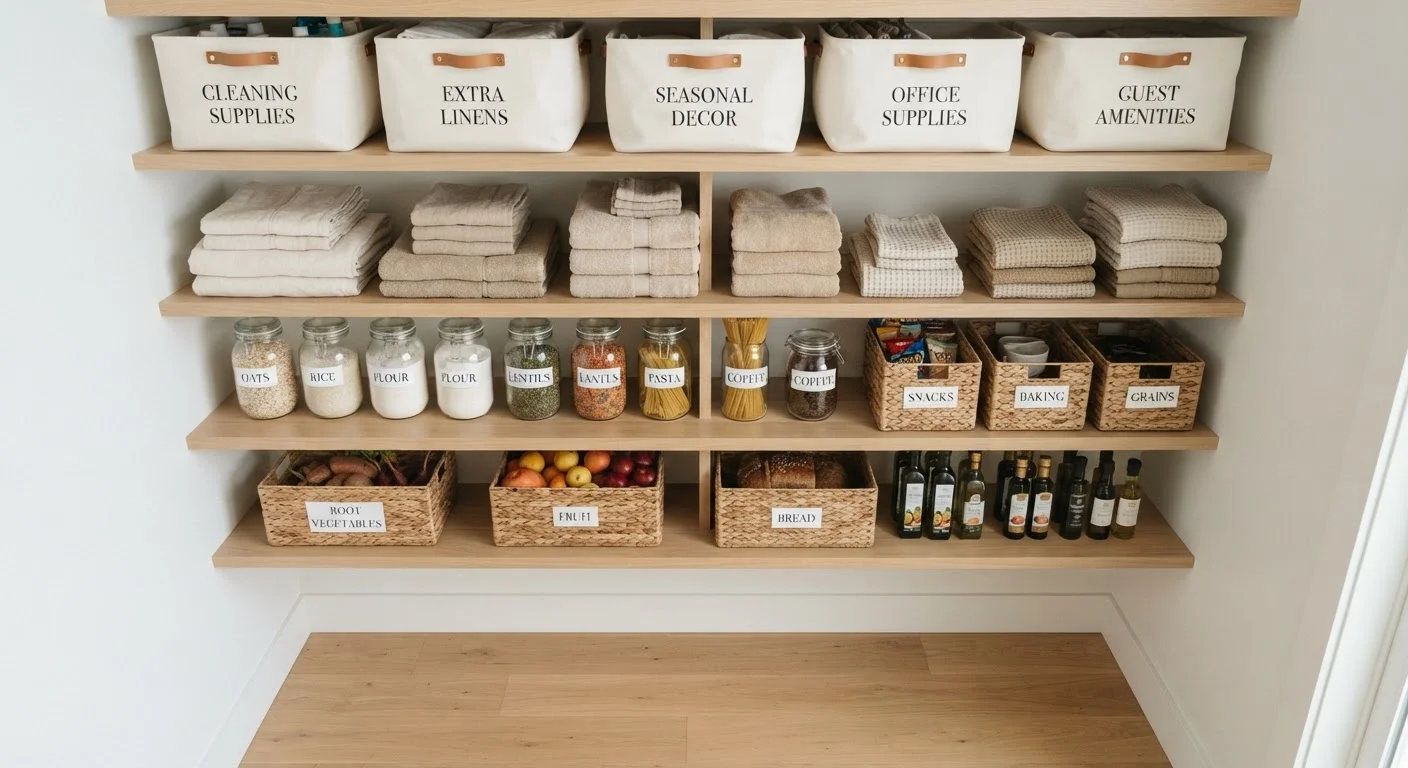
Resist the urge to buy storage products prematurely. Once you know exactly what you're keeping and where it will live, you can make targeted, useful purchases. Buying bins before you've decluttered almost always results in organized clutter - not a functional system.
For the longer term, small daily habits are what maintain what you've built. The one-in-one-out rule and related habits are worth exploring once your initial systems are in place.
Room-by-Room Organization Walkthrough
Once you've got the basics down, this end-to-end guide covers proven strategies for organizing every major space in your home, from kitchen counters to bedroom closets.
Annual Home Organization Audit Checklist
A room-by-room checklist to assess what's working in your organizational system and spot where things have quietly slipped - ideal for maintaining progress after your initial declutter.
Common Pitfalls - and How to Avoid Them
Even with the best intentions, certain patterns consistently trip up first-time organizers. Being aware of them in advance can save significant time and frustration.
- Doing too much at once
- Pulling apart multiple rooms simultaneously creates a worse mess than you started with and leaves you exhausted before anything is finished. Commit to one zone at a time.
- Organizing before decluttering
- Buying matching bins and labeling shelves before sorting what you own just relocates clutter more neatly. Declutter first, always.
- Using guilt as a sorting criterion
- Keeping items because they were expensive, a gift, or belonged to someone else keeps your home organized around the past rather than your present needs. Acknowledging the sentimental weight and still letting go is a skill that gets easier with practice.
- Aiming for perfection over function
- An organizational system that requires perfect behavior to maintain will collapse quickly. Design for your realistic self, not your ideal self.
Once your home has a working system, a periodic check-in helps catch drift before it becomes overwhelming again. The annual home organization audit checklist is a practical tool for keeping your system honest over time.
Don't Discard Other People's Items
Only sort through belongings that are unambiguously yours. Discarding shared or other household members' items without their knowledge can damage trust and create conflict. For shared spaces, open conversation before any sorting is essential - not an optional extra.