Shared Spaces, Different Standards: Organizing a Home When Everyone Has Different Habits


Key Takeaways
- Shared organization works best when systems are designed around the least tidy person's natural habits.
- Clearly defined zones for each person reduce conflict over shared surfaces and storage areas.
- Low-friction storage - meaning easy to open, close, and return items to - dramatically improves follow-through.
- Regular, brief household conversations about what's working prevent resentment from quietly building.
- Compromise means building systems people can actually maintain, not imposing one person's ideal standard.
Why Shared Organizing Is a Different Problem Entirely
Organizing a home you share is fundamentally different from organizing one you control alone. When one person's threshold for clutter is another person's daily baseline, no single tidying method resolves the conflict on its own. The challenge isn't really about systems - it's about aligning different habits, preferences, and tolerances within a space everyone depends on.
Most popular organization advice assumes a single decision-maker. Shared households need a different approach: one built around negotiation, realistic expectations, and structures that account for how people actually behave, not how they intend to behave.
There Is No Universally 'Right' Level of Tidy
Research in environmental psychology suggests that clutter tolerance varies significantly between individuals and is influenced by personality, upbringing, and stress load - not laziness or carelessness. What reads as chaos to one person may feel comfortable and functional to another. Effective shared organization acknowledges this without judgment, focusing on systems that serve the household rather than enforcing one person's standard.
The zoned living approach is one framework that translates especially well to shared homes, because it creates intuitive spatial logic everyone can reference - not just the person who set it up.
Best Practices for Organizing Around Competing Habits
The following practices are drawn from real-world organizing strategies that hold up in multi-person households. The common thread: they prioritize function and follow-through over appearance and perfection.
Design systems around the least tidy person's natural behavior, not the most organized person's ideal.
A system that only works if everyone performs at their personal best will fail regularly. Building around realistic, observable habits creates structures that hold up under real daily conditions. This approach also reduces friction and blame when standards slip.
Establish clearly defined personal zones within shared rooms.
When surfaces and storage are ambiguous, everyone's clutter bleeds together - making it impossible to know whose responsibility a mess is. Defined zones give each person ownership of a specific area and reduce disputes about shared surfaces. It's easier to maintain your own space when it's genuinely yours.
Choose low-friction storage over aesthetically perfect storage.
Lids, latches, and complicated folding systems are abandoned under time pressure. Storage that requires one motion to open and one motion to put something away gets used consistently. Prioritizing ease over appearance is one of the most practical shifts a household can make. You can read more in our home organization myths guide on why aesthetics-first thinking often backfires.
Hold brief, regular household check-ins rather than waiting for tension to peak.
Organizational systems erode gradually, and frustration compounds if it goes unaddressed. A short monthly conversation about what's working and what isn't keeps small issues from becoming arguments. It also normalizes the idea that systems need ongoing adjustment - not just a one-time setup.
Separate truly shared spaces from personal domains and apply different standards to each.
Trying to impose uniform tidiness standards across an entire home rarely succeeds. Shared spaces like kitchens, bathrooms, and living areas benefit from agreed-upon baselines; private spaces can operate by the individual's own preferences. This compromise respects autonomy while protecting communal comfort.
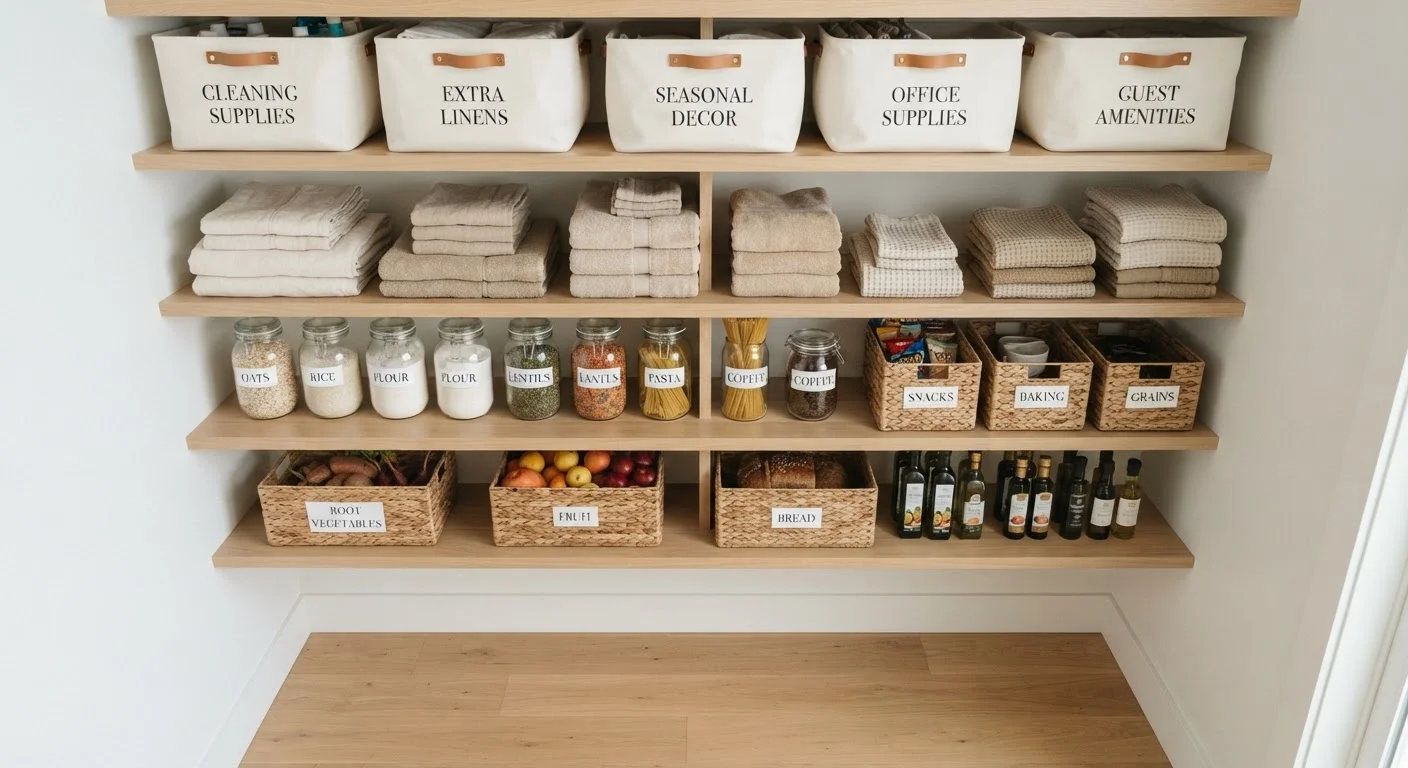
Use visual anchors and labels to make the 'right' place obvious to everyone.
When the correct home for an item isn't obvious, people default to the nearest flat surface. Labels and visual cues remove the need to remember a system - they make the right choice the easy choice. This is especially useful in households where not everyone agreed to or helped design the original organization setup.
For households dealing with the additional complexity of seasonal items, gear, or rotating décor, the seasonal rotation guide offers a structured approach that keeps shared storage manageable year-round.
Quick Wins You Can Implement Today
Before tackling a full household reorganization, these targeted actions create immediate, visible improvements - and often build momentum for larger changes.
If you're working with limited square footage, the principles in storage solutions that scale can help you apply these ideas within tight physical constraints.
Keeping It Working Over Time
The hardest part of organizing a shared home isn't the initial setup - it's maintaining systems when life gets busy and habits drift. A few structural habits make the difference between a system that holds and one that quietly collapses.
“The goal is not a perfect home. The goal is a home that works for the people who actually live in it.”
— Julie Morgenstern, Professional organizer and author of 'Organizing from the Inside Out'
Small, consistent routines matter more than occasional overhauls. The habits that keep homes tidy long-term offers a practical set of daily practices that work especially well in shared households because they're low-effort and transferable.
It's also worth scheduling an annual review of your home's organization overall. A structured home organization audit can surface where systems have silently slipped - before small frustrations become larger disputes.