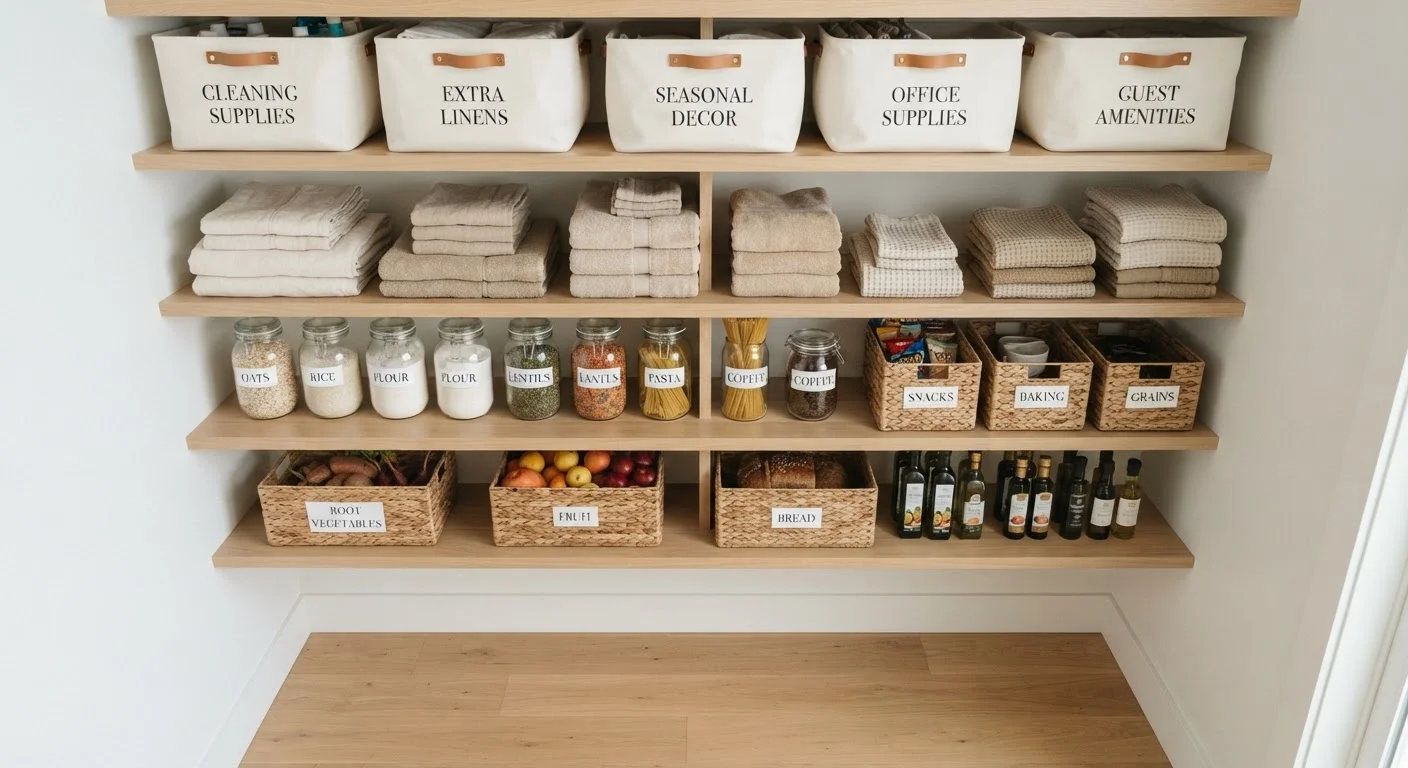
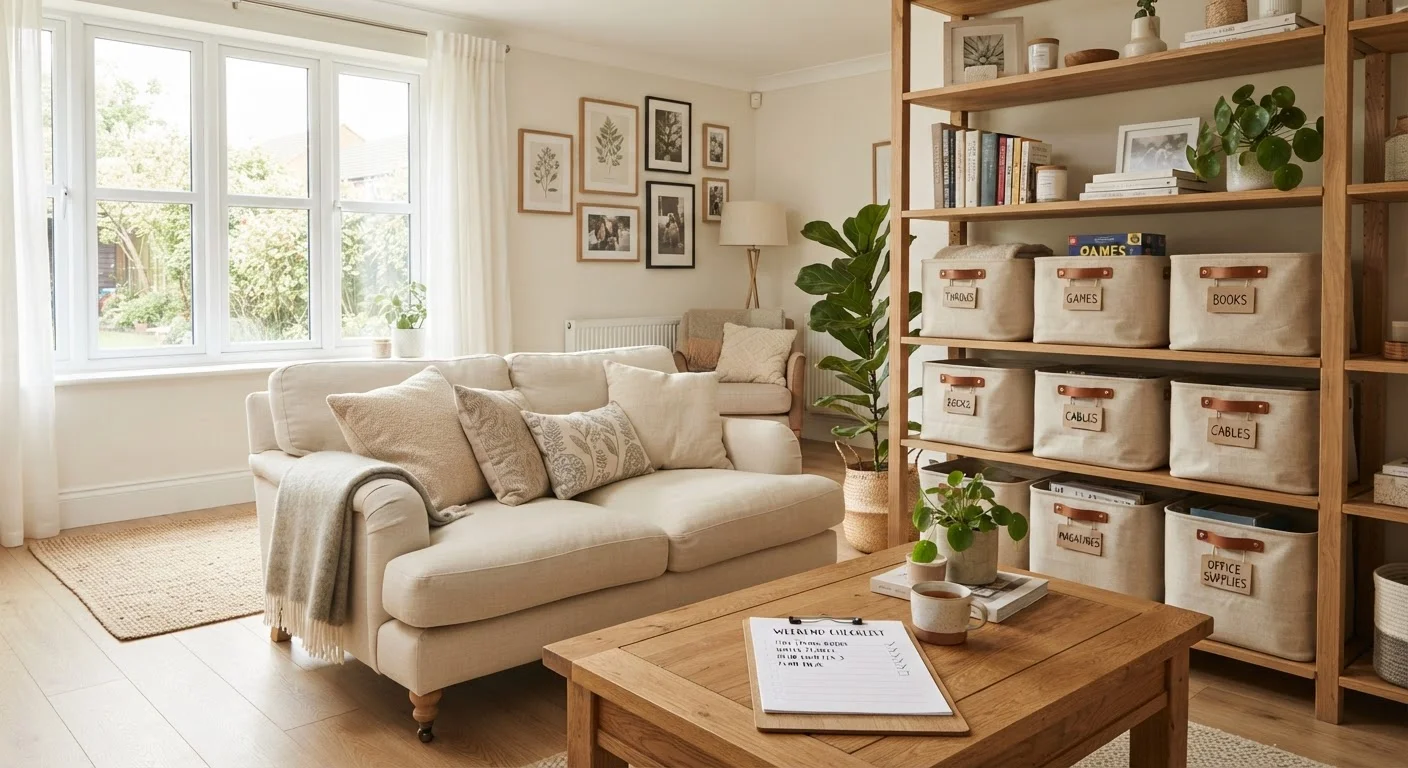
Key Takeaways
- An annual audit catches organization problems before they become overwhelming clutter crises.
- Room-by-room assessment reveals which systems are working and which need adjustment.
- Functional organization is about habit support, not just aesthetic tidiness.
- Small, targeted changes after an audit are more sustainable than full overhauls.
- Household members' input during the audit improves buy-in for new systems.
Summary
28 items · 45-90 minutes
Why an Annual Organization Audit Matters
Most organization breakdowns don't happen overnight. A drawer gets overstuffed, a shelf grows inconsistent, a cabinet becomes a catch-all - and gradually, the systems you set up stop working. An annual audit gives you a structured moment to step back and honestly assess what's functioning and what's quietly failing.
Unlike a full declutter overhaul, an audit is observational first. You're gathering information: noting friction points, identifying spaces that have changed purpose, and flagging storage that no longer matches how your household actually operates. The changes you make afterward are smaller and more targeted - which means they tend to stick.
If multiple people share your home, consider doing this audit together. Systems that only one person understands tend to collapse. For more on building shared organization habits, see our guide on organizing a home when everyone has different habits.
Whole-Home Assessment
Kitchen & Pantry
Bedrooms & Closets
Bathrooms
Living & Common Areas
Home Office & Paper Management
Garage, Basement & Storage Spaces
System Review & Follow-Up
What You'll Need Before You Start
This audit doesn't require a lot of prep, but having a few tools on hand will help you move efficiently through each room without stopping to hunt for supplies.
Notepad or clipboard
Record observations room by room without committing to changes mid-audit.
Colored sticky notes or tape flags
Mark problem areas or items needing action without moving anything yet.
Camera or smartphone
Photograph disorganized areas before and after as a reference and motivator.
Label maker or marker and blank labels
Update or create storage labels on the spot as you identify mislabeled or unlabeled bins.
Donation box or bag
Capture items identified for removal during the audit so they leave the space immediately.
Set aside a block of uninterrupted time - ideally on a weekend morning when the household is calm. Walk through each room with your notepad before moving anything. The goal of the first pass is observation, not action.
Resist the urge to reorganize mid-audit
It's tempting to start rearranging as soon as you spot a problem, but doing so mid-walkthrough causes you to lose your whole-home perspective. Complete your observations for every room first, then prioritize what to address. Acting too early often means investing effort in lower-priority spaces while bigger problem areas go untouched.
Turning Audit Findings Into Action
Once you've completed the room-by-room walkthrough, review your notes and group your findings into three buckets: quick fixes (takes under 15 minutes), medium projects (an hour or an afternoon), and longer-term changes that need planning or budget.
Tackle quick fixes the same day if possible - relabeling a bin, consolidating a duplicated category, or clearing a surface resets the space immediately and builds momentum. Medium projects can be scheduled across the following weeks. Longer-term changes, such as adding shelving or reconfiguring a room's layout, belong in a home improvement planning list.
If your audit surfaces financial considerations - like needing new storage solutions - it's worth reviewing your discretionary spending before committing. A structured approach like the one in our monthly budget audit checklist can help you carve out room in your plan without guesswork.
Finally, schedule your next audit before you close out this one. Putting a recurring reminder on the calendar - even just annually - makes it far more likely to happen. Pair it with a seasonal transition if that helps; the seasonal swap-out guide is a natural companion to this process.
Don't Equate Tidy with Functional
A space can look organized but still be failing you - if retrieving a commonly needed item requires moving five other things, the system isn't working regardless of how it photographs. The measure of a good organization system is frictionless daily use, not appearance. Keep that standard at the center of everything you assess and adjust.