Key Takeaways
- You don't need to purge everything before organizing - small, targeted sessions are often more effective.
- Buying storage containers before sorting your belongings frequently leads to wasted money and more clutter.
- A system that looks perfect on social media may be completely impractical for everyday life.
- Sustainable organization is built on repeatable habits, not a single marathon tidying session.
- Organizing by how you actually use items - not by category - creates systems that are easier to maintain.
Why Organization Myths Are So Hard to Shake
Home organization advice is everywhere - on social media, in bestselling books, in the homes of friends who seem to have it all together. The problem is that much of this advice is built on assumptions that sound logical but rarely hold up in real households with real people and real schedules.
These myths persist partly because they tap into something emotionally appealing: the idea that a clean slate, the right products, or a single heroic weekend can solve what feels like a deeply personal failing. But disorganization is rarely a character flaw. More often, it's a systems problem rooted in how clutter accumulates over time.
Busting these myths doesn't just save frustration - it saves money, time, and the particular exhaustion that comes from reorganizing the same space repeatedly.
Myth
You have to declutter everything before you can start organizing.
Fact
You can organize incrementally - starting with one drawer, shelf, or category - and still make meaningful, lasting progress.
The all-or-nothing approach to decluttering is one of the most common reasons people never begin. The idea that you must clear your entire home before creating any system sets an impossible bar for most households. In practice, tackling one small area at a time - a junk drawer, a bathroom cabinet, a closet shelf - builds both momentum and the skills to apply elsewhere. Small wins compound. If you're curious why the whole-house purge often stalls, understanding why clutter reaccumulates is a useful starting point.
Myth
You need special bins, labels, and matching containers to get organized.
Fact
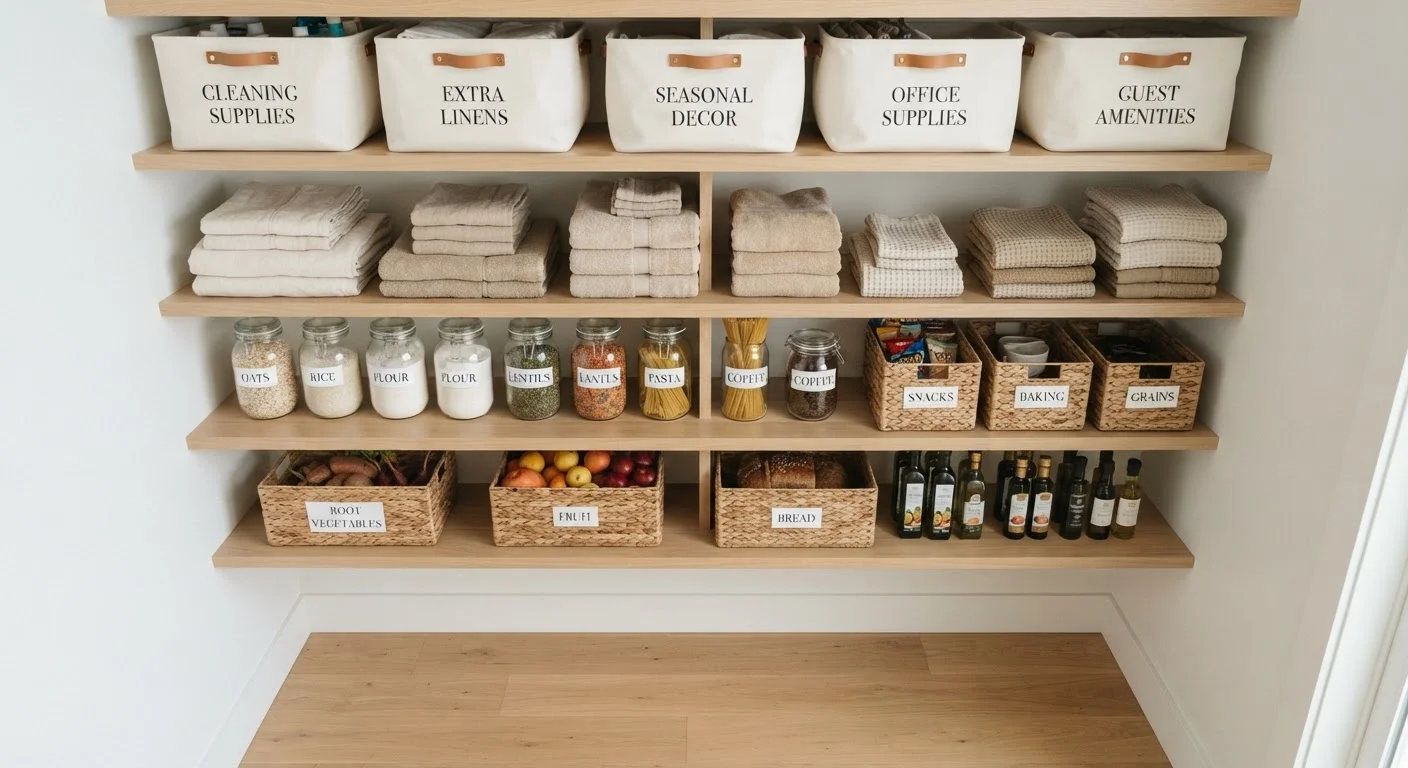
Storage products can help, but buying them before sorting your belongings almost always results in wrong sizes, wasted money, and additional clutter.
The organization industry is adept at making containers feel like solutions. But a bin you bought before deciding what goes in it is just another object to manage. The sequence matters: sort first, measure second, shop last - and only for what you genuinely need. Many effective systems use items already in the home. For households working with a tighter budget, it's worth reviewing general guidance on budgeting before making any home organization purchases.
Myth
A perfectly organized home stays organized on its own.
Fact
Organization requires regular maintenance habits - brief, consistent routines matter far more than a single large effort.
Social media showcases the moment of peak tidiness, not the daily work that sustains it. Every functional home organization system includes some form of reset habit: a five-minute evening tidy, a weekly sweep of high-traffic surfaces, or a monthly check of accumulation zones. Without these micro-habits, even the most beautifully organized space will drift back toward clutter within weeks. The habits that keep homes tidy long-term are worth building into your routine from the start.
Myth
If you organize by category (all books together, all tools together), everything will be easier to find.
Fact
Organizing by use context - where and how you actually use something - is often more practical than strict category-based grouping.
Category-based organization works beautifully in libraries and warehouses. In homes, it frequently means walking across the house to retrieve things you use together. A more effective approach groups items by the activity or location they belong to - everything needed for the morning routine in one place, everything for bill-paying in another. This is the core logic behind zone-based organization. See how assigning a purpose to every area of your home creates systems that households can maintain intuitively.
Myth
Minimalism is the only reliable path to a tidy home.
Fact
Functional organization doesn't require owning fewer things - it requires knowing where things are and being able to return them easily.
Minimalism works extremely well for some people, but it's a lifestyle choice, not a prerequisite for a functional home. Plenty of households with abundant belongings - craft supplies, sporting gear, large families - maintain genuinely organized spaces by designing systems that scale to what they actually own. The question isn't how little can I own but does every item have a designated home. For an honest look at minimalism's real trade-offs, this exploration of whether minimalism actually reduces maintenance is worth reading before committing to a major purge.
Building Systems That Actually Stick
Once you've cleared away the misconceptions, organizing becomes less about willpower and more about design. The goal is to create systems so intuitive that tidying feels like the path of least resistance rather than a chore you have to force yourself to do.
Don't Reorganize a Space You Haven't Sorted First
Rearranging clutter into neater-looking piles or bins without first deciding what to keep is one of the most common organizational pitfalls. It creates the visual impression of order while leaving the underlying problem intact - and often makes things harder to find. Always sort and edit before you contain.
A few principles guide durable organization. First, store things where you actually use them - not where it seems logical on paper. Cookbooks belong near where you cook and read them, not alphabetized in a distant cabinet. Second, make returning items easier than leaving them out. If putting something away takes more effort than dropping it on a counter, the counter will always win.
For households with multiple people, this matters even more. A system only works if everyone can follow it. See how shared spaces can be organized around different habits without constant conflict.
Finally, plan to revisit and adjust. Schedules change, families grow, and what worked two years ago may no longer fit. The Annual Home Organization Audit Checklist is a useful tool for catching quiet slippage before it snowballs.
Where to Go From Here
If you're starting with a space that has never really been organized, resist the urge to tackle everything at once. Begin with one area, apply what you've learned here, and let that success build momentum. The foundational steps for decluttering from scratch can help you sequence the work without overwhelm.
For a room-by-room approach once you have a handle on the basics, the complete home organization walkthrough covers proven strategies for every space. And if you're curious about the habits that keep homes tidy long after the initial effort, explore daily routines that actually stick - including the well-known one-in-one-out rule.
Organization isn't a destination. It's an ongoing, evolving practice - and now that you know which myths to leave behind, you're better equipped to build something that genuinely works.
~$1,000
Estimated annual cost of disorganization per household
Research cited by the National Association of Professional Organizers has suggested disorganized households may lose significant money annually through duplicate purchases, late fees, and wasted food - though exact figures vary by source and household size.
23 min
Average daily time lost searching for items
Workplace and home productivity studies have consistently found adults spend measurable time each day locating misplaced items, though estimates range widely depending on methodology.