
Growing a Kitchen Herb Garden: Placement, Care, and Harvesting Without Killing the Plant

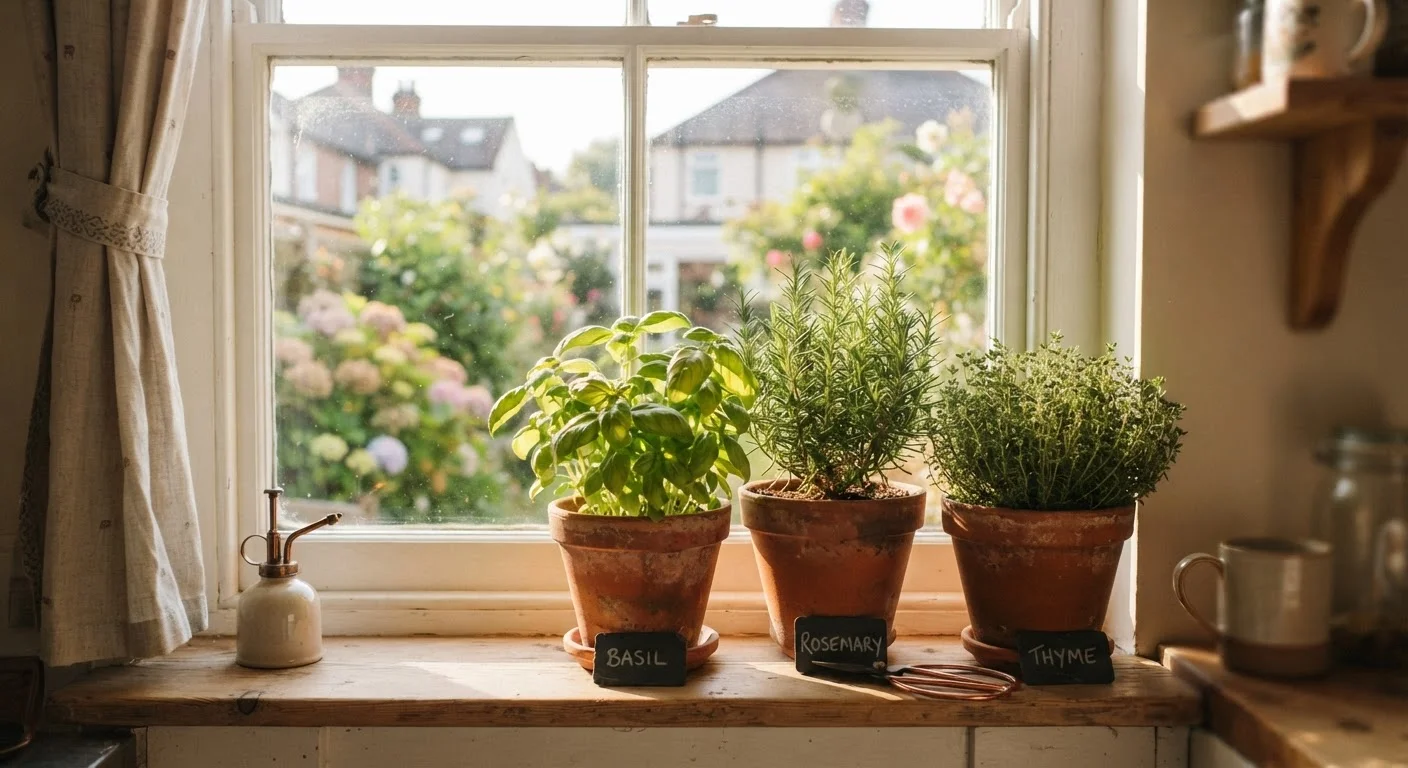
Key Takeaways
- Most culinary herbs need at least 6 hours of direct light daily - a south- or west-facing window works best indoors.
- Overwatering is the leading cause of herb death; always check soil moisture before watering.
- Harvest no more than one-third of a plant at a time to keep it productive and prevent stress.
- Pinching off flower buds (deadheading) extends a herb's useful life significantly.
- Mediterranean herbs like rosemary and thyme prefer lean, well-drained soil; basil and mint tolerate richer conditions.
- Container-grown herbs need more frequent feeding than in-ground plants due to nutrient leaching.
What you will need
Choosing the Right Spot for Your Herbs
Placement is the single biggest factor separating a thriving herb garden from a graveyard of wilted stems. Before you buy a single plant, assess how much usable light your space actually delivers - not the light you hope for, but the light you can measure by watching a spot across several hours on a clear day.
Indoors: A south-facing windowsill is ideal in most US homes, offering the longest daily sun exposure. West-facing windows are a solid second choice. North-facing windows rarely produce enough light for culinary herbs without supplemental grow lighting. Reflect on the season too - winter sun angles are significantly lower, so a window that performs well in July may be marginal in January.
Outdoors and on balconies: Most herbs thrive in a spot receiving 6-8 hours of direct sun. If you're working with a patio or balcony, container gardening techniques can help you maximize limited square footage. Raised beds are another option worth considering - our guide on raised beds vs. in-ground planting walks through the tradeoffs in detail.
Grouping herbs by need: Mediterranean herbs (rosemary, thyme, oregano, sage) prefer dry, sunny conditions and fast-draining soil. Moisture-loving herbs (basil, mint, parsley, chives) tolerate richer, slightly more moist soil. Keeping similar-need herbs together makes watering and feeding far more manageable.
What you will need
Watering, Feeding, and Everyday Care
The most common way to kill a herb plant isn't neglect - it's overwatering. Roots sitting in waterlogged soil develop rot quickly, and the early symptoms (wilting, yellowing leaves) look identical to drought stress, which leads many gardeners to water even more. Before watering, push a finger about an inch into the soil. If it feels moist, wait. If it feels dry, water thoroughly until it drains from the bottom of the pot.
Soggy Soil Kills Faster Than Drought
Root rot caused by overwatering can destroy a herb plant in days, and by the time symptoms appear above soil, the damage is often irreversible. Always prioritize good drainage - never use containers without drainage holes, and avoid saucers that hold standing water beneath pots for extended periods. When in doubt, wait another day before watering.
Feeding guidelines: In-ground herbs in amended garden soil often need little supplemental fertilizer. Container herbs are different - nutrients leach out with every watering, so a diluted liquid feed applied roughly every two to four weeks during the growing season supports steady growth. Avoid heavy nitrogen applications on Mediterranean herbs; excess fertilizer produces lush but flavor-poor, disease-prone growth. For more on sustainable soil enrichment, see our article on composting kitchen scraps into garden amendments.
Pests and airflow: Aphids, spider mites, and fungus gnats are the most frequent indoor herb pests. Good airflow - avoid cramming pots together - and avoiding wet foliage go a long way toward prevention. If you spot a problem early, a strong stream of water or insecticidal soap (following label instructions) is usually sufficient.
Watering habits affect far more than moisture levels. Our piece on watering habits that quietly stress your plants explains common mistakes in detail.
How to Harvest Without Harming the Plant
Harvesting herbs is an active part of keeping them healthy - but technique matters enormously. The core rule: never remove more than one-third of the plant at a single session. Taking too much at once shocks the plant, reduces its ability to photosynthesize, and can trigger premature bolting (flowering and setting seed), which dramatically shortens its productive life.
Identify the stem tips and new growth nodes
Before cutting anything, look at the plant's structure. Nodes are the small bumps or pairs of leaves along a stem - new growth sprouts from these after you cut. Always plan your cut so at least two nodes remain below it on each stem. This ensures the plant can branch out and continue producing.
Cut stems cleanly just above a leaf node
Use clean, sharp scissors or snips - dull blades crush stem tissue and create entry points for disease. Cut at a slight angle just above a node, removing the top 2-4 inches of growth. Work your way around the plant evenly rather than stripping one side, which can cause uneven growth and wind stress.
Pinch off any flower buds as soon as they appear
When a herb begins to flower (bolt), it shifts energy from leaf production to seed development. Leaves become smaller, less flavorful, and sometimes bitter. As soon as you notice a flower spike or bud forming - common on basil in warm weather - pinch it off at the base. Check plants weekly during summer for early bolting signs.
Harvest in the morning for peak flavor
Essential oil concentration - which gives herbs their aroma and flavor - is highest in the morning after any overnight dew has dried but before the midday heat causes volatilization. This isn't a strict rule, but if you have the choice, a morning harvest will produce noticeably more flavorful leaves than one taken in the late afternoon.
Store or use harvested herbs promptly
Soft-stemmed herbs (basil, cilantro, parsley) keep best standing upright in a glass with an inch of water, loosely covered, at room temperature for basil or refrigerated for others. Woody herbs (rosemary, thyme, oregano) store well wrapped lightly in a slightly damp paper towel inside a sealed bag in the refrigerator. For longer-term storage, drying or freezing in ice cube trays with water or oil works well.
Understanding whether your herbs are annuals or perennials also shapes how you manage them long-term. Basil is an annual; it completes its lifecycle in one season. Thyme and rosemary are perennials in many US climates. Our article on perennials vs. annuals provides a helpful framework for planning around these differences.
Mint Needs Its Own Container
Mint spreads aggressively through underground runners and will crowd out neighboring herbs within a single growing season if planted together. Always give mint its own dedicated pot. This containment strategy also makes it easier to manage its heavier watering needs separately from drought-tolerant herbs like rosemary.