

Key Takeaways
- Perennials return each year from established root systems, reducing replanting costs over time.
- Annuals complete their life cycle in one season, offering continuous, flexible bursts of color.
- Combining both plant types is the most reliable strategy for season-long garden interest.
- Upfront perennial investment typically pays off after two to three growing seasons.
- Choosing native perennials can reduce watering, feeding, and pest management demands significantly.
Our Verdict
Neither perennials nor annuals are inherently superior - each solves a different garden problem. Perennials build a durable, low-maintenance framework, while annuals fill gaps and deliver uninterrupted color between bloom cycles. A thoughtfully blended planting strategy gives most home gardeners the best of both worlds.
| Best for | Recommended |
|---|---|
| Gardeners prioritizing long-term value and lower yearly effort | Perennials |
| Those wanting flexible, season-long color with room to experiment | Annuals |
| Most home gardeners seeking beauty with manageable upkeep | A mixed perennial-and-annual planting plan |
What Sets Perennials and Annuals Apart
The distinction comes down to life cycle. Perennials are plants that live for more than two years, dying back to the ground in winter (in most US climates) and re-emerging from the same root system each spring. Annuals complete their entire life cycle - germination, flowering, seed production, and death - within a single growing season.
This biological difference has real garden implications. Perennials invest heavily in root development in their first year, which can mean modest flowering early on. By year two or three, an established clump like coneflower (Echinacea) or black-eyed Susan (Rudbeckia) rewards you with vigorous blooms and little extra effort. Annuals like zinnias or marigolds, by contrast, bloom prolifically from the moment you plant them - they're essentially racing to produce seed before the season ends.
It's worth noting that some plants commonly sold as annuals in northern states - lantana and impatiens, for example - are technically perennials in warmer USDA hardiness zones. Knowing your zone helps you make smarter planting decisions. For a broader view of plant selection based on your growing environment, our guide on designing with native plants and pollinators is a useful companion resource.
Comparing Cost, Maintenance, and Flexibility
Budget and time are the two factors that most often shape which plant type a gardener leans toward.
| Perennials | Annuals | |
|---|---|---|
| Lifespan | 3+ years from same root system | One growing season only |
| Upfront cost | Higher per plant | Lower per plant |
| Long-term cost | Lower - replanting rarely needed | Higher - repurchased each season |
| Bloom duration | 3-6 weeks per season, typically | Continuous until frost if deadheaded |
| Maintenance level | Low once established | Moderate - regular deadheading needed |
| Design flexibility | Fixed location once planted | Easily swapped year to year |
| Best use in a bed | Structural backbone and foliage | Color fill and gap coverage |
Perennials generally cost more per plant at the nursery, but that investment spreads across many growing seasons. A single hosta division purchased one spring can be split into three or four plants within a few years - effectively multiplying your planting stock at no additional cost. Annuals require a fresh purchase (or seed-starting effort) every season, which adds up, particularly for large beds.
On the maintenance front, established perennials largely look after themselves between spring cutback and occasional division. Annuals demand more consistent deadheading (removing spent blooms) to prevent premature seed set and extend their flowering period. If you enjoy regular hands-on garden time, that's a feature; if you prefer lower weekly effort, it's a consideration. Our seasonal garden maintenance checklist outlines exactly what each season demands for both plant types.
Stretch Your Annual Budget With Seeds
Starting annuals from seed indoors four to six weeks before your last frost date can dramatically reduce what you spend each season. Zinnias, cosmos, and marigolds are particularly easy to direct-sow or start in trays. Check seed packets for your region's recommended start dates, or consult your local cooperative extension office for frost date guidance.
Building a Mixed Planting Strategy
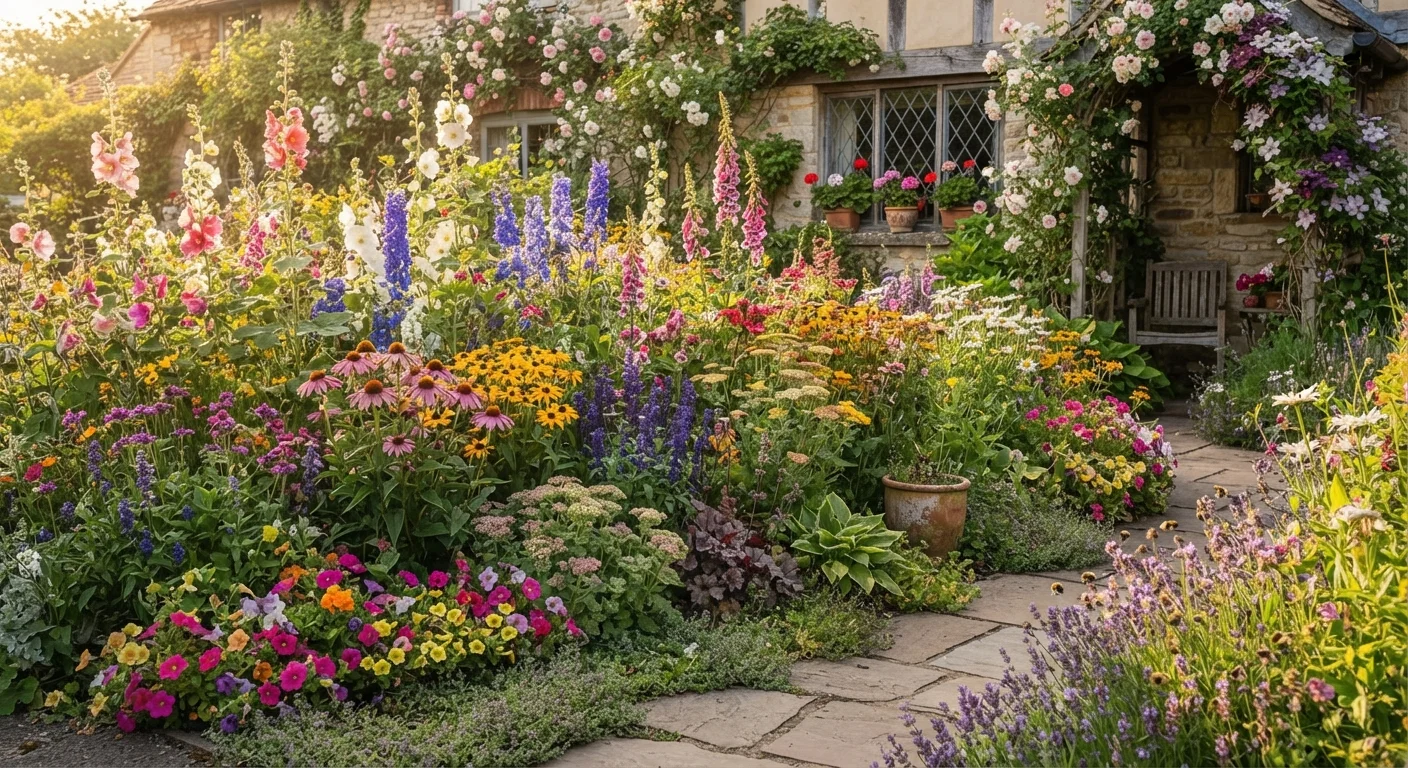
The most effective approach for continuous color is to treat perennials as the structural backbone of a bed and annuals as the flexible fill. Here's how to think about it in practice:
- Map your bloom times. Identify the flowering windows of any perennials you plan to include. Most perennials bloom for three to six weeks. Note the gaps - those are where annuals earn their place.
- Layer by height and season. Place taller, late-season perennials like rudbeckia or asters toward the back, and use compact annuals - calibrachoa, lobularia, or alyssum - along borders to bridge early and mid-season lulls.
- Anchor with foliage perennials. Plants like hostas, ornamental grasses, and ferns contribute texture and color even when not in bloom, giving the bed visual interest throughout the season.
- Use containers for maximum flexibility. Annuals thrive in pots, allowing you to swap combinations seasonally without disturbing established perennial beds. See our container gardening guide for practical setup advice.
If you're deciding how to structure the beds themselves before choosing plants, raised beds vs. in-ground planting covers the trade-offs worth understanding first.
Making the Right Choice for Your Garden Goals
Your ideal plant mix depends on three practical factors: how much time you want to spend maintaining the garden, how much flexibility you want to change its look year to year, and your starting budget.
3-5 years
Typical perennial payback period vs. annual replanting
University cooperative extension programs generally note that perennial plantings offset their higher initial cost within a few growing seasons through elimination of annual repurchasing.
70%
Perennial share recommended in low-maintenance mixed beds
Many landscape horticulturalists suggest a 70/30 perennial-to-annual ratio as a practical starting point for homeowners wanting year-round structure with seasonal color flexibility.
If you're establishing a garden from scratch and want lower ongoing effort, start with a perennial-dominant plan - aim for roughly 70% perennials to 30% annuals by bed area. As your perennials mature and fill in, you can gradually reduce annual purchases and let the perennial framework carry the display.
If you're renting, designing a temporary space, or simply enjoy the creative reset that comes with a new planting scheme each spring, a predominantly annual garden gives you maximum creative latitude with minimal long-term commitment.
For kitchen-adjacent areas or herb gardens where plants serve a functional purpose, the annual-vs-perennial distinction matters differently - some culinary herbs are annuals (basil, cilantro) while others are perennial in most US zones (thyme, mint, chives). Our kitchen herb garden guide breaks down care by plant type. Whatever direction you choose, planning bloom times across the full growing season before you purchase a single plant is the single step most likely to result in a garden you're proud of from April through October.