

Key Takeaways
- Raised beds warm up faster in spring and typically drain better than native soil.
- In-ground planting costs less to start and supports a wider range of large or deep-rooted plants.
- Poor or compacted native soil is the single strongest argument for choosing raised beds.
- Raised beds require purchasing and replenishing soil mix over time, adding long-term cost.
- In-ground gardens benefit from natural soil ecosystems but may need more amendment upfront.
- Your yard's size, topography, and your physical comfort level should guide the final decision.
Option A
Raised Bed Gardening
The controlled, high-performance growing environment.
Best for: Gardeners dealing with poor native soil, limited mobility, or tight spaces who want faster results and more control.
Option B
In-Ground Planting
The traditional, large-scale approach with lower startup cost.
Best for: Gardeners with good existing soil, larger growing areas, or deep-rooted crops like corn, melons, and fruit trees.
If your yard has heavy clay, rocky, or contaminated soil
Raised Bed Gardening
Raised beds let you bypass native soil entirely, filling the bed with a custom mix suited to your plants.
If you want to minimize upfront cost and grow large quantities
In-Ground Planting
In-ground plots require no lumber, hardware, or bulk soil purchase - just soil amendments if needed.
If you have limited mobility or prefer less bending
Raised Bed Gardening
An elevated bed at 18-24 inches high reduces the need to kneel or crouch, making gardening more accessible.
If you plan to grow deep-rooted crops like squash, corn, or fruit trees
In-Ground Planting
In-ground soil provides unlimited depth and volume for expansive root systems that raised beds can restrict.
If you're a first-time gardener wanting quick, manageable results
Raised Bed Gardening
A single 4×8 raised bed is easy to manage, fills with optimized soil from day one, and typically produces results faster.
The Core Differences at a Glance
Choosing between raised beds and in-ground planting is one of the first structural decisions any gardener faces. Both approaches can produce thriving vegetables, herbs, and flowers - but they work through different mechanisms and suit different situations.
Raised beds are contained growing structures, usually built from wood, metal, or composite materials, filled with a custom soil blend. In-ground planting works directly with your yard's existing soil, which you may amend but don't replace wholesale.
| Criterion | Raised Beds | In-Ground Planting |
|---|---|---|
| Upfront cost | Moderate to high (materials + soil) | Low (tools and amendments only) |
| Soil control | Full - you choose the mix | Partial - amend native soil |
| Drainage | Excellent by design | Varies with native soil type |
| Spring warm-up speed | Faster - elevated soil heats quickly | Slower in colder climates |
| Accessibility | High - reduced bending | Lower - ground-level work |
| Root depth available | Limited to bed depth (6-24 in.) | Unlimited |
| Weed pressure | Generally lower | Higher without consistent management |
| Best plant scale | Compact to mid-size crops | All sizes, including large vining plants |
If you're just getting started, our guide to starting a vegetable garden from scratch walks through both approaches in the context of a complete first garden plan.
Soil Quality and Control
Soil is where raised beds hold their biggest advantage. When you build a raised bed, you fill it with a blended mix - typically a combination of topsoil, compost, and an aerating material like perlite or coarse sand. You know exactly what your plants are growing in from day one.
In-ground gardening means working with what's there. Native soil can be anything from rich loam to dense clay or rocky hardpan. Before planting in the ground, most gardeners need to test their soil and then amend it - adding compost, adjusting pH, or breaking up compaction. This process takes time, sometimes more than one season.
6-8 in.
Minimum raised bed depth for most vegetables
University cooperative extension programs generally recommend at least 6 inches of growing medium for shallow-rooted crops; 12 inches or more for root vegetables.
2-4 weeks
Earlier planting window in raised beds
Elevated soil warms faster than ground soil in spring, allowing earlier planting in many USDA hardiness zones, according to general horticultural guidance.
30-50%
Less water needed with proper mulching
Mulching either bed type can significantly reduce evaporation; the exact reduction depends on mulch depth, material, climate, and soil composition.
That said, in-ground soil also has a long-term advantage: an intact, diverse soil ecosystem. Earthworms, beneficial fungi, and microbial communities build up naturally over years in undisturbed ground. A raised bed's biology improves with time too, but it starts from scratch.
For gardeners dealing with potentially contaminated urban soil - common in older neighborhoods - raised beds also provide a clean barrier, keeping edible plants separate from questionable ground. This is particularly relevant for gardeners exploring organic methods.
Cost, Setup, and Long-Term Maintenance
In-ground planting has a clear upfront cost advantage. You're working with existing ground, so primary expenses are limited to tools, seeds or transplants, and any soil amendments. A basic in-ground plot can be started for very little.
Raised beds carry a higher initial investment. Materials for a single 4×8 cedar bed - a common starter size - plus hardware and several cubic feet of quality soil mix can add up. If you're planning multiple beds, those costs multiply. However, many gardeners find the productivity and control worth the investment over time.
Ongoing maintenance differs too. In-ground soil can be replenished with surface compost each year and tilled or top-dressed between seasons. Raised bed soil compresses and breaks down over time, requiring periodic topping-off with fresh compost or mix - typically every one to two seasons.
Weeding tends to be lighter in raised beds when proper soil mix is used (fewer weed seeds than native soil), but neither method eliminates the task entirely. Watering frequency is often higher in raised beds, as they drain more freely and can dry out faster in hot weather.
What You Can Grow - and Where
For most vegetables, herbs, and annual flowers, raised beds perform exceptionally well. Compact and mid-size crops - tomatoes, lettuces, peppers, carrots, beans, and culinary herbs - thrive in the controlled environment of a well-built raised bed. Our kitchen herb garden guide covers herb-specific placement and care that applies equally to raised beds.
In-ground planting opens the door to larger-scale growing. Vining crops like melons, pumpkins, and sweet potatoes sprawl in ways that easily outgrow a raised bed. Corn needs space and benefits from in-ground growing conditions. Fruit trees and perennial edibles like asparagus and rhubarb - which may persist for a decade or more - are generally better established directly in the ground.
For gardens blending food production with ornamental plantings, pairing perennials with annuals can work in either system, though perennials are often more at home in-ground where roots can spread freely year after year.
A Hybrid Approach Is Always an Option
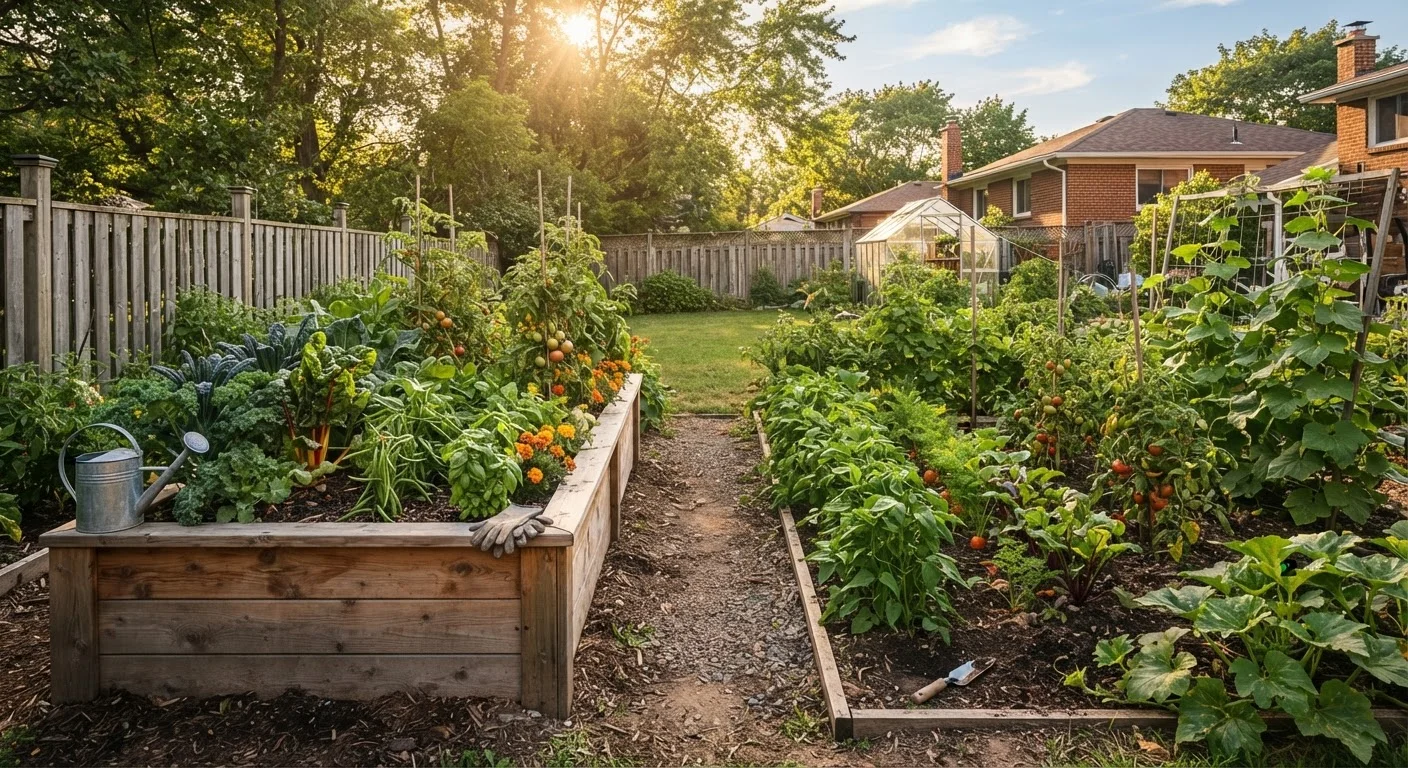
Many home gardeners use both methods simultaneously - raised beds for compact, high-value crops like tomatoes and herbs, and in-ground space for sprawling or large-scale plantings. If your yard allows it, combining the two gives you the benefits of each without committing entirely to one system. You might also explore container gardening as a third option for patios, balconies, or spots without any ground access.