Key Takeaways
- Vertical storage uses wall height to free up floor space, making it ideal for the smallest rooms.
- Horizontal storage keeps items accessible and works better when ceiling height is limited.
- Combining both strategies often yields the most functional small-space layout.
- Accessibility, ceiling height, and item frequency of use should guide your storage choice.
- Neither approach alone is universally superior - context and household habits determine the winner.
Option A
Vertical Storage
The upward-reaching, space-multiplying approach.
Best for: Small rooms with limited floor space but usable wall height, such as studios, narrow hallways, or compact kitchens.
Option B
Horizontal Storage
The grounded, accessible, versatile approach.
Best for: Households needing easy, everyday access to items - especially in shared spaces or rooms with low ceilings.
If your biggest constraint is floor space in a studio or micro-apartment
Vertical Storage
Tall shelving and wall-mounted units free up the floor entirely, making the room feel larger and preserving walking paths.
If you need frequent, effortless access to everyday items
Horizontal Storage
Low, wide storage keeps essentials within easy reach without ladders or overhead stretching - critical for high-traffic zones.
If you have low ceilings or rental restrictions on wall mounting
Horizontal Storage
Horizontal units don't depend on wall anchors or ceiling clearance, making them more adaptable to restricted environments.
If you're organizing a kitchen, laundry room, or home office with many small items
Vertical Storage
Stacked shelves, pegboards, and cabinet risers categorize many small items efficiently without consuming precious counter space.
If your household includes children, older adults, or anyone with limited reach or mobility
Horizontal Storage
Low, wide storage is safer and more inclusive - no climbing, no overreaching, and items stay visible and grab-ready.
Why Storage Direction Matters in Small Spaces
In a compact room, every square foot carries weight. The direction you store things - upward along walls or outward across floors - shapes how spacious a room feels, how easy it is to find items, and whether your organizing system actually holds up over time.
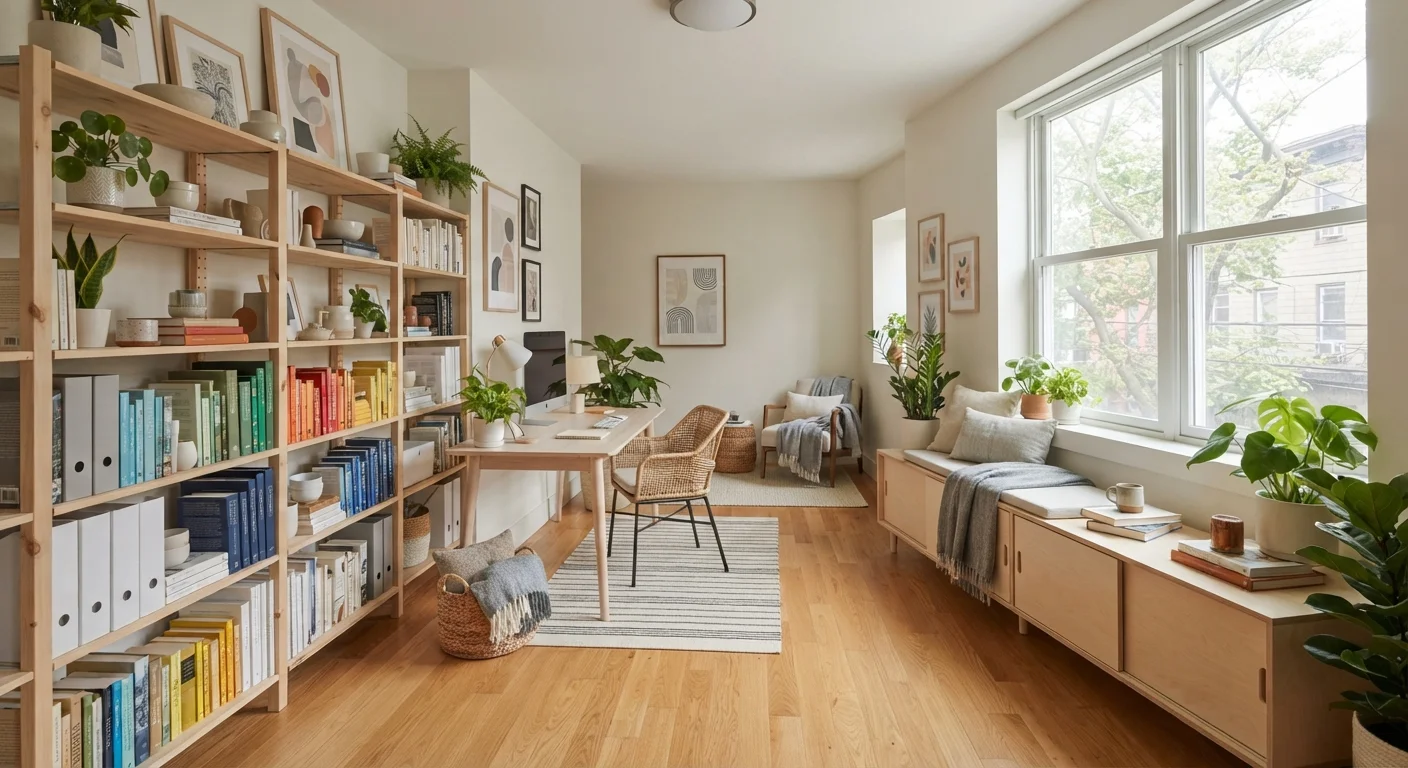
Vertical storage means shelving units, wall-mounted racks, pegboards, over-door organizers, and anything that climbs toward the ceiling. Horizontal storage covers ottomans with lids, low bookcases, under-bed drawers, benches, and wide credenzas that spread across the floor plane.
Neither direction is inherently superior. The right choice depends on your ceiling height, your floor plan, how often you access stored items, and who lives in your home. Understanding when each approach shines - and where it falls short - lets you build a system that actually works. For a broader view of how these principles shift by home size, see our guide to storage solutions that scale.
Vertical Storage: Strengths and Limitations
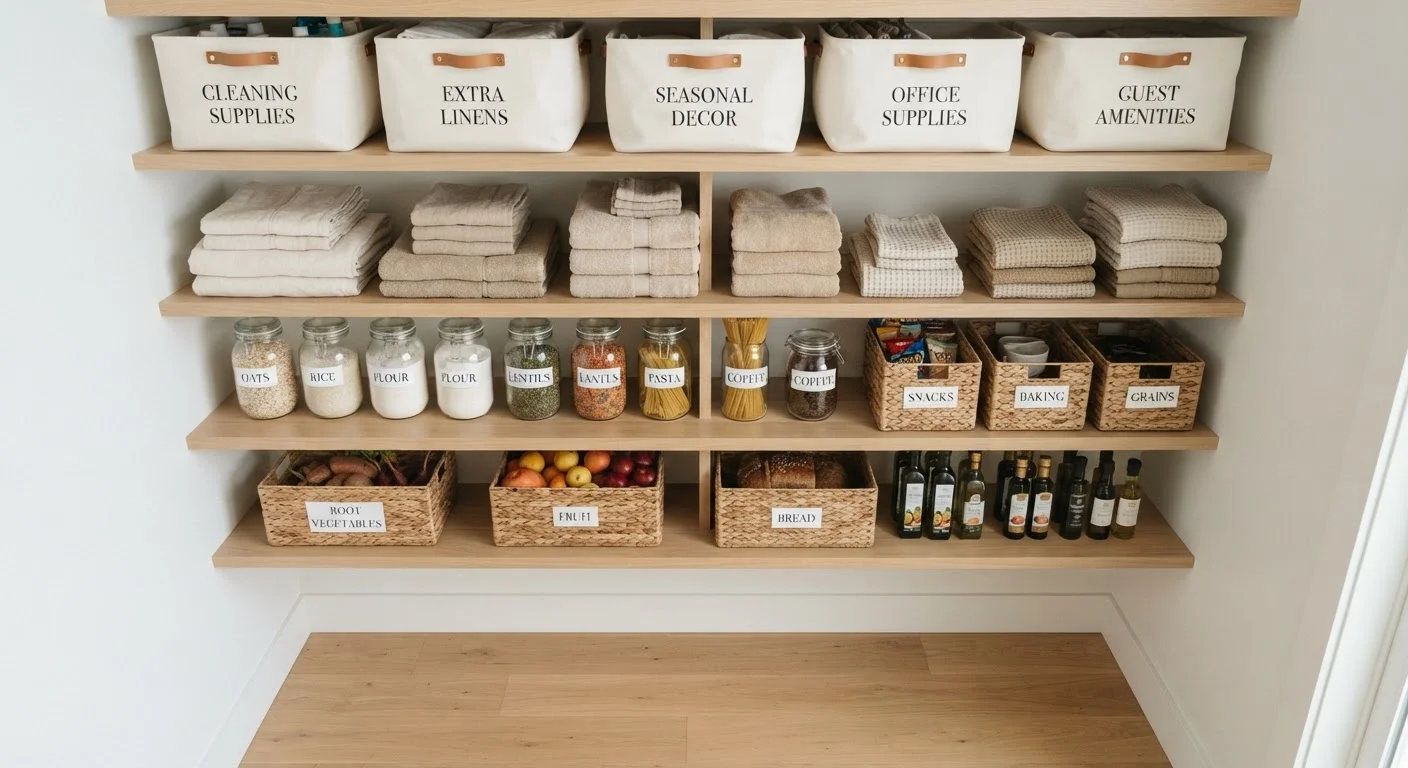
The core appeal of vertical storage is that walls are almost always underused. A standard 8-foot ceiling leaves several feet of usable wall real estate above eye level - space that most people never tap.
Where vertical storage excels
- Floor preservation: Tall shelving removes clutter from the ground entirely, keeping walkways clear and making small rooms easier to clean.
- Visual organization: Items stored vertically in labeled bins or open shelves are visible at a glance without digging through stacks.
- Density: A single wall can hold far more volume than the same footprint on the floor.
Where vertical storage struggles
- Accessibility: Items stored above shoulder height require a step stool. Reserve high shelves for rarely used items only.
- Stability concerns: Tall freestanding units can tip if not anchored to studs - wall anchoring is an important safety step, not optional.
- Rental limitations: Drilling into walls isn't always permitted. Freestanding tall units or tension-rod systems offer workarounds, but options narrow.
A Note on Wall Anchoring Safety
Tall freestanding shelving units - anything over 4 feet - should be anchored to wall studs to prevent tipping, especially in homes with children or pets. Most units include anti-tip hardware. If you're renting and cannot drill into walls, look for furniture with wide bases and a low center of gravity, or use freestanding units designed specifically for stability without anchoring. When in doubt, consult the manufacturer's installation guidelines.
If you're wondering whether you need to completely overhaul your space first, our look at common organization myths addresses that directly.
Horizontal Storage: Strengths and Limitations
Horizontal storage works with the floor plane rather than the wall, spreading across surfaces in a way that stays close to the body and the action of daily life.
Where horizontal storage excels
- Ease of access: Drawers, low shelves, and lidded ottomans put items at hand height - ideal for children, older adults, or anyone avoiding overhead reaching.
- Flexibility: Most horizontal pieces are freestanding and require no drilling, making them rental-friendly and easy to reposition.
- Multifunctionality: A storage bench, bed frame with drawers, or coffee table with a lift top doubles as furniture - earning its floor footprint twice over.
Where horizontal storage struggles
- Floor consumption: Every wide unit takes up floor area that could otherwise serve as open living space.
- Visual heaviness: Low, wide pieces can make a room feel shorter or more crowded if not balanced with open visual lines.
- Lower density: You simply store less per square foot horizontally than vertically.
For households where multiple people need to maintain a shared system, organizing for different household habits is worth reading alongside this comparison.
| Criterion | Vertical Storage | Horizontal Storage |
|---|---|---|
| Floor space used | Minimal - climbs the wall | Moderate to high footprint |
| Accessibility | Variable - high shelves need a step stool | Easy - items stay at reach height |
| Storage density | High - more volume per sq ft | Lower - spreads rather than stacks |
| Rental-friendliness | Can require wall anchoring | Generally freestanding, no drilling |
| Best ceiling height | 8 ft or higher | Works with any ceiling height |
| Multifunctionality | Limited - primarily storage | Strong - doubles as seating or tables |
| Visual effect | Makes rooms feel taller, airier | Can feel grounded or heavy |
| Safety considerations | Must anchor tall units to prevent tipping | Stable by default; low center of gravity |
How to Combine Both for Maximum Effect
The most functional small spaces rarely rely on just one direction. A layered approach - vertical for volume, horizontal for access - tends to outperform either strategy alone.
A practical layering framework
- Anchor the walls first. Install shelving or wall-mounted units to claim vertical real estate before adding any floor pieces.
- Use the floor for double-duty furniture. Every piece that rests on the floor should earn that footprint by serving two purposes - seating plus storage, table plus drawers.
- Reserve high shelves for rarely touched items. Seasonal décor, backup supplies, and archive documents belong above eye level. Daily-use items stay at or below shoulder height.
- Leave visual breathing room. Mixing open vertical shelves with closed horizontal cabinets prevents a space from feeling like a warehouse.
Thinking about how zones within a room can work in concert with this approach? Our article on zoned living strategies offers a complementary framework for room planning.
~340 sq ft
Average US studio apartment size
According to RentCafe data, US studio apartments average around 340 square feet, making vertical storage strategies especially impactful in these spaces.
Up to 3x
More storage capacity per wall foot vertically vs. horizontally
Storage planning resources consistently note that floor-to-ceiling shelving can hold significantly more volume than the same footprint used for low, wide furniture.