

Key Takeaways
- Cosmetic and surface-level tasks are generally safe for confident DIYers with the right tools.
- Electrical, structural, and gas work almost always requires a licensed professional and local permits.
- Misidentifying a wall as non-load-bearing or skipping permits can create costly legal and safety problems.
- Splitting the work strategically-DIY prep, pro finish-can reduce labor costs without compromising safety.
- Hidden costs often emerge when DIY projects are handed off mid-job; plan the full scope before starting.
Our Verdict
Neither pure DIY nor full contractor work is always the right answer. The smartest approach is an honest assessment of the task's complexity, the safety stakes, and your own verified skill level. Reserve licensed professionals for permitted, hazardous, or structurally significant work-and own the rest with confidence.
| Best for | Recommended |
|---|---|
| Homeowners with basic tool skills and time to invest | DIY |
| Electrical, gas, structural, or permitted work | Licensed Contractor |
| Large projects where prep and finishing can be separated | Hybrid approach |
| First-time renovators with limited renovation experience | Licensed Contractor for scope assessment first |
Why the DIY vs. Contractor Decision Deserves More Than a Budget Calculation
Most homeowners frame the DIY-versus-contractor question as a simple math problem: how much will labor cost versus how much time do I have? But cost is only one dimension. The real calculation involves safety risk, permit requirements, the quality margin your project can tolerate, and-critically-the downstream consequences if something goes wrong.
A poorly patched wall is ugly but fixable. A miswired circuit, an unbraced load-bearing wall, or an improperly vented gas line can cause injury, structural failure, or a denied insurance claim. Understanding which category your project falls into is the first and most important step. See our guide to hidden renovation costs to understand what budget surprises typically emerge once the work begins.
Tasks That Typically Suit a Confident DIYer
A wide range of home improvement work is genuinely accessible to homeowners who are willing to research properly and take the time to do it right. These tasks share a few common traits: mistakes are visible before they become dangerous, the materials are forgiving, and learning resources are widely available.
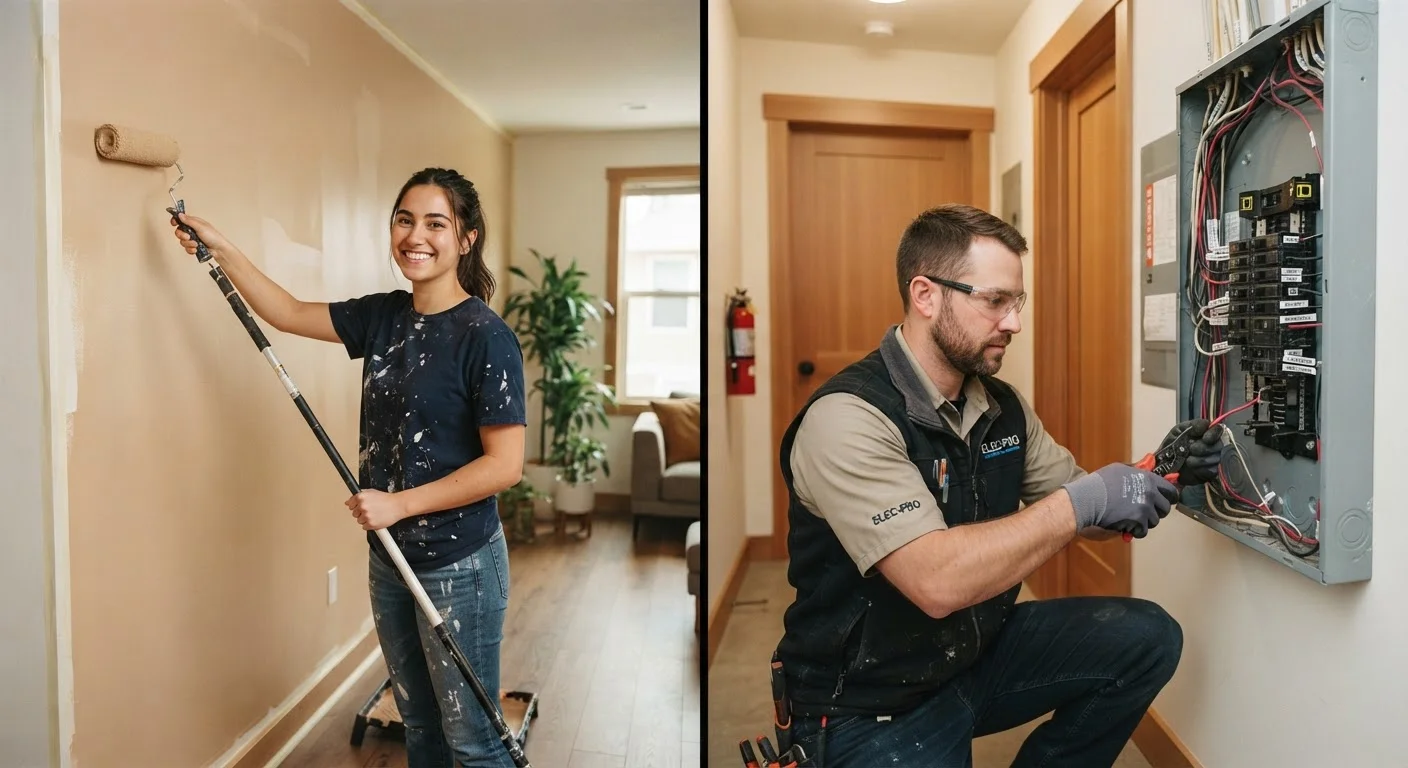
- Painting interior walls, trim, and ceilings - surface prep is the most important step, not the brush technique.
- Basic drywall repair - nail pops, hairline cracks, and holes up to a few inches can be handled by most homeowners. Our drywall repair guide walks through the range of damage types and how each is approached.
- Installing hardware and fixtures - cabinet pulls, towel bars, light switch covers, and similar items require basic fastener knowledge, not licensed skills.
- Caulking and weatherstripping - these are maintenance tasks with a high DIY success rate and direct energy-saving benefits.
- Laying peel-and-stick flooring - in rooms without complex subfloor issues, this is straightforward with careful measuring.
Test Your Skills on Lower-Stakes Projects First
If you're new to a technique-tiling, drywall finishing, trim carpentry-practice on a low-visibility area before tackling a primary space. A closet, a utility room, or a small patch behind furniture gives you a realistic sense of the learning curve without putting a main living area at risk.
DIY success is often more about honest self-assessment than raw skill. Before starting, confirm you have the specific tools, a realistic time estimate, and a clear plan for what happens if something unexpected turns up mid-project.
Tasks That Genuinely Warrant a Licensed Professional
Certain projects are regulated for good reason: they involve systems where errors create hazards that aren't always immediately visible. In most US jurisdictions, performing this work without a license-or without pulling the required permit-can void homeowner's insurance, create liability on resale, or trigger required remediation at far greater cost.
Unpermitted Work Can Create Serious Resale Problems
Work completed without required permits may need to be disclosed in a home sale, or may be flagged during a buyer's inspection. In some cases, unpermitted structural or electrical work must be removed and redone before a sale can close. Verify local permit requirements before starting any significant project-not after.
- Electrical panel work, new circuits, and wiring changes - this is among the most commonly under-permitted DIY categories, and among the most dangerous. Always verify local code requirements.
- Gas line installation or modification - even a small leak represents a serious risk; this work is licensed in every US state.
- Structural changes, including wall removal - before any demolition, understanding load-bearing status is non-negotiable. Our article before you knock down that wall details how to assess this and what permits are typically required.
- Major plumbing that connects to the main line - drain line, water main, or sewer work typically requires permits and inspection.
- Basement waterproofing involving exterior excavation - interior sealant application may be DIY-accessible, but exterior drainage systems involve structural and soil considerations. See tackling a basement waterproofing project for a breakdown of what each approach requires.
| Task Type | DIY | Licensed Contractor | |
|---|---|---|---|
| Interior painting | Generally suitable | Unnecessary for standard work | |
| Drywall patching (small areas) | Generally suitable | Only needed for large structural damage | |
| Electrical wiring or panel work | Not recommended; safety and permit risk | Required in most jurisdictions | |
| Load-bearing wall removal | Not suitable; structural risk | Licensed and permitted work | |
| Gas line work | Not permitted anywhere in the US | Licensed work; always required | |
| Caulking and weatherstripping | Well-suited for DIY | Rarely needed | |
| Basement waterproofing (exterior) | Not recommended without expertise | Specialist typically required | |
| Deck construction (permitted) | Partial DIY possible with planning | Required for structural and inspected phases |
The Hybrid Approach: DIY Prep, Professional Finish
One underused strategy is splitting the labor honestly across phases. Contractors typically charge by the hour or by scope-and a significant portion of many projects involves preparation work that a homeowner can legitimately do themselves. Demolition, material hauling, site clearing, and even some finish tasks like painting after a pro has completed structural work can meaningfully reduce the total invoice without compromising the permitted portion.
This approach works best when the scope is clearly defined upfront. Handing a partially completed project to a contractor mid-job often results in higher costs, not lower ones, because they must assess and correct what was already done. Plan the split before breaking ground, not during. This principle applies in other skilled-work contexts too-similar trade-offs appear in the DIY car maintenance vs. professional shop decision, where the line between accessible and risky tasks is equally important to draw correctly.
For permitted projects like decks, understanding the inspection process helps you schedule professional and DIY phases logically. Our deck permit process guide explains what inspectors typically evaluate at each stage, which helps you plan what must be completed by a licensed tradesperson before inspection.
~33%
DIY projects that exceed initial budget estimates
Industry surveys consistently find that a significant share of DIY renovations run over initial cost projections, often due to unforeseen complications or tool purchases.
2 in 3
Homeowners who've hired a contractor to fix a DIY mistake
Surveys from home improvement organizations suggest the majority of homeowners have at some point paid a professional to correct work they initially attempted themselves.