

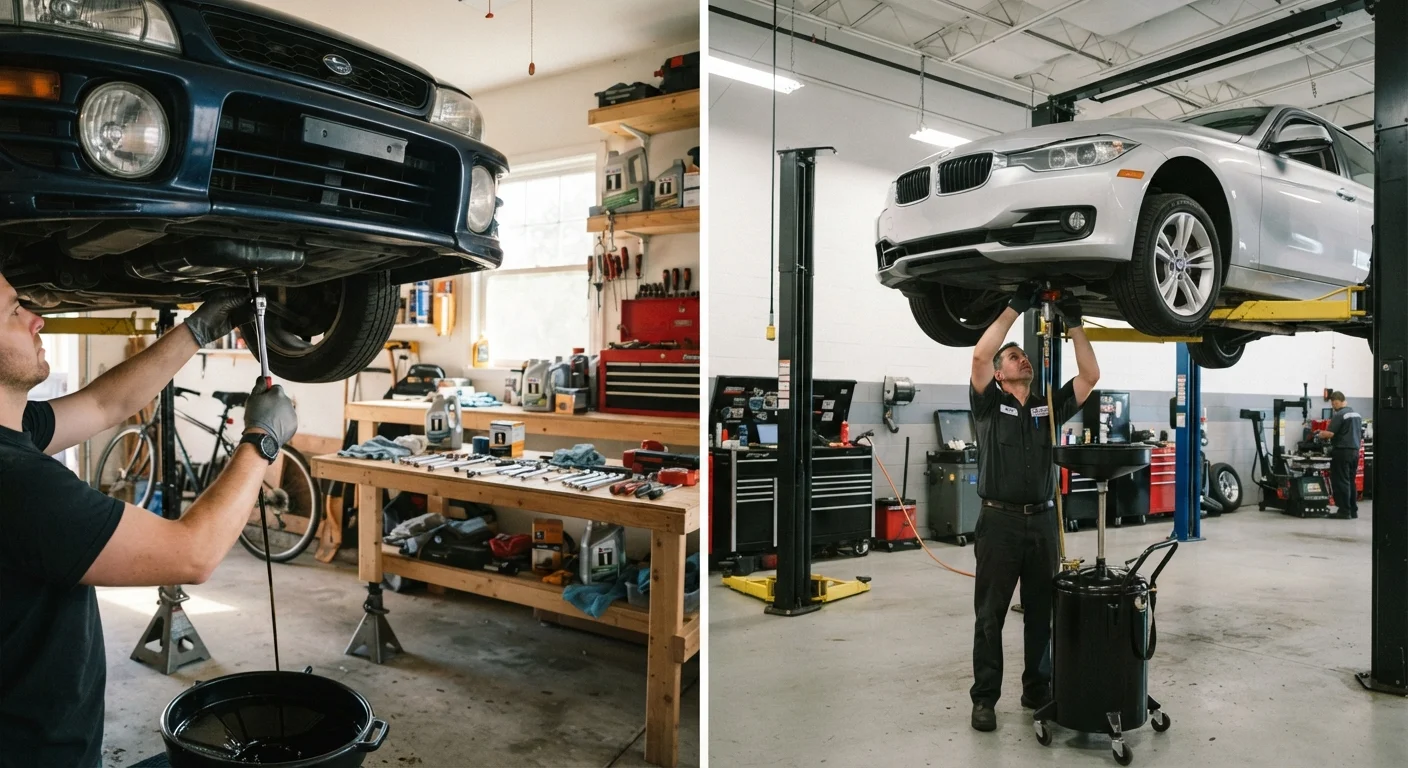
Key Takeaways
- Routine tasks like oil changes and air filter swaps are genuinely manageable for most drivers at home.
- Work involving brakes, suspension, or fuel systems carries real safety risk and often warrants professional attention.
- DIY maintenance can save money but requires the right tools, workspace, and honest self-assessment of your skill level.
- Even confident DIYers should keep records of every service performed to maintain vehicle history.
- When in doubt, a diagnostic inspection at a shop is a low-cost way to make an informed decision.
Our Verdict
DIY maintenance genuinely pays off for straightforward, well-documented tasks - but only when you have the tools, space, and knowledge to do the job correctly. For anything involving safety-critical systems or specialized equipment, professional service is the more responsible choice. The smartest approach for most drivers is a hybrid: handle the basics yourself and know when to hand it over.
Best for drivers who are comfortable with basic mechanical tasks, have access to proper tools, and want to reduce routine maintenance costs without compromising safety.
What DIY Maintenance Actually Covers
Not all car maintenance is created equal. Some tasks are genuinely designed to be owner-serviceable - manufacturers publish straightforward procedures in owner's manuals precisely because these jobs are within reach of an attentive driver with basic tools.
Tasks well-suited to home service include engine oil and filter changes, cabin and engine air filter replacements, windshield wiper blade swaps, battery terminal cleaning or battery replacement, and tire pressure checks and rotations (with the right jack stands). These jobs are low-risk, well-documented, and produce clear results you can verify yourself.
If you're new to vehicle ownership, the maintenance basics guide is a solid starting point for understanding what your car actually needs and when.
Where DIY Creates Real Risk
The calculus changes sharply once you move into safety-critical systems. Brake pad and rotor replacement, suspension component work, steering linkage, and anything involving the fuel system all carry consequences if done incorrectly - not just for the vehicle, but for the driver and everyone else on the road.
Electrical diagnosis is another area where amateur attempts frequently compound the original problem. Modern vehicles rely on interlocking control modules, and an incorrect repair can trigger cascading fault codes that cost more to sort out than the original fix would have.
It's also worth being honest about workspace limitations. Proper brake work, for example, requires a stable lift or quality jack stands rated for your vehicle's weight - working under a car supported only by a floor jack is genuinely dangerous.
When a Diagnostic Visit Makes Sense
If a warning light appears or you notice an unfamiliar symptom, a professional diagnostic scan is often the most cost-effective first step - even for experienced DIYers. Many independent shops offer low-cost or free basic scans, and knowing the fault code before purchasing parts prevents wasted spending. Don't let uncertainty about a problem push you toward guessing with parts.
The Real Cost Comparison
DIY maintenance does reduce out-of-pocket labor costs, but the savings need to be weighed against a few realities. You'll need to purchase tools, dispose of used fluids legally, and invest time - a straightforward oil change that takes a shop 20 minutes can take a first-timer 90 minutes.
There's also the risk cost. A mistake on a routine job - over-tightening a drain plug and stripping the oil pan, for instance - can turn a $40 oil change into a $400 repair. That risk shrinks significantly with experience, but it never disappears entirely.
~35%
Share of vehicle labor cost in a typical repair bill
Industry estimates consistently place labor at roughly one-third or more of an average shop repair invoice, which illustrates where DIY savings are most concentrated.
1 in 3
US drivers who perform at least some DIY maintenance
Consumer surveys from automotive research organizations suggest a substantial minority of American drivers handle at least basic upkeep tasks themselves.
On the flip side, deferring maintenance entirely is consistently more expensive than either option. If DIY lowers the psychological and financial barrier to staying current on service, that's a genuine win for your vehicle's long-term health.
How to Draw Your Own Line
A practical rule of thumb: if the job requires specialty tools you'd only use once, involves a system that directly controls stopping or steering, or produces a result you can't independently verify (like a proper torque on wheel lug nuts without a torque wrench), it's worth having a professional handle it.
Before you start any unfamiliar job, look up the procedure in your vehicle's service manual - not just a general online tutorial. Manufacturer specifications for torque values, fluid types, and part fitment matter more than most DIY guides acknowledge. Avoiding maintenance myths is just as important as following correct procedures.
Keep written records of everything you service yourself, including dates, mileage, parts used, and any observations. This documentation matters for resale value and helps catch patterns - like a fluid that keeps running low - that signal a deeper issue worth investigating professionally. For a broader view of sustainable upkeep habits, see habits experienced owners rely on.