

Key Takeaways
- Water intrusion sources vary - identifying whether moisture is seeping, pooling, or condensing determines your solution.
- Interior sealants address minor surface dampness but cannot stop hydrostatic pressure from outside the foundation.
- Exterior waterproofing is the most comprehensive fix but involves significant excavation and professional labor.
- Sump pumps manage water that has already entered; they work best as part of an interior drainage system.
- Permits may be required for drainage systems or foundation work - always check local codes before starting.
Our Verdict
Basement waterproofing is rarely a one-size-fits-all project. Minor dampness or condensation can often be addressed with DIY-friendly interior sealants and improved ventilation, while active seeping through walls or chronic flooding typically calls for professional-grade interior drainage systems or exterior waterproofing. Investing in the right solution from the start prevents repeated repairs and protects your home's structural integrity and air quality.
Homeowners who have confirmed active water intrusion - not just condensation - and are prepared to either invest in professional drainage work or undertake a carefully researched DIY interior sealing project on a foundation with minimal structural concerns.
Diagnosing the Problem Before Picking a Solution
The single most common waterproofing mistake is treating symptoms without identifying the source. Basement moisture falls into three broad categories: condensation (humid air hitting cool surfaces), seepage through porous concrete or block walls, and water intrusion through cracks, joints, or window wells driven by hydrostatic pressure.
A simple test separates condensation from seepage: tape a piece of plastic sheeting tightly to a damp wall, seal all edges, and leave it for 24-48 hours. Moisture on the outer (room) side of the plastic points to condensation; moisture trapped between the plastic and the wall indicates water migrating through the foundation material itself.
Understanding the source guides every decision that follows. Pairing waterproofing work with broader moisture control - covered in our room-by-room weatherproofing guide - often addresses contributing factors like exterior grading, gutter discharge, and window well drainage simultaneously.
Condensation vs. Seepage: Why It Matters
Condensation forms when warm, humid indoor air contacts a cool foundation wall - it's a ventilation and humidity problem, not a waterproofing problem. Installing a dehumidifier and improving air circulation often resolves it entirely. Applying a waterproofing sealant to a wall that's simply sweating from condensation wastes money and can trap moisture within the concrete, accelerating deterioration.
Interior Waterproofing: Sealants and Drainage Systems
Interior approaches work from inside the basement and fall into two distinct categories: surface sealants and interior drainage systems.
Hydraulic cement and masonry sealants are applied directly to walls and floors. They can block minor seepage through porous concrete but are largely ineffective against water under pressure. If hydrostatic pressure is forcing water through a crack, a surface coating will eventually fail.
Interior drainage systems - sometimes called drain tile or a French drain - channel water that enters the foundation into a perimeter trench, directing it to a sump pump that expels it away from the structure. This approach doesn't stop water at the source but manages it reliably once it enters. Many waterproofing contractors favor this method because it's accessible year-round, doesn't require excavating the exterior, and can be installed in a few days.
Exterior Waterproofing: The Comprehensive Approach
Exterior waterproofing addresses water before it ever contacts your foundation. The process typically involves excavating the soil around the perimeter of the home down to the footing, cleaning and repairing the foundation wall, applying a waterproof membrane or drainage board, installing exterior drain tile at the footing level, and backfilling with gravel to encourage drainage away from the structure.
This is generally considered the most effective long-term solution because it eliminates hydrostatic pressure at its origin. However, it is also the most disruptive and expensive option - excavation around an entire home is a major undertaking that typically requires licensed contractors and may involve permits. Similar to structural changes explored in our guide to wall removal, exterior foundation work warrants professional assessment before committing to a scope of work.
Sump Pumps: A Critical Component, Not a Standalone Fix
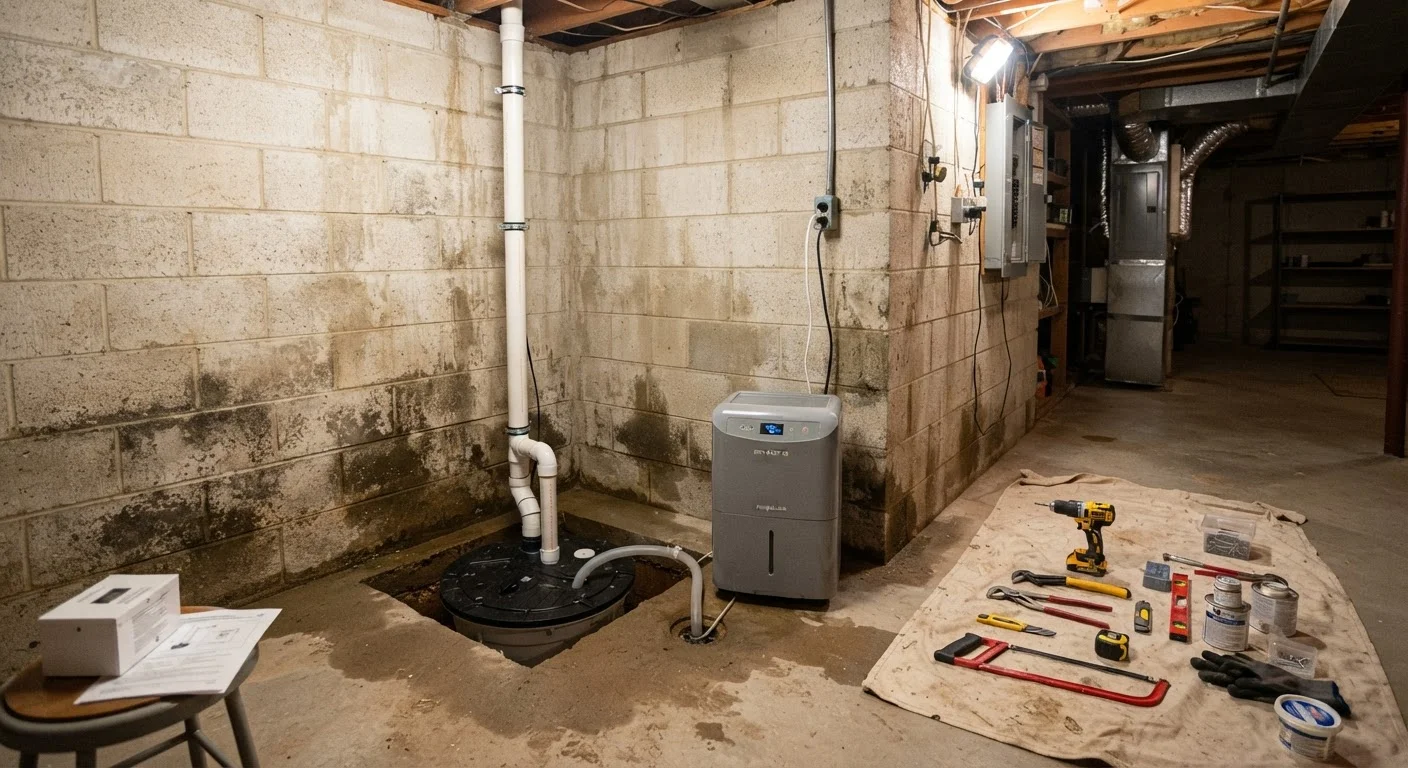
A sump pump sits in a pit at the lowest point of your basement floor and pumps collected groundwater out through a discharge line routed away from the foundation. It is an essential piece of most interior drainage systems but should not be considered a complete waterproofing solution on its own.
Key decisions when installing or upgrading a sump pump include choosing between pedestal (motor sits above the pit) and submersible (motor sits inside the pit) models, and adding a battery backup system for protection during power outages - which often coincide with the heavy rains that trigger flooding.
98%
Basements that experience some water intrusion
According to the American Society of Home Inspectors, nearly 98% of basements with poured concrete or block foundations will experience some form of water penetration during their lifetime.
~$4,000-$10,000+
Typical interior drainage system cost range
HomeAdvisor and similar home services aggregators report that professional interior perimeter drainage systems, including sump pump installation, generally fall in this range depending on basement size and local labor rates.
Sump pump discharge lines must terminate well away from the foundation and away from neighbors' property. Some municipalities also restrict discharge into storm sewers - confirm local regulations before routing the line. Unexpected plumbing-related surprises are worth anticipating; common plumbing misconceptions often extend to drainage assumptions homeowners make during these projects.
When to Call a Licensed Professional
DIY interior sealing makes sense for minor, confirmed condensation issues or hairline cracks in poured concrete walls with no signs of structural movement. Most other scenarios benefit strongly from a professional assessment.
Hire a licensed waterproofing contractor or structural engineer when you observe: bowing or cracking block or brick foundation walls, water entering at the floor-wall joint under pressure, chronic flooding after every significant rain, or white mineral deposits (efflorescence) covering large wall sections - a sign of long-term water movement.
Get multiple quotes and ask contractors to explain exactly what problem their proposed solution addresses. Reputable contractors will perform a thorough inspection and explain the diagnosis before recommending a system. Waterproofing work can be a significant investment, so it's worth reviewing your overall budgeting and savings strategy before committing to a scope of work.
This article is for general informational and educational purposes only. Always verify local building codes and permit requirements with your municipality, and consult a licensed contractor or structural engineer before undertaking foundation or drainage work.