

Key Takeaways
- Six or more hours of direct sun daily is the single most important site requirement for most vegetables.
- Starting small - even a 4×8-foot bed - makes the learning curve manageable and reduces early mistakes.
- Healthy, well-amended soil is the foundation of productive vegetable growing; test before you plant.
- Beginner-friendly crops like lettuce, zucchini, and bush beans reward new gardeners with quick, reliable harvests.
- Consistent watering at the root level, rather than overhead, prevents most common fungal problems.
- Catching pest or disease issues early almost always requires less intervention than waiting until damage is severe.
Start here
Choosing the Right Spot
Next
Planning Your Garden Layout
Then
Preparing the Soil
Ready to plant
Selecting and Planting Vegetables
Keep it growing
Watering, Feeding, and Ongoing Care
Protect your work
Recognizing Problems Early
Choosing the Right Spot
Site selection is the most consequential decision you'll make before your first seed goes in the ground. Most food-producing vegetables - tomatoes, peppers, beans, squash, and leafy greens - require a minimum of six hours of direct sunlight each day. Eight hours is better. Walk your yard at different times of day and note where shade from structures, trees, or fences falls, and when.
Beyond sun, consider these factors:
- Proximity to water: You'll water frequently, especially in summer. Locating your garden near an outdoor faucet saves significant time and effort.
- Level ground: Sloped areas cause water to run off before it soaks in. If your only option is a slope, raised beds help compensate.
- Soil drainage: Avoid spots where water pools after rain; consistently waterlogged soil suffocates roots. Press a handful of moist soil - it should clump loosely, not feel sticky like clay putty.
If your outdoor space is limited, don't rule out gardening entirely. Our article on container gardening explores how patios and balconies can support productive growing in pots and planters.
Planning Your Garden Layout
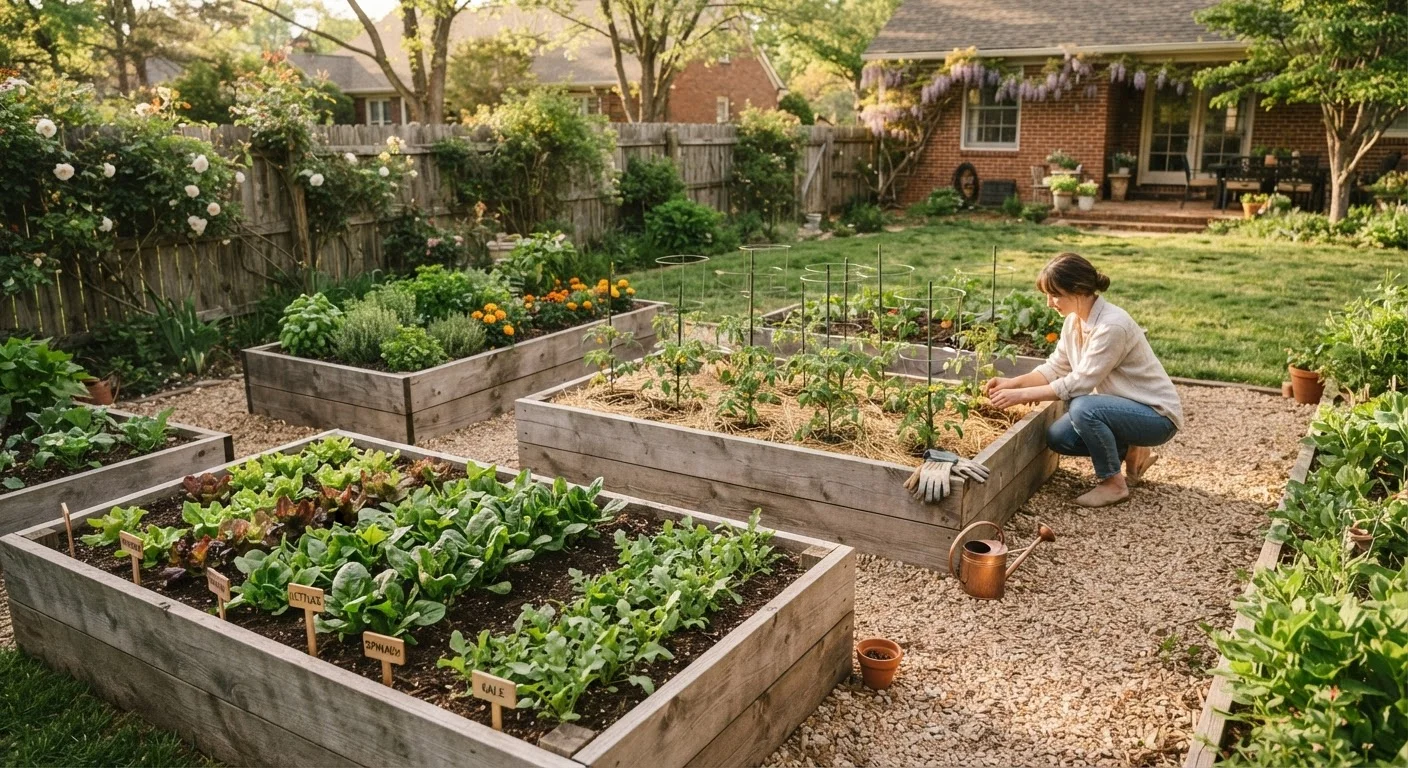
Resist the urge to go large your first season. A 4×8-foot bed is enough to grow a meaningful variety of vegetables while staying manageable. You can always expand in year two, armed with real experience.
Sketch your layout on paper before you dig. A few planning principles that pay off:
- Tall plants go north: Place taller crops (like tomatoes or corn) on the north side of the bed so they don't shade shorter neighbors as the season progresses.
- Group by water needs: Plants with similar moisture requirements are easier to water efficiently when clustered together.
- Leave walking access: Design beds no wider than four feet so you can reach the center from either side without stepping on the soil and compacting it.
Start Small, Expand with Confidence
Beginning with a modest 4×8-foot bed keeps the workload achievable and lets you build skills without feeling overwhelmed. Many experienced gardeners say their best early decision was resisting the urge to plant more than they could comfortably tend. Add space only when you feel ready.
Once you're comfortable with a basic in-ground or raised bed setup, it's worth weighing your options more carefully. Our guide to raised beds vs. in-ground planting walks through the practical trade-offs of each approach.
Preparing the Soil
Vegetables are heavy feeders that need loose, nutrient-rich, well-draining soil. Native yard soil alone rarely meets this standard without some preparation. Start by removing weeds, grass, and debris from your plot. Then dig or till the area to a depth of about 12 inches to loosen compaction.
A soil test is the most reliable way to understand what your plot needs. Tests measure pH (most vegetables prefer 6.0-7.0) and flag deficiencies in nitrogen, phosphorus, or potassium. Many state cooperative extension offices provide low-cost testing, and results include amendment recommendations.
Common amendments for first-time gardeners include:
- Compost: The single best all-purpose amendment - it improves drainage in clay soils, adds water retention to sandy soils, and feeds soil biology. Aim to incorporate 2-4 inches into your top foot of soil.
- Aged manure: Adds nitrogen and organic matter; must be well-composted to avoid burning plants or introducing pathogens.
- Lime or sulfur: Used to raise or lower pH respectively, only when a soil test indicates the need.
Building your own compost is a cost-effective long-term habit. Our guide to composting at home explains how to turn kitchen and yard scraps into a steady supply of free soil amendment.
USDA Hardiness Zone
A standardized map system that divides the US into climate zones based on average annual minimum winter temperatures, helping gardeners understand which plants can survive and thrive in their region.
Direct sowing
Planting seeds directly into garden soil outdoors, rather than starting them indoors first. Many root vegetables and fast-maturing crops are best grown this way.
Transplant
A seedling started indoors or in a nursery that is then moved to its permanent outdoor growing location. Transplanting gives slow-maturing crops a head start on the season.
Soil amendment
Any material mixed into soil to improve its structure, drainage, fertility, or pH. Common amendments include compost, lime, sulfur, and aged manure.
Side-dressing
Applying fertilizer or compost to the soil surface around the base of growing plants midseason, allowing nutrients to gradually work into the root zone.
pH
A measure of soil acidity or alkalinity on a scale of 0-14. Most vegetables grow best in slightly acidic to neutral soil, typically between 6.0 and 7.0.
Selecting and Planting Vegetables
Choose crops you actually want to eat and that suit your climate's growing season. Reliable beginner choices include:
- Lettuce and salad greens: Fast-maturing, tolerant of partial shade, harvestable in as little as 30 days.
- Radishes: Ready in under a month; excellent for filling gaps between slower crops.
- Bush beans: Direct-sow, grow without staking, and produce heavily over several weeks.
- Zucchini: Vigorous and forgiving; one or two plants produce abundantly.
- Cherry tomatoes: More reliable and disease-resistant than large slicing varieties for beginners.
Understand the difference between direct sowing (planting seeds straight into garden soil) and transplanting (starting seeds indoors weeks earlier, then moving seedlings outside). Crops like beans, carrots, and radishes prefer direct sowing; tomatoes, peppers, and eggplant benefit from an indoor head start or nursery transplants.
Pay close attention to seed packet or plant tag information: spacing matters more than most beginners realize. Overcrowded plants compete for water and nutrients, increasing disease pressure and reducing yields. Follow recommended spacing even when seedlings look small - they won't stay that way.
If you enjoy fresh herbs alongside your vegetables, our article on growing a kitchen herb garden covers placement, care, and harvesting to keep plants producing throughout the season.
Watering, Feeding, and Ongoing Care
Consistent moisture is critical during germination and fruit development. Most vegetable gardens need approximately one inch of water per week. A simple rain gauge helps you track how much nature provides so you can supplement the rest.
Water at the base of plants whenever possible - soaker hoses and drip irrigation are more efficient than overhead sprinklers and keep foliage dry, reducing fungal disease risk. Water in the morning so any moisture on leaves has time to evaporate before nightfall.
For feeding, side-dressing with compost midseason gives most vegetable beds a meaningful nutrient boost without the risk of over-application. If you use a granular or liquid fertilizer, follow label rates precisely - more is not better, and excess nitrogen encourages leafy growth at the expense of fruit production in crops like tomatoes and peppers.
Don't Skip Weeding Early On
Weeds establishing themselves in the first few weeks of your garden's life can significantly set back young vegetable plants. A neglected bed can go from manageable to overwhelming quickly. A short weeding session every few days is far easier - and more effective - than a single marathon session once weeds have rooted deeply.
Weeding is an ongoing task, but it's most critical in the first six weeks after planting. Young seedlings can't compete with established weeds for water and light. A two-to-three inch layer of straw or wood chip mulch around plants significantly reduces weed emergence and helps retain soil moisture between waterings.
Recognizing Problems Early
Walk your garden every few days and look closely at leaves, stems, and soil. Early detection is the most effective form of pest and disease management available to home gardeners.
Common issues to watch for:
- Yellowing leaves: Can signal overwatering, underwatering, nitrogen deficiency, or disease - context and pattern help distinguish between them.
- Holes in foliage: Often caused by caterpillars, beetles, or slugs. Check the undersides of leaves where many pests hide or lay eggs.
- Wilting despite moist soil: May indicate root rot from poor drainage, or stem-boring insects at the plant's base.
- Powdery white coating: Powdery mildew - a fungal issue favored by poor air circulation and fluctuating humidity. Remove affected leaves and improve spacing if recurrent.
For most beginner gardens, physical removal of pests, improving cultural conditions (spacing, watering technique, airflow), and removing diseased material will resolve the majority of problems without needing to reach for sprays or treatments. When in doubt, your local cooperative extension office is a reliable, free resource for diagnosis and region-specific guidance.
Your first harvest is both a milestone and a lesson. Note what worked, what struggled, and what you'd plant differently - that reflection is the fastest path to a better garden next season.