
Soil Amendments Explained: What They Do and When Your Garden Actually Needs Them

Key Takeaways
- Soil amendments change the soil environment itself, not just the plants growing in it.
- A soil test is the most reliable way to identify which amendments your garden actually needs.
- Organic amendments like compost improve multiple soil properties simultaneously over time.
- Adding amendments without testing can cause imbalances that harm plant health.
- Different garden setups - raised beds, containers, or in-ground plots - have different amendment needs.
Soil Amendments
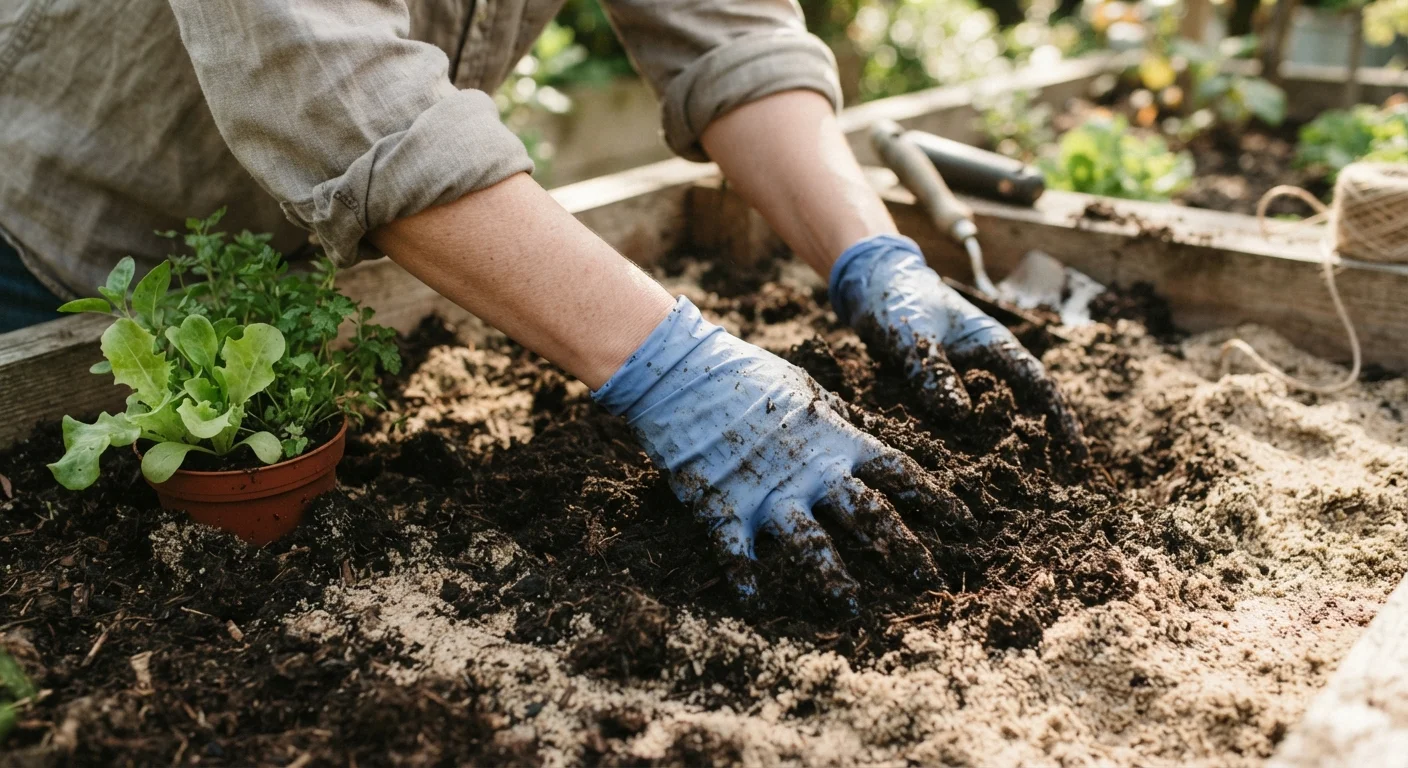
Soil amendments are materials added to garden soil to improve its physical structure, nutrient content, drainage, or water retention. Unlike fertilizers, which primarily feed plants directly, amendments change the soil environment itself - making it more hospitable for roots and beneficial organisms. They can be organic (compost, aged manure, peat moss) or inorganic (perlite, lime, gypsum).
Amendments work by altering soil texture, pH, cation exchange capacity (the soil's ability to hold nutrients), and microbial activity - all of which influence how effectively plants absorb water and nutrients.
What Soil Amendments Actually Do
Healthy plant growth starts below the surface. Soil amendments work by changing the conditions in which roots live - improving how water moves through the soil, how nutrients are held and released, and how much oxygen reaches root systems. This is fundamentally different from simply adding fertilizer.
There are two broad categories:
- Organic amendments - materials derived from living matter, including compost, aged manure, leaf mold, coconut coir, and biochar. These break down over time, adding nutrients and feeding soil microbes.
- Inorganic amendments - mined or manufactured materials like perlite, vermiculite, agricultural lime, sulfur, and gypsum. These change physical structure or pH more predictably and don't decompose.
The goal is always to bring soil closer to the loose, well-draining, biologically active profile that most garden plants prefer - often described as having good tilth. No single amendment achieves everything, which is why identifying the specific problem first matters so much.
Amendments Are Not a Substitute for Fertilizer
Structural amendments like perlite or gypsum do not supply meaningful amounts of plant nutrients. Organic amendments like compost release nutrients slowly and in modest amounts. If plants show acute nutrient deficiency, a targeted fertilizer application alongside amendment work may be necessary. A soil test will tell you whether a nutrient deficit is caused by low supply or by pH preventing uptake - the solution differs significantly between the two.
How to Know If Your Soil Needs Help
Guessing at amendments is one of the most common garden mistakes. Adding lime to soil that isn't acidic, for example, can push pH into a range that locks out iron and manganese - causing the yellowing gardeners were trying to fix. The same goes for over-applying gypsum or piling on phosphorus-rich compost year after year.
A soil test is the single most useful investment before amending. Cooperative extension services through land-grant universities across the US offer affordable testing - often $15-$30 - with specific amendment recommendations based on your results. Home test kits provide a quick pH read but offer less detail.
Beyond lab results, physical signs also give clues:
- Water pooling or slow absorption suggests compaction or too much clay - organic matter or coarse sand may help.
- Soil that cracks and pulls away from bed edges suggests a sandy or low-organic-matter profile with poor water retention.
- Pale, slow-growing plants in otherwise adequate conditions can point to pH imbalance preventing nutrient uptake.
For more context on how garden setup affects soil strategy, see our guide on raised beds vs. in-ground planting.
~95%
Of plant problems tied to soil conditions
University extension educators commonly note that the vast majority of garden plant failures trace back to soil pH or structure issues rather than pests or disease.
6.0-7.0
Ideal soil pH for most vegetables
According to USDA and university extension guidance, most vegetable crops perform best within this slightly acidic to neutral pH range.
2-4 inches
Recommended annual compost layer
Land-grant university extension programs generally recommend working 2-4 inches of finished compost into garden beds annually to maintain organic matter levels.
Common Amendments and What They're Actually For
Understanding what each amendment targets helps you apply only what your soil genuinely needs.
Compost
The most versatile amendment available. Compost improves drainage in clay soils, increases water retention in sandy soils, feeds soil microbes, and adds a broad spectrum of nutrients slowly. It's difficult to over-apply in moderation and benefits almost every soil type to some degree.
Agricultural Lime (Ground Limestone)
Used to raise soil pH in acidic soils - common in the eastern US and the Pacific Northwest. Most vegetables and lawn grasses prefer a pH between 6.0 and 7.0. Lime works slowly, so fall application is generally recommended. Do not apply without a soil test confirming acidity.
Sulfur
The counterpart to lime - used to lower pH in alkaline soils, which are common in the arid western and southwestern US. Acid-loving plants like blueberries and azaleas often benefit from sulfur amendments. Again, a soil test should guide application rates.
Perlite and Vermiculite
Both are volcanic minerals that improve aeration and drainage. Perlite is preferred for drainage-heavy mixes; vermiculite retains more moisture and nutrients. Both are common in container and raised-bed mixes. See our guide to container gardening for how these fit into potting strategies.
Gypsum (Calcium Sulfate)
Useful for breaking up compacted clay and adding calcium and sulfur without significantly changing pH. It's particularly helpful in soils with high sodium content. Its benefits are soil-type dependent and not universally applicable.
Start with Compost Before Anything Else
If you're unsure where to begin, compost is the safest first amendment for almost any garden bed. It improves both clay and sandy soils, adds biological life, and rarely causes harm in reasonable quantities. Once you've tested your soil and understand its specific deficiencies, you can add targeted amendments with confidence.
For more on how amendments interact with surface-level soil management, mulch's role in long-term soil health is worth understanding alongside amendments.
Applying Amendments: Practical Considerations
Most amendments are worked into the top 6-12 inches of soil - the root zone where they'll have the most impact. For established perennial beds, surface application and letting rainfall and earthworms incorporate material over time is often preferable to disrupting root systems.
Timing matters. Organic amendments applied in fall have months to break down and integrate before spring planting. pH-adjusting amendments like lime or sulfur are slow-acting and should be applied well ahead of the growing season. Fast-acting amendments like perlite can be incorporated immediately before planting.
When starting a new garden bed, a one-time amendment to correct major structural or pH deficiencies can dramatically change long-term results. After that, annual top-dressing with compost and periodic soil testing every 2-3 years is generally sufficient for most home gardens.
If you're comparing gardening philosophies that influence amendment choices, our overview of organic vs. conventional gardening approaches covers how each approach prioritizes soil management differently.