

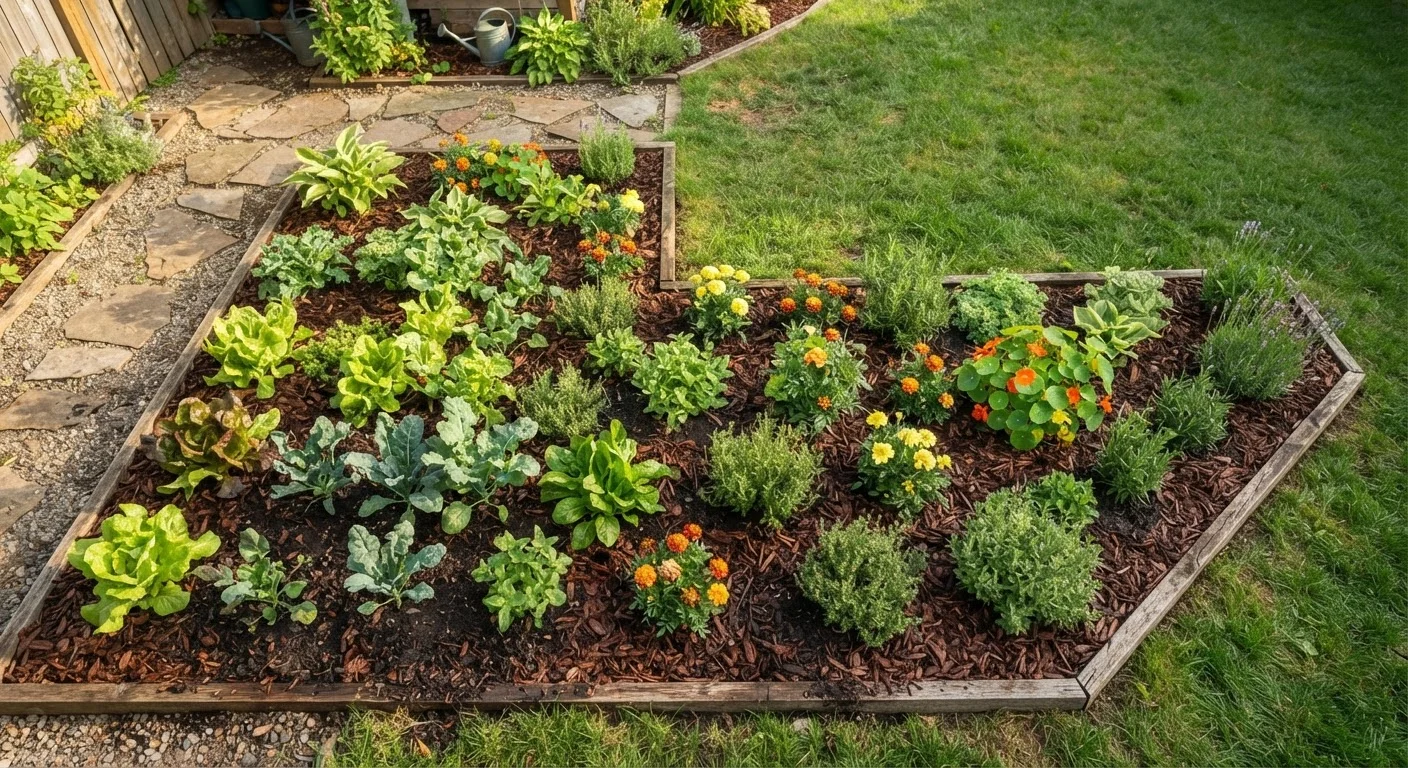
Key Takeaways
- A 2-4 inch layer of mulch can significantly reduce how often you need to water garden beds.
- Organic mulches break down and improve soil structure, feeding beneficial microorganisms.
- Mulch suppresses weeds by blocking the light seeds need to germinate.
- Keeping mulch away from plant stems prevents rot and pest harborage.
- Different mulch types suit different garden goals - no single material works best everywhere.
Garden Mulch
Garden mulch is any material spread over the surface of soil to protect and improve it. It can be organic - like wood chips, straw, or shredded leaves - or inorganic, like gravel or landscape fabric. Mulch forms a barrier between the soil and the open air, moderating temperature, reducing water loss, and blocking weed growth.
Organic mulches decompose over time, contributing organic matter and nutrients to the soil food web - a process that inorganic mulches do not replicate.
More Than a Finishing Touch
Many gardeners apply mulch as a final aesthetic step - a way to make beds look tidy and uniform. That's a reasonable goal, but it sells mulch considerably short. What's happening beneath that layer is an ongoing set of physical and biological processes that directly support plant health, reduce your workload, and build long-term soil quality.
Understanding those processes helps you apply mulch more strategically - choosing the right material, the right depth, and the right timing rather than simply spreading whatever is available. Whether you're managing a vegetable patch, a mixed perennial border, or foundation plantings, mulch is one of the most efficient tools available to a home gardener.
2-3x
Longer soil moisture retention with mulch vs. bare soil
University extension programs widely note that organic mulch can reduce soil moisture loss substantially compared to unmulched beds, particularly in summer heat.
70-90%
Reduction in weed emergence under adequate mulch depth
Research from horticulture extension programs indicates that a 3-4 inch mulch layer can prevent the majority of weed seed germination by blocking light at the soil surface.
2-4 inches
Recommended mulch depth for most garden beds
This range is recommended by most cooperative extension services as sufficient for moisture and weed benefits without risking root oxygen deprivation.
Moisture Retention: The Most Immediate Benefit
Bare soil loses water quickly. Sun and wind pull moisture from the surface through evaporation, and without a protective layer, you're constantly fighting that loss - especially in summer. Mulch interrupts that cycle by shielding the soil surface from direct sun and reducing air movement at ground level.
The result is soil that stays consistently moist between waterings. That consistency matters: plants under moisture stress - even mild, repeated stress - divert energy away from growth and flowering. A well-mulched bed maintains more even soil moisture, which translates directly to steadier, healthier plant performance. This is especially valuable for newly transplanted specimens still establishing their root systems.
Keep Mulch Away From Stems and Trunks
Always leave a 2-3 inch gap between mulch and the base of any plant, shrub, or tree. Mulch piled against stems traps moisture and can promote rot, fungal issues, or pest harborage. This is one of the most common mulching mistakes and one of the easiest to avoid.
Weed Suppression: Blocking Light, Not Just Seeds
Weed seeds are present in virtually every garden soil, and new ones arrive constantly via wind and wildlife. Most of them require light to germinate. A mulch layer - when applied at adequate depth - denies weed seeds the light signal they need, dramatically reducing germination rates without any chemical intervention.
This isn't total weed prevention; seeds that land on top of mulch or work their way to the surface can still sprout. But the overall population is sharply reduced, and the weeds that do emerge are typically easier to pull because the mulched soil below stays loose and workable. That's a meaningful time saving across a full growing season.
For more on how soil conditions affect what grows - and what doesn't - see our breakdown of common garden myths.
Soil Health: What Happens as Mulch Breaks Down
Organic mulches don't last forever - and that's exactly the point. As wood chips, shredded leaves, straw, or bark decompose, they feed the soil food web: the community of bacteria, fungi, earthworms, and other organisms that break down organic matter into forms plants can use. A mulched bed over several seasons tends to develop richer, more biologically active topsoil than a bare one.
Decomposing mulch also improves soil structure. It adds organic matter that helps sandy soils retain nutrients and moisture, and helps clay soils drain more freely. This structural improvement takes time but is genuinely durable. For gardeners looking to address more significant soil deficiencies, pairing mulch with targeted inputs can accelerate progress - our guide on soil amendments explains how those two strategies fit together.
Mulch Needs Refreshing Over Time
Organic mulch breaks down and compresses, eventually losing its effectiveness. Most garden beds benefit from a top-up of an inch or two each season. Before adding fresh mulch, lightly rake the existing layer to break up any matted sections that might be shedding water rather than absorbing it.
Choosing the Right Mulch for Your Garden
Organic mulches - wood chips, bark, straw, pine needles, shredded leaves - each have slightly different characteristics. Coarser materials like wood chips break down slowly and work well in perennial and shrub beds. Finer materials like shredded leaves decompose faster, making them well-suited for vegetable gardens where you want a quicker return of organic matter to the soil.
Inorganic options such as gravel or crushed stone don't improve soil biology, but they're durable and work well in areas where low maintenance and defined structure are priorities - something worth considering alongside hardscaping elements like paths and edging that frame your planting beds. If you're mulching around native plantings, wood chip mulch is widely considered a compatible choice because it mimics forest floor conditions these species evolved alongside.