

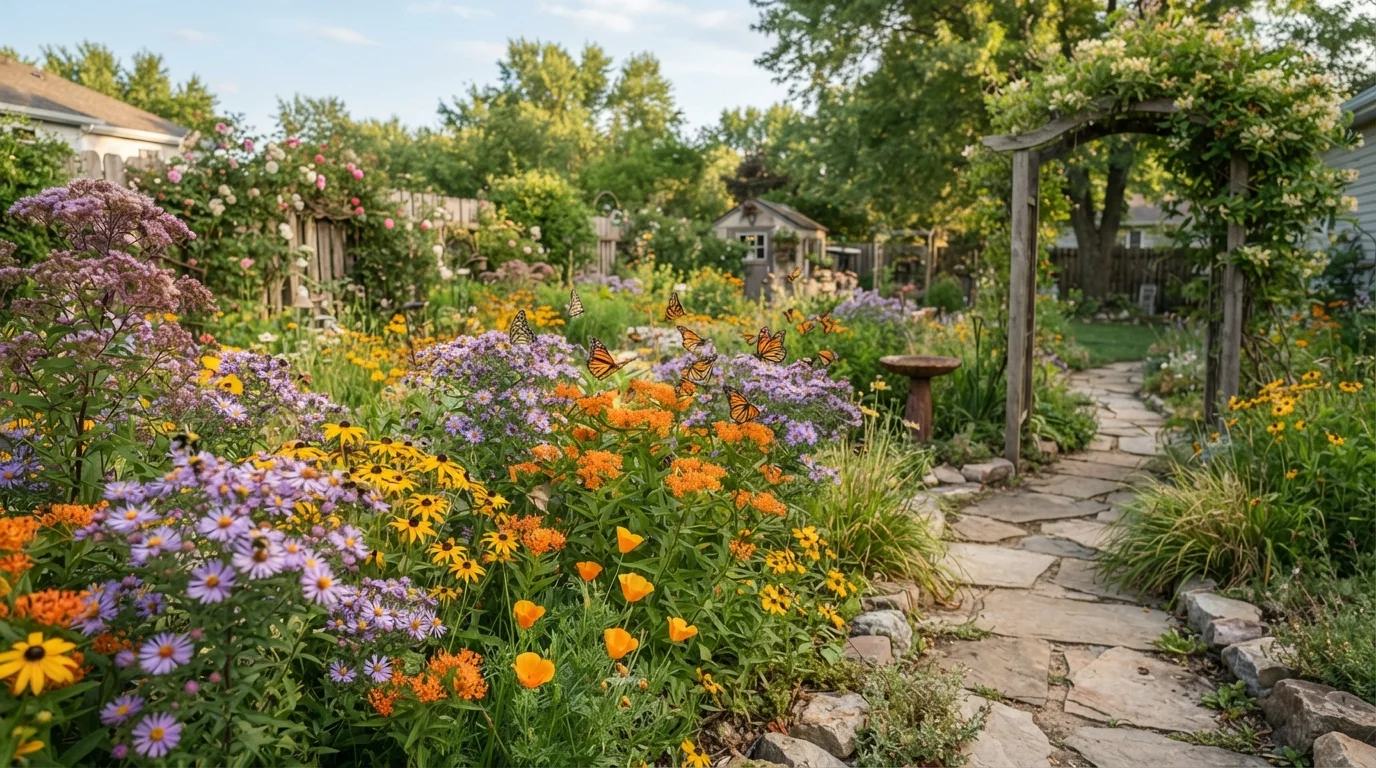
Key Takeaways
- Native plants are genetically adapted to local soils and climates, reducing the need for fertilizers and supplemental watering.
- Planting in layers - canopy, shrub, and ground cover - maximizes habitat value for a wider range of pollinators.
- Leaving some bare ground and hollow stems over winter provides critical nesting sites for native bees.
- Avoiding pesticides, even organic ones, is essential to protecting the insects your garden is designed to support.
- Regional native plant societies and university extension programs are reliable sources for identifying plants suited to your area.
Why Native Plants Make a Difference
Choosing native plants - species that evolved naturally in your region without human introduction - does more than add beauty to your yard. These plants have co-evolved alongside local insects, birds, and other wildlife over thousands of years, forming ecological relationships that introduced ornamentals simply can't replicate.
Research from entomologist Doug Tallamy and colleagues has highlighted that many native bees are specialists, meaning they can only gather pollen from a narrow range of native plant genera. Plant an exclusively non-native garden and you may attract generalist honeybees, but you'll likely miss the native bumblebees, mason bees, and sweat bees that are essential to your local food web.
Beyond wildlife value, native plants are often far less demanding once established. Because they're matched to regional rainfall patterns and soil chemistry, many require little to no supplemental irrigation after their first year. That's good news for both your schedule and your water bill. For a broader look at how plant choice affects long-term garden upkeep, see our guide to perennials vs. annuals.
~70%
Native bee species that nest in the ground
According to the USDA Forest Service, approximately 70% of North America's roughly 4,000 native bee species are ground-nesters, making bare soil a critical garden resource.
4,000+
Native bee species found in North America
The Xerces Society for Invertebrate Conservation notes that North America is home to more than 4,000 native bee species, most of which are solitary and non-aggressive.
Best Practices for Designing a Pollinator-Friendly Native Garden
Knowing which plants to choose is only the first step. How you arrange them - and what you do (or don't do) around them - shapes whether your garden truly functions as wildlife habitat.
Source plants from reputable local native plant nurseries or plant swaps
Plants grown from local seed stock are best adapted to your specific regional conditions and provide the greatest genetic value to local wildlife. Big-box retailers sometimes sell cultivars selected for ornamental traits that reduce pollen or nectar availability.
Design in layers to mimic natural plant communities
Natural ecosystems stack vegetation vertically - canopy trees, understory shrubs, herbaceous perennials, and ground covers - and each layer supports different species. A flat, uniform planting provides far less structural habitat.
Provide continuous bloom from early spring through late fall
Pollinators are active across a long season and need consistent food sources. A garden that peaks in midsummer but offers nothing in April or October forces foragers to travel farther, burning energy and increasing mortality risk.
Leave areas of bare soil and undisturbed leaf litter for ground-nesting bees
Roughly 70% of native bee species in North America nest in the ground. Mulching every square inch or applying thick layers of wood chips eliminates these nesting opportunities. A small patch of compacted, bare soil can support dozens of nesting females.
Eliminate or sharply reduce pesticide use throughout the garden
Many pesticides - including those marketed as "natural" or "organic" - are broadly toxic to insects and can kill the very pollinators you're working to attract. Even systemic pesticides absorbed by plants can persist in pollen and nectar.
Getting Started: Quick Wins for Any Yard
You don't need to overhaul your entire landscape at once. Even modest changes can have meaningful ecological impact. The following actions are achievable this season, regardless of garden size or experience level.
As you plan your planting calendar, our seasonal garden maintenance checklist can help you time soil prep and planting windows to match your regional climate.
Common Pitfalls - and How to Avoid Them
Even well-intentioned gardeners can inadvertently undermine their efforts. A few of the most common missteps:
- Buying "native" plants that aren't local natives. Plants labeled "native" at a garden center may be native to another region or a cultivar bred for traits (like sterile blooms) that reduce their value to wildlife. Cross-reference purchases with your state's native plant society or a university cooperative extension program.
- Over-tidying in autumn. Cutting back every stem and raking every leaf removes the very habitat structures - hollow stems, leaf litter, seed heads - that ground-nesting bees, overwintering butterflies, and songbirds depend on through winter.
- Planting monocultures. Even a monoculture of a native species limits habitat. Aim for diversity in bloom time, plant height, and flower structure to serve the widest range of visitors.
What "Native" Actually Means
A plant is generally considered native if it occurred in a region prior to European colonization and was not introduced by humans. However, "native" is not one-size-fits-all - a plant native to the Pacific Northwest may be completely foreign to a Mid-Atlantic ecosystem. When sourcing plants, ask specifically about provenance (where the seed stock originated) and favor locally grown plants over those shipped from distant growing regions. Your state's native plant society website is a good starting point for region-specific lists.
For a deeper look at which widely repeated gardening advice holds up to scrutiny, our article on garden myths separates fact from folklore.