

Key Takeaways
- Raw diets for pets lack the long-term clinical evidence that supports commercial complete-and-balanced foods.
- Pathogen contamination is a documented risk in raw pet food, posing threats to pets and their human households.
- Some pets may show coat, digestion, or palatability improvements on raw diets, though controlled evidence remains limited.
- Nutritional imbalances are common in homemade raw diets without veterinary nutritionist oversight.
- Always consult a veterinarian or board-certified veterinary nutritionist before switching a pet to a raw diet.
High palatability for many dogs and cats
Many pets find raw food more appealing than processed kibble, which can benefit picky eaters or pets with reduced appetite. The texture and aroma of fresh meat are closer to what carnivores are instinctively drawn to.
Potential improvements in coat condition
Some owners and clinicians report shinier coats in pets transitioned to raw diets, possibly linked to higher levels of naturally occurring fatty acids in fresh meat. Controlled studies confirming this effect remain limited, however.
Lower carbohydrate content for obligate carnivores
Cats are obligate carnivores with limited ability to use carbohydrates as an energy source. A raw diet's naturally low carbohydrate profile may align better with feline metabolic physiology, though high-quality wet foods can achieve similar macronutrient ratios.
Greater owner engagement with pet nutrition
Preparing or sourcing a raw diet often prompts owners to learn more about ingredient quality and nutritional needs. This increased awareness can lead to more thoughtful overall feeding practices.
Documented risk of bacterial contamination
Studies have detected Salmonella, Listeria monocytogenes, and E. coli in commercially sold raw pet food products. These pathogens can infect pets and shed into the household environment, posing genuine zoonotic risk to human family members.
High rate of nutritional imbalance in homemade recipes
Multiple peer-reviewed analyses have found that the overwhelming majority of homemade raw diet recipes available online or in books do not meet established AAFCO nutrient profiles. Deficiencies in calcium, phosphorus, zinc, and vitamins D and E are particularly common.
Bone feeding carries injury risk
Raw bones, while softer than cooked bones, can still cause dental fractures, choking, gastrointestinal obstruction, or internal puncture. These injuries sometimes require emergency veterinary intervention.
No long-term controlled clinical evidence of superiority
Despite widespread anecdotal claims, there are currently no large-scale, long-term randomized controlled trials demonstrating that raw diets produce better health outcomes than AAFCO-compliant commercial diets over a pet's lifetime.
Elevated risk for vulnerable animals and households
Puppies, kittens, elderly pets, and immunocompromised animals face higher risk from pathogen exposure. Households containing pregnant individuals, young children, or immunocompromised people face additional public-health considerations.
Our Verdict
Raw diets occupy a genuinely contested space in pet nutrition — the anecdotal enthusiasm is real, but so are the documented safety and nutritional risks. For healthy adult dogs or cats whose owners are willing to invest significant time, source rigorously, and work with a veterinary nutritionist, a carefully formulated raw diet may be viable. For most households, however, the evidence does not clearly support raw feeding over high-quality commercial diets that meet AAFCO standards.
Best suited to committed owners of healthy adult pets who partner closely with a board-certified veterinary nutritionist and are prepared to manage stringent food-safety practices at home.
What Raw Feeding Actually Means
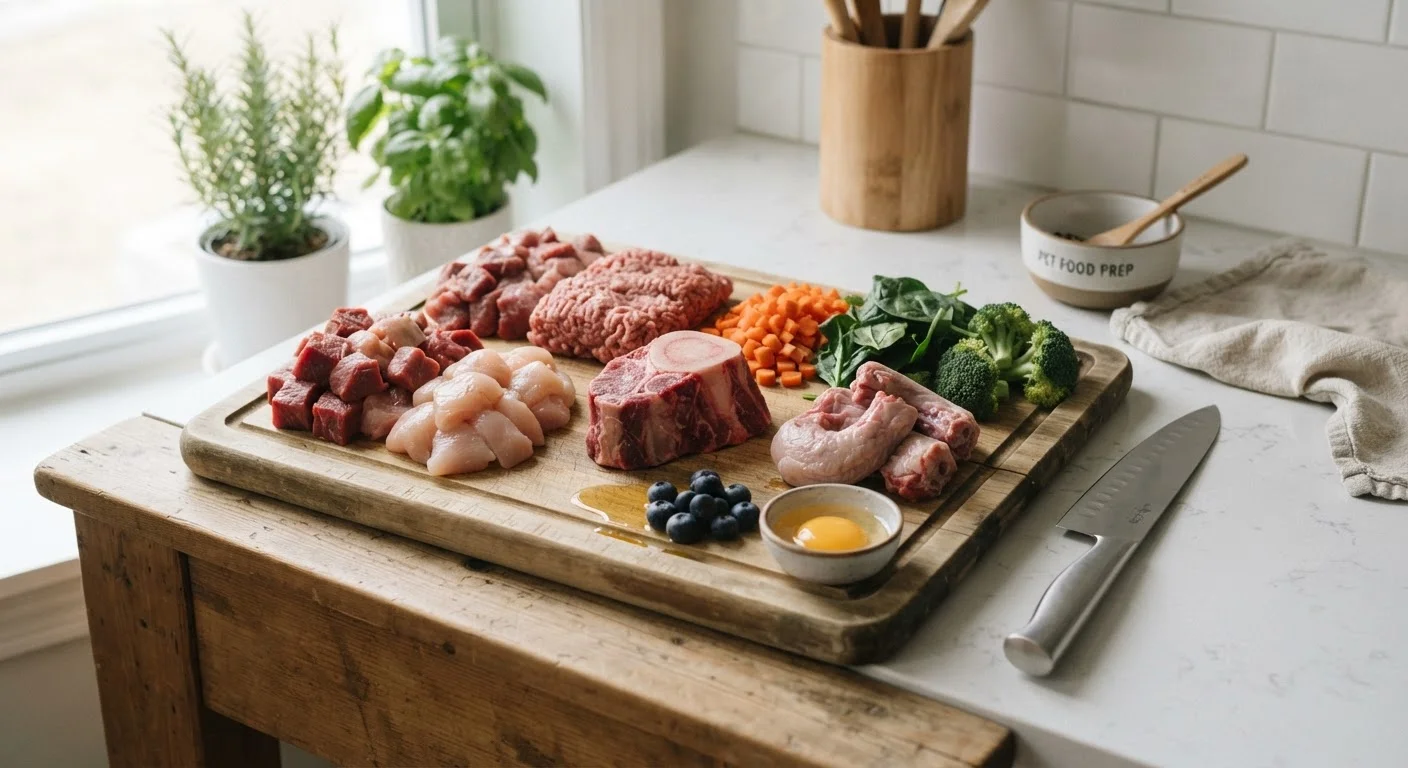
Raw feeding — sometimes called BARF (Biologically Appropriate Raw Food or Bones and Raw Food) — refers to diets built primarily from uncooked muscle meat, organ meat, raw meaty bones, and sometimes raw fruits, vegetables, or eggs. Proponents argue that this mirrors what dogs and cats would eat before domestication. Critics, including most mainstream veterinary organizations, point to gaps in safety and nutritional evidence.
Raw diets come in two broad forms: commercially prepared frozen or freeze-dried raw products, and homemade diets assembled by the owner. These are not equivalent in nutritional reliability. Commercial raw products are at least subject to labeling requirements, while homemade recipes vary enormously in quality and completeness. For a broader look at what pet food labeling actually guarantees, see The Truth Behind Popular Pet Food Claims.
High palatability for many dogs and cats
Many pets find raw food more appealing than processed kibble, which can benefit picky eaters or pets with reduced appetite. The texture and aroma of fresh meat are closer to what carnivores are instinctively drawn to.
Potential improvements in coat condition
Some owners and clinicians report shinier coats in pets transitioned to raw diets, possibly linked to higher levels of naturally occurring fatty acids in fresh meat. Controlled studies confirming this effect remain limited, however.
Lower carbohydrate content for obligate carnivores
Cats are obligate carnivores with limited ability to use carbohydrates as an energy source. A raw diet's naturally low carbohydrate profile may align better with feline metabolic physiology, though high-quality wet foods can achieve similar macronutrient ratios.
Greater owner engagement with pet nutrition
Preparing or sourcing a raw diet often prompts owners to learn more about ingredient quality and nutritional needs. This increased awareness can lead to more thoughtful overall feeding practices.
The Case Against Raw Diets: Documented Risks
The concerns raised by veterinary bodies are grounded in published research, not mere caution. The risks fall into two main categories: microbial safety and nutritional adequacy.
Documented risk of bacterial contamination
Studies have detected Salmonella, Listeria monocytogenes, and E. coli in commercially sold raw pet food products. These pathogens can infect pets and shed into the household environment, posing genuine zoonotic risk to human family members.
High rate of nutritional imbalance in homemade recipes
Multiple peer-reviewed analyses have found that the overwhelming majority of homemade raw diet recipes available online or in books do not meet established AAFCO nutrient profiles. Deficiencies in calcium, phosphorus, zinc, and vitamins D and E are particularly common.
Bone feeding carries injury risk
Raw bones, while softer than cooked bones, can still cause dental fractures, choking, gastrointestinal obstruction, or internal puncture. These injuries sometimes require emergency veterinary intervention.
No long-term controlled clinical evidence of superiority
Despite widespread anecdotal claims, there are currently no large-scale, long-term randomized controlled trials demonstrating that raw diets produce better health outcomes than AAFCO-compliant commercial diets over a pet's lifetime.
Elevated risk for vulnerable animals and households
Puppies, kittens, elderly pets, and immunocompromised animals face higher risk from pathogen exposure. Households containing pregnant individuals, young children, or immunocompromised people face additional public-health considerations.
AAFCO Standards: A Useful Baseline
The Association of American Feed Control Officials (AAFCO) sets nutrient profiles that commercial pet foods use to establish nutritional completeness. A diet labeled 'complete and balanced' has been formulated to meet or exceed these minimums, either by calculation or feeding trial. Raw diets — especially homemade versions — frequently skip this verification step, making independent nutritional analysis essential if you choose this route.
Nutritional analysis of homemade raw diets published in peer-reviewed journals has consistently found high rates of imbalance. A frequently cited study in the Journal of Nutritional Science found that the majority of homemade dog diet recipes assessed failed to meet established nutrient guidelines. If you are considering supplements to fill gaps, the evidence base for specific additions is examined in Supplementing Your Pet's Diet.
~74%
Homemade raw recipes with nutrient deficiencies
A review of published studies on homemade pet diet recipes found that the large majority failed to meet minimum nutrient guidelines for dogs or cats.
~25%
Commercial raw products testing positive for pathogens
An FDA sampling study of commercially sold raw pet food found Salmonella or Listeria contamination in roughly one in four products tested.
Making an Informed Decision
The decision to feed raw should begin — not end — with a conversation with your veterinarian. Pets with compromised immune systems, very young animals, and elderly pets face elevated risk from raw feeding and are generally considered poor candidates. Households with immunocompromised people, infants, or elderly family members face additional zoonotic risk that must be weighed seriously.
If you proceed, a board-certified veterinary nutritionist (DACVN) can formulate a complete-and-balanced recipe tailored to your specific pet rather than relying on generic internet guides. Understanding how raw compares to other formats is also useful — Dry Kibble vs. Wet Food and Grain-Free vs. Grain-Inclusive Pet Food offer useful nutritional context. New pet owners should also read Feeding a Pet for the First Time before making any dietary overhaul.
This article is for general informational and educational purposes only and does not constitute veterinary or medical advice. Always consult a licensed veterinarian before making significant changes to your pet's diet.