

Key Takeaways
- True grain allergies in pets are rare; most food allergies are linked to animal proteins, not grains.
- The FDA investigated a possible link between grain-free diets and dilated cardiomyopathy (DCM) in dogs — the inquiry remains open and unresolved.
- Grains such as oats, barley, and brown rice provide digestible energy, fiber, and essential nutrients for most pets.
- Grain-free formulas often substitute grains with legumes and potatoes, which carry their own nutritional considerations.
- A veterinarian or board-certified veterinary nutritionist is the right resource for any diet change, especially for pets with health conditions.
Option A
Grain-Inclusive Pet Food
The established, research-backed nutritional standard.
Best for: Most healthy dogs and cats without a confirmed grain sensitivity or allergy, particularly those where cardiac health is a consideration.
Option B
Grain-Free Pet Food
The popular alternative with legitimate — but narrower — applications.
Best for: Pets with a veterinarian-confirmed grain allergy or intolerance, under professional dietary supervision.
If your pet has no diagnosed food allergy or intolerance
Grain-Inclusive Pet Food
Whole grains are a safe, well-studied source of carbohydrates, fiber, and micronutrients. There is no scientific evidence that grain-free diets benefit pets without a confirmed need.
If your veterinarian has confirmed a grain allergy
Grain-Free Pet Food
A grain-free formula may be appropriate in this specific, clinically confirmed situation — but should still be selected with veterinary guidance to ensure complete nutrition.
If your dog is a breed predisposed to dilated cardiomyopathy
Grain-Inclusive Pet Food
Given the ongoing FDA investigation into a potential DCM link with grain-free diets high in legumes, grain-inclusive foods are the more cautious choice for at-risk breeds.
If you want maximum long-term nutritional research behind your choice
Grain-Inclusive Pet Food
Grain-inclusive formulas have decades of feeding trials and peer-reviewed nutritional science supporting their safety and adequacy for most life stages.
How the Grain-Free Trend Took Hold
Grain-free pet food surged in popularity through the 2010s, driven in part by the parallel rise of low-carb and gluten-free diets in human nutrition. The marketing narrative was straightforward: grains are fillers, carnivores don't need carbohydrates, and eliminating grains is closer to an ancestral diet. Pet owners, understandably motivated to do the best for their animals, responded.
The problem is that the premise has significant gaps. Dogs are not wolves — thousands of years of coevolution alongside humans have left domestic dogs with greater amylase activity and a meaningfully different capacity to digest starches than their wild relatives. Cats are obligate carnivores with a genuinely lower carbohydrate requirement, but even for cats, grains are not inherently harmful when properly prepared.
Understanding what's actually inside either type of food is the first step toward an evidence-based decision. See our guide to reading pet food ingredient labels for a deeper breakdown of how to interpret what's on the bag.
What Grains Actually Contribute Nutritionally
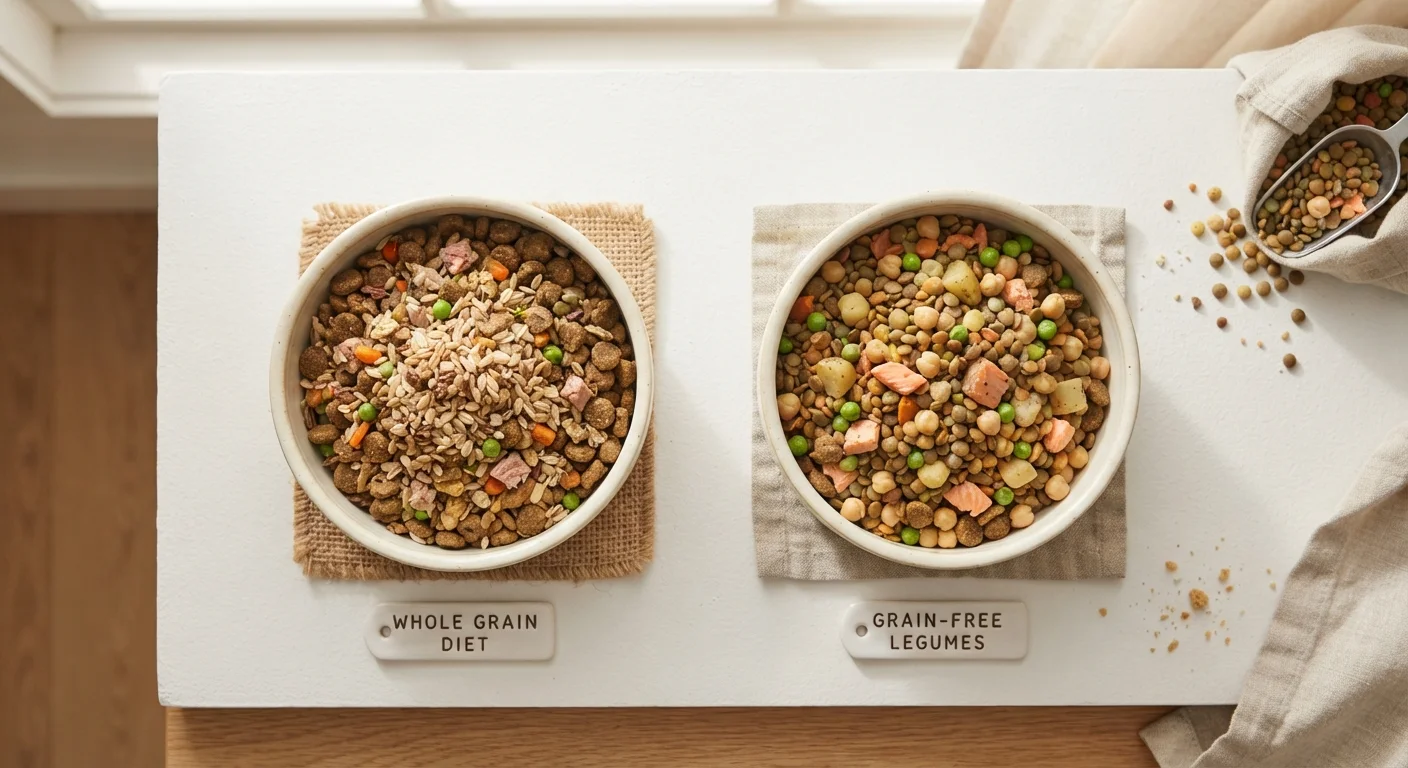
Whole grains — including oats, brown rice, barley, and millet — are not empty fillers. They contribute digestible carbohydrates for energy, dietary fiber that supports gut health, B vitamins, and minerals such as iron and magnesium. In a complete-and-balanced formulation, they serve a genuine nutritional function rather than simply bulking out the product cheaply.
Grain-free diets typically replace these ingredients with legumes (lentils, peas, chickpeas) and root vegetables (potatoes, sweet potatoes, tapioca). These alternatives provide carbohydrates too, but they come with their own nutritional profile — and, importantly, their own unresolved questions.
| Criterion | Grain-Inclusive | Grain-Free |
|---|---|---|
| Primary carbohydrate source | Whole grains (oats, rice, barley) | Legumes, potatoes, tapioca |
| Decades of feeding trial data | Extensive | Limited |
| DCM cardiac risk signal | No association identified | Under ongoing FDA investigation |
| Appropriate for grain allergies | No | Yes (when confirmed by vet) |
| Fiber and micronutrient profile | Well-established | Variable by formulation |
| Marketing-driven perception | Seen as traditional or conventional | Marketed as premium or ancestral |
For cats, dietary carbohydrate needs are low regardless of grain status. However, the key issue for any species is overall nutrient balance, not the presence or absence of one ingredient category. As our article on popular pet food label claims explains, terms like "grain-free" are marketing descriptors, not regulated nutritional standards.
The DCM Investigation: What We Know and Don't Know
In 2018, the U.S. Food and Drug Administration (FDA) began investigating a potential association between grain-free diets — particularly those high in legumes — and dilated cardiomyopathy (DCM), a serious heart condition, in dogs. The concern stemmed from an unusual pattern: DCM was appearing in breeds not genetically predisposed to it, and many affected dogs were eating grain-free foods rich in peas, lentils, or potatoes.
The investigation has not established a definitive causal link. Researchers have proposed several mechanisms, including reduced taurine availability, but the picture remains complex and incomplete. The FDA has not issued a recall or ban. However, major veterinary cardiology organizations have recommended caution, particularly for large and giant breeds and those with a hereditary DCM risk.
About the FDA's DCM Investigation
The FDA's ongoing inquiry into grain-free diets and DCM in dogs began in 2018 and has not concluded with a definitive causal finding. The agency continues to monitor reports and work with researchers. Pet owners concerned about cardiac risk should discuss their pet's specific diet and breed history with a veterinarian rather than drawing conclusions from the investigation's current status alone.
The honest summary: the DCM association is a legitimate signal that warrants attention, not a proven cause-and-effect relationship. It is also not a reason to dismiss grain-free diets categorically — but it is a reason to make that choice deliberately, with veterinary input, rather than on the basis of marketing.
When Grain-Free Is Genuinely Appropriate
True grain allergies in companion animals are uncommon. Research consistently identifies animal proteins — beef, chicken, dairy, and eggs — as the most frequent triggers of food hypersensitivity reactions in dogs and cats. Grains, particularly corn and wheat, are sometimes implicated but are far less common allergens than their reputation suggests.
~1–2%
Dogs with confirmed food allergies
Estimates from veterinary dermatology literature suggest true food allergies affect a small minority of dogs, with animal proteins being the most common triggers.
Top 5
Most common dog food allergens
Beef, dairy, chicken, wheat, and egg are consistently identified as the leading food allergens in dogs, according to a frequently cited review in Veterinary Dermatology.
That said, grain allergies do exist. If a veterinarian has diagnosed a specific grain sensitivity through a properly conducted dietary elimination trial, a grain-free formula may be a clinically appropriate solution. The critical distinction is diagnosed versus assumed. Switching to grain-free based on symptoms like itching or digestive upset — without professional evaluation — risks missing the actual allergen while introducing dietary changes that may not be necessary.
For pets on any restricted or therapeutic diet, consulting a board-certified veterinary nutritionist ensures that eliminating one ingredient group doesn't inadvertently compromise overall nutritional completeness. You can also explore our coverage of pet dietary supplements if nutrient gaps are a concern.
This article provides general nutritional information for educational purposes only and does not constitute veterinary or medical advice. Always consult a licensed veterinarian or board-certified veterinary nutritionist before making significant changes to your pet's diet, particularly if your pet has an existing health condition.