

Key Takeaways
- Terms like 'natural' and 'human-grade' have limited or inconsistent regulatory definitions on pet food labels.
- Grain-free diets are not inherently healthier for most dogs or cats and carry potential cardiac risks under investigation.
- By-products are not low-quality filler — many are nutrient-dense organ tissues with established nutritional value.
- The AAFCO nutritional adequacy statement is one of the most meaningful things you can look for on a pet food label.
- No single ingredient or marketing claim reliably predicts overall diet quality — the full nutrient profile matters most.
Why Pet Food Marketing Outpaces the Science
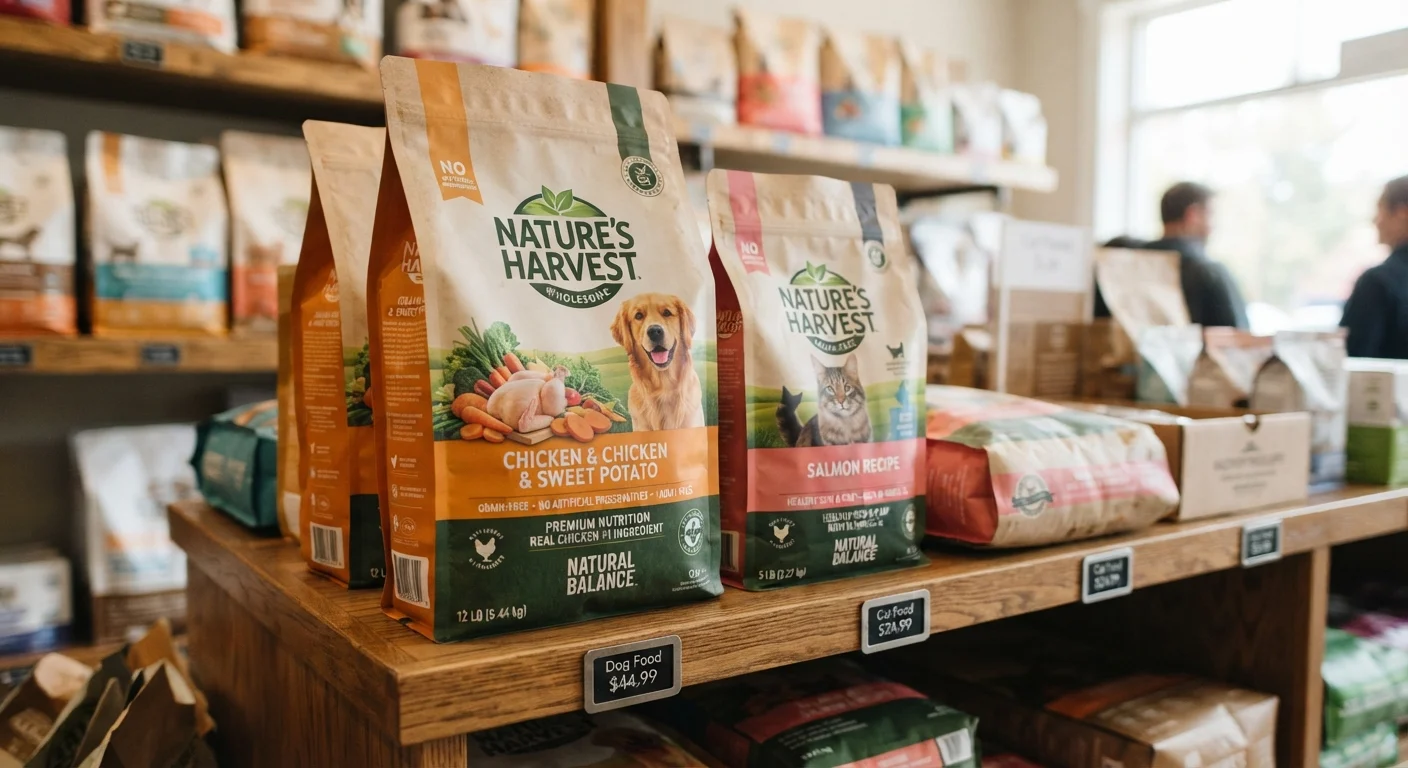
Pet food is a multi-billion-dollar industry, and competition on store shelves is fierce. As a result, packaging is engineered to reassure and attract owners rather than to communicate precise nutritional information. Terms like "wholesome," "premium," "ancestral," and "biologically appropriate" are not defined by any regulatory body and carry no enforceable nutritional standard.
The agencies that do regulate pet food — primarily the AAFCO and the FDA — govern safety and labeling accuracy, but many marketing claims fall into gray areas. Understanding what these terms actually mean (and don't mean) is the first step toward making genuinely informed choices. For a deeper look at how standards are set, see how AAFCO standards shape what goes into pet food.
Myth
Grain-free diets are healthier and more natural for dogs and cats.
Fact
Grains are not inherently harmful to pets, and grain-free formulas are not nutritionally superior for most animals.
The grain-free trend was driven by a parallel with human low-carb eating, not by veterinary nutrition research. Dogs are omnivores that have co-evolved with humans and can digest starch effectively. Cats, obligate carnivores, do have limited carbohydrate metabolism, but grains themselves are not the issue — total carbohydrate load and overall nutrient balance are what matter.
More critically, the FDA launched an investigation into a potential link between grain-free diets high in legumes (peas, lentils, chickpeas) and a form of heart disease called dilated cardiomyopathy (DCM) in dogs. While the research is ongoing and causation has not been definitively established, the concern is serious enough that many veterinary cardiologists have recommended caution. For a fuller comparison, see grain-free vs. grain-inclusive pet food.
Myth
By-products are low-quality scraps that have no place in a nutritious pet food.
Fact
Named animal by-products — such as liver, kidney, and lung — are often nutrient-dense and have long been used in AAFCO-compliant, nutritionally complete pet foods.
"By-product" is a regulatory term, not a quality judgment. In pet food, named by-products (e.g., "chicken by-products") refer to non-muscle-meat parts of the carcass: organs, necks, feet, and similar tissues. Organ meats in particular are rich in vitamins, minerals, and protein. They are consumed as prized food sources in many human culinary traditions and are a natural part of what wild canids and felids eat.
The concern is more legitimate with unnamed by-products (listed generically as "meat by-products" or "poultry by-products") where the source species is unspecified. Named, single-source by-products from a reputable manufacturer carry far less ambiguity.
Myth
"Natural" on a pet food label means the food is minimally processed and free of artificial additives.
Fact
AAFCO defines "natural" for pet food, but the definition is narrow and allows for heavily processed ingredients provided they originate from plant, animal, or mined sources.
Under AAFCO guidelines, "natural" means ingredients derived from plant, animal, or mined sources without chemically synthetic processes — but this permits significant industrial processing such as rendering and extraction. A food can legally bear the "natural" claim while still containing rendered meals, refined fats, and other highly processed components.
The term also does not mean the food is organic, free of preservatives, or nutritionally superior. Chemical preservatives like BHA, BHT, and ethoxyquin are synthetic and would disqualify a "natural" claim, but natural preservatives like mixed tocopherols (vitamin E) and rosemary extract are permitted — and have a shorter shelf life, which can be a practical trade-off to be aware of.
Myth
"Human-grade" pet food is held to the same standards as food prepared for people.
Fact
"Human-grade" has no official regulatory definition in pet food; only "human edible" carries a legal standard, and very few products qualify.
AAFCO has clarified that for a pet food to truthfully claim it is "human grade," every ingredient and the finished product itself must be legally suitable for human consumption — meaning it must be manufactured, packed, and held under conditions that comply with federal regulations for human food. This is an exceptionally high bar that most pet foods on the market do not meet.
Companies that use the phrase loosely — implying high quality without meeting that standard — may be in violation of labeling regulations, but enforcement is inconsistent. The claim is used primarily as a marketing signal, not a verifiable quality guarantee. If this distinction matters to your purchasing decision, look for manufacturers who can document compliance with human-food facility standards. Decoding pet nutrition labels can help you evaluate the full picture.
Myth
A food with "real meat" as the first ingredient is always higher in protein and better quality.
Fact
Ingredient order reflects pre-processing weight, not the final protein contribution; moisture content heavily influences where meat ranks on the list.
Fresh or frozen meat contains significant moisture — often 70% or more water by weight. After cooking and processing, the actual protein contribution may be substantially less than the raw weight suggests. Meanwhile, a dry ingredient like "chicken meal" (which is already rendered and concentrated) listed third or fourth may actually contribute more protein to the final formula than the fresh meat listed first.
This doesn't mean fresh meat first is bad — it may still indicate a quality formula — but it means you can't evaluate protein content by ingredient position alone. The guaranteed analysis panel and, ideally, a manufacturer's published nutrient profile give a more accurate picture of what your pet is actually consuming.
What Actually Signals a Quality Pet Food
Rather than chasing label buzzwords, focus on a few genuinely meaningful indicators. The AAFCO nutritional adequacy statement tells you whether a food has been formulated to meet established minimum nutrient profiles or has been tested through feeding trials for a specific life stage. This is one of the most substantive pieces of information on the entire bag.
Ingredient order matters too — ingredients are listed by pre-cooking weight, so a named protein source (e.g., "chicken" or "salmon") appearing first is a meaningful signal — though not the only one. Reading ingredient labels carefully helps you move past marketing language and evaluate what's actually in a formula. The guaranteed analysis panel, which shows minimum protein and fat percentages and maximum fiber and moisture, is another factual anchor in a sea of promotional copy.
Switching Diets Without Veterinary Guidance
Changing your pet's food based on a marketing claim — whether to raw, grain-free, or home-cooked — without professional input can introduce nutritional imbalances. Abrupt diet changes can also cause digestive upset. Always transition foods gradually and consult your veterinarian, particularly for pets with existing health conditions, before making significant dietary shifts.
Ultimately, the best diet for your individual pet depends on species, age, health status, and activity level. A board-certified veterinary nutritionist or your veterinarian can provide guidance tailored to your pet's specific needs — no label claim substitutes for that.
This article provides general educational information about pet food labeling and marketing terms. It is not veterinary or nutritional advice. Consult your veterinarian before making significant changes to your pet's diet.