Key Takeaways
- Minimalism genuinely reduces daily cleaning time by eliminating surfaces where clutter accumulates.
- The transition to minimalism requires significant upfront effort and can be emotionally taxing.
- A minimalist approach isn't equally practical for every household, especially families with children.
- Functional minimalism - keeping what serves a purpose - is more sustainable than strict aesthetic minimalism.
- Maintenance habits matter more than item count alone in keeping any home manageable.
Faster daily and weekly cleaning routines
Fewer objects on surfaces means less dusting, wiping, and rearranging. Many minimalist households report measurably shorter cleaning sessions as a direct result.
Reduced decision fatigue around tidying
When everything has one clear home, returning items requires no deliberation. This lowers the mental effort needed to maintain order day to day.
Less storage furniture required
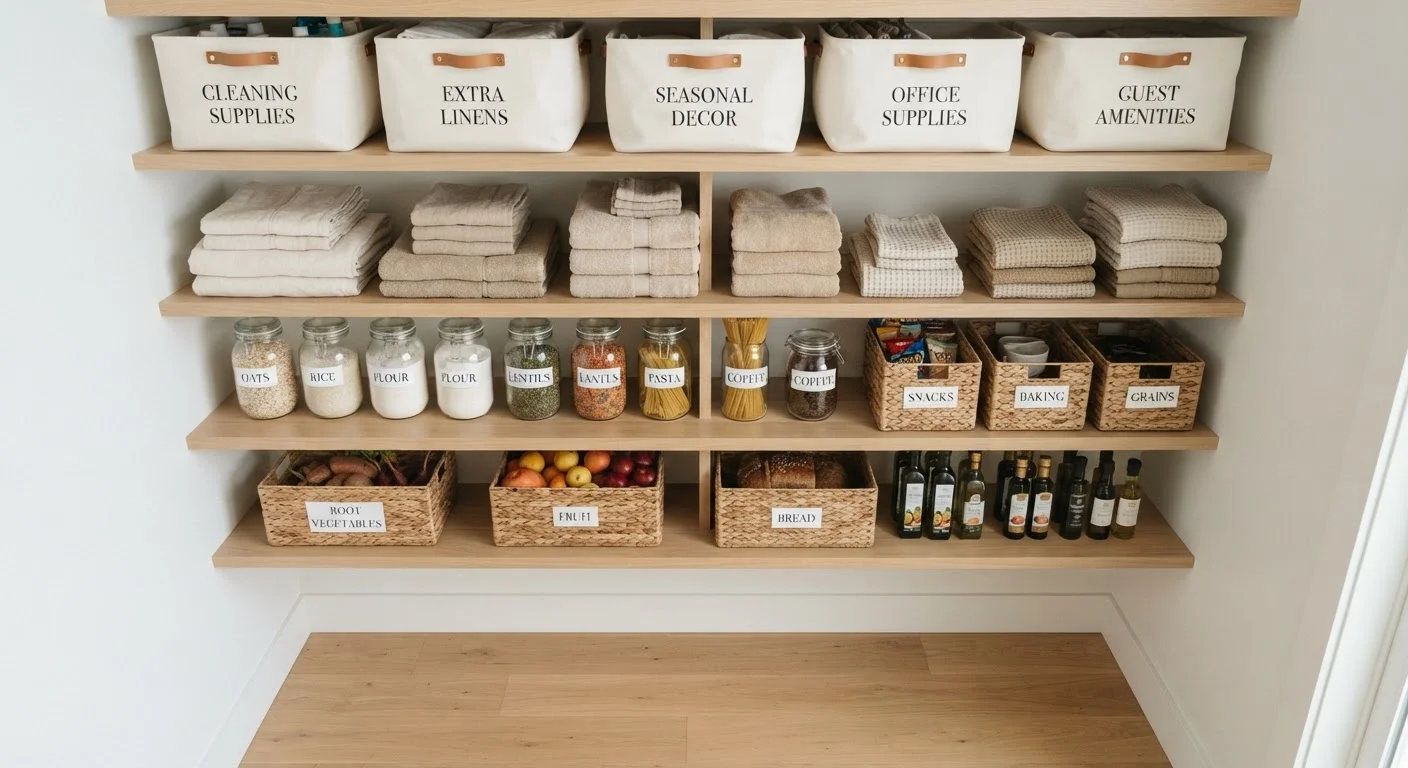
Owning fewer items means fewer bulky storage solutions - shelving units, cabinets, and bins - which themselves require cleaning and can make rooms feel smaller.
Easier to spot what needs attention
In a sparse space, a dirty window or a dusty corner becomes visible immediately, making it harder to overlook maintenance tasks before they compound.
Supports consistent organizing habits
A lower baseline of possessions makes systems like one-in-one-out and nightly resets more achievable, reinforcing long-term tidiness rather than relying on periodic overhauls.
High upfront effort to reach a minimal baseline
Decluttering an established home takes significant time and emotional energy. Many people underestimate the scope and abandon the process partway through, leaving spaces in a disorganized interim state.
Not practical for all household types
Families with children, people with hobbies requiring gear, and those who work from home with specialized equipment often find that minimalism conflicts with genuine functional needs.
Risk of under-equipping for real needs
Paring back too aggressively can mean replacing items you actually need - which costs money, creates waste, and undermines the efficiency minimalism promises.
Can create household conflict in shared spaces
When one person embraces minimalism and another doesn't, the resulting tension around possessions and standards can be harder to manage than the clutter itself was.
Maintenance depends on habits, not item count alone
A minimalist room without consistent tidying habits becomes cluttered quickly because there are fewer places to set things down and hide disorder. The discipline required is ongoing, not a one-time fix.
Our Verdict
Minimalism does make homes easier to maintain for many people - but only when it aligns with your actual lifestyle rather than an idealized image. Stripped-down spaces genuinely cut cleaning time and reduce decision fatigue, yet the approach demands a real upfront investment and isn't a universal fit. A practical middle ground - keeping what you use, storing it intentionally, and building consistent habits - tends to deliver most of the maintenance benefits without the rigidity.
Minimalism works best for individuals or small households who value visual calm, have stable routines, and are willing to make deliberate, ongoing decisions about what they own.
What Minimalism Actually Promises
At its core, minimalism in the home context means owning and displaying fewer things - ideally only what is functional, meaningful, or both. The promise is straightforward: fewer objects means fewer surfaces to dust, fewer items to organize, and less visual noise competing for your attention. Research on the psychological effects of clutter suggests there's real substance to this - physical clutter has been linked to elevated cortisol levels and reduced focus.
But the promise and the practice often diverge. A minimalist home isn't simply a less-full home - it's one where every object has a designated place and purpose, and where systems exist to keep it that way. Without those systems, a sparse room can become a cluttered one surprisingly fast.
Faster daily and weekly cleaning routines
Fewer objects on surfaces means less dusting, wiping, and rearranging. Many minimalist households report measurably shorter cleaning sessions as a direct result.
Reduced decision fatigue around tidying
When everything has one clear home, returning items requires no deliberation. This lowers the mental effort needed to maintain order day to day.
Less storage furniture required
Owning fewer items means fewer bulky storage solutions - shelving units, cabinets, and bins - which themselves require cleaning and can make rooms feel smaller.
Easier to spot what needs attention
In a sparse space, a dirty window or a dusty corner becomes visible immediately, making it harder to overlook maintenance tasks before they compound.
Supports consistent organizing habits
A lower baseline of possessions makes systems like one-in-one-out and nightly resets more achievable, reinforcing long-term tidiness rather than relying on periodic overhauls.
Where Minimalism Genuinely Helps
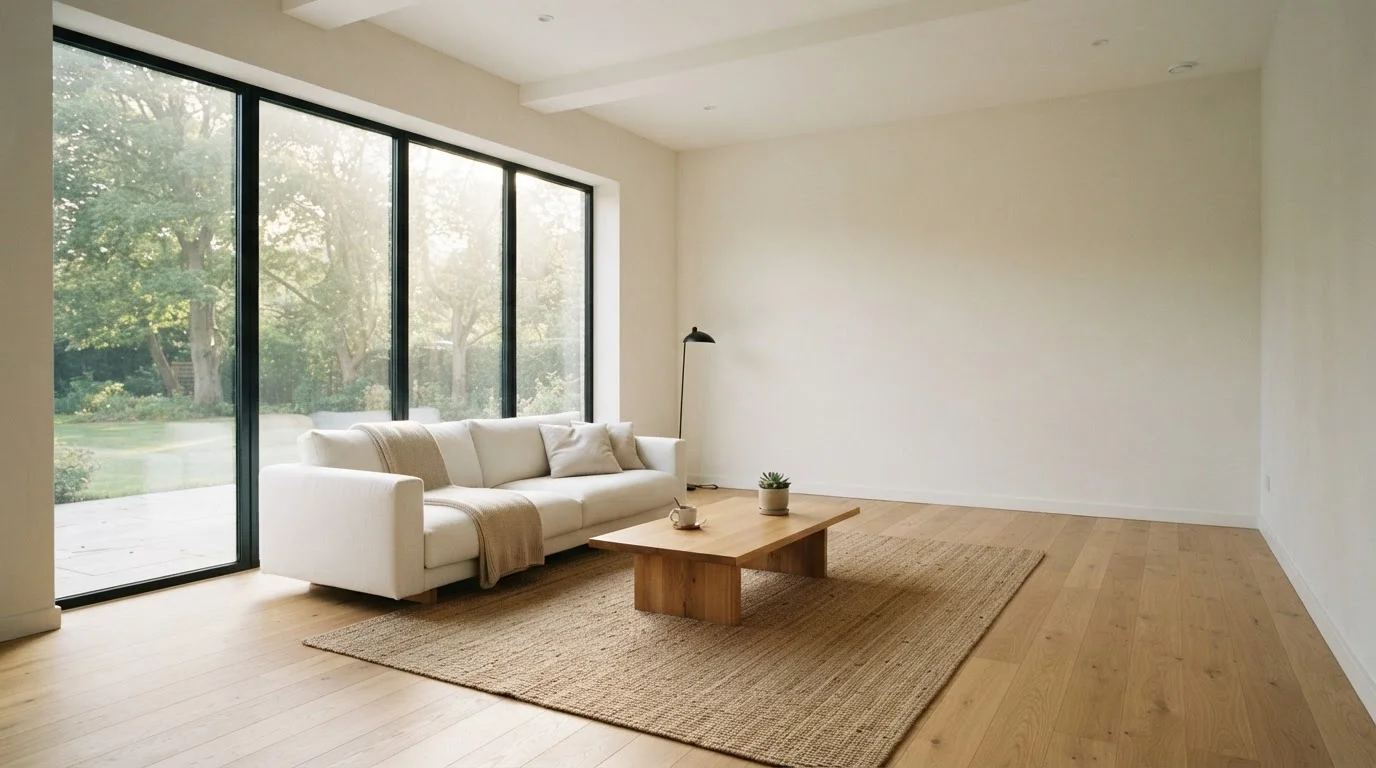
The maintenance advantages of a well-executed minimalist home are real and measurable in everyday life. Vacuuming a room with one rug and two chairs is objectively faster than navigating around a dozen pieces of furniture. Open counter space is wiped down in seconds; counters crowded with appliances and decorative items take considerably longer.
Beyond the physical, there's a cognitive dimension. When a home has fewer items with fewer ambiguous homes, the mental load of tidying drops significantly. You don't deliberate - you simply return things to their place. Habits like the one-in-one-out rule integrate more naturally into daily life when your baseline is already pared back.
40%
Of household cleaning time spent managing clutter
The National Soap and Detergent Association has estimated that clutter is a primary factor in as much as 40% of household cleaning time, though exact figures vary by household.
3x
More likely to feel stressed in cluttered home environments
Studies published in the journal Personality and Social Psychology Bulletin found associations between cluttered home environments and elevated stress indicators in occupants.
Where Minimalism Falls Short
The trade-offs are real, and dismissing them leads to frustration. Achieving a minimalist home from a lifetime of accumulated possessions isn't a weekend project - it's a sustained effort that can surface genuine emotional difficulty. Objects carry memory and identity, and starting the decluttering process from scratch can feel overwhelming without a structured approach.
There's also a practical ceiling. Families with young children, people who work creative or trade jobs from home, and households with multiple people sharing space often find that strict minimalism conflicts with real functional needs. A drummer needs drums. A seamstress needs fabric. A toddler needs toys - and the emotional cost of enforcing spareness can outweigh the cleaning benefit. When household members have different habits and standards, rigid minimalist rules can create tension rather than harmony.
High upfront effort to reach a minimal baseline
Decluttering an established home takes significant time and emotional energy. Many people underestimate the scope and abandon the process partway through, leaving spaces in a disorganized interim state.
Not practical for all household types
Families with children, people with hobbies requiring gear, and those who work from home with specialized equipment often find that minimalism conflicts with genuine functional needs.
Risk of under-equipping for real needs
Paring back too aggressively can mean replacing items you actually need - which costs money, creates waste, and undermines the efficiency minimalism promises.
Can create household conflict in shared spaces
When one person embraces minimalism and another doesn't, the resulting tension around possessions and standards can be harder to manage than the clutter itself was.
Maintenance depends on habits, not item count alone
A minimalist room without consistent tidying habits becomes cluttered quickly because there are fewer places to set things down and hide disorder. The discipline required is ongoing, not a one-time fix.
Finding a Workable Middle Ground
The most maintainable homes aren't necessarily the most minimal - they're the most intentional. Rather than chasing a specific aesthetic, focus on reducing what genuinely creates friction in your household: the junk drawer that's never useful, the cabinet that spills when opened, the entryway that collects everything without a system.
Many common organizing assumptions actually work against you - including the belief that you must own very little to keep a space orderly. Storage that's well-designed and appropriately sized for your actual life matters more than item count alone.
Functional Minimalism vs. Aesthetic Minimalism
Aesthetic minimalism prioritizes appearance - bare walls, neutral palettes, surfaces kept clear for visual calm. Functional minimalism prioritizes usability - owning what you actually use, storing it efficiently, and eliminating what creates friction. The two can overlap, but they don't have to. Many homes that look lived-in are easier to maintain than visually sparse ones that require constant policing to stay photo-ready.
If budget is a consideration, it's worth noting that intentional minimalism can reduce impulse purchasing over time, which connects directly to broader budgeting and saving habits. Less acquisition means less eventual decluttering, less storage furniture, and less replacement of items that wore out through neglect in crowded spaces.