
Personal Finance

Monthly Budget Audit: A Checklist for Reviewing Where Your Money Actually Went

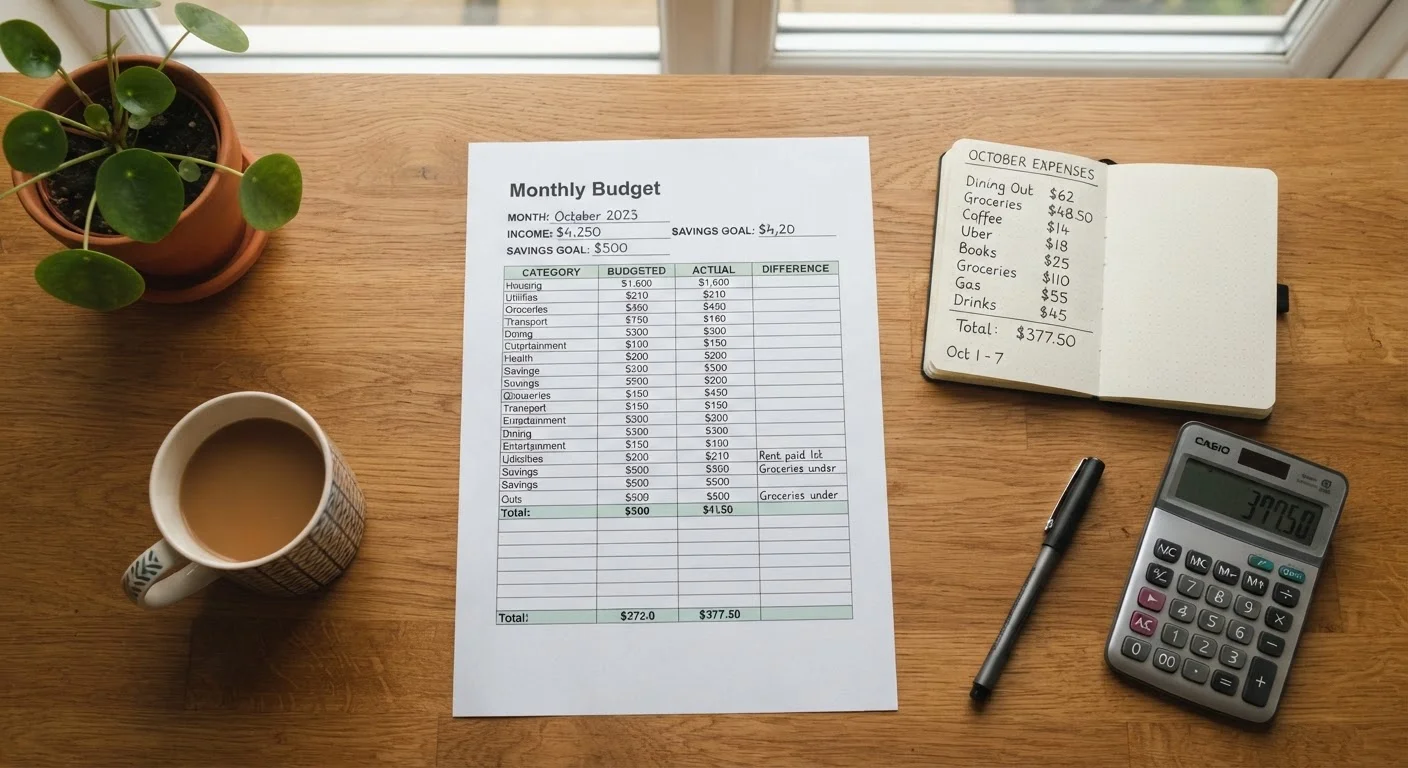
Monthly budget audit materials laid out on a desk including spreadsheet, calculator, and notebook.

Key Takeaways

  • A monthly audit compares planned spending against actual spending to reveal real patterns, not assumptions.
  • Recurring subscriptions and irregular expenses are the most commonly overlooked budget drains.
  • Identifying one or two consistent overspend categories each month is enough to drive meaningful change.
  • Adjusting next month's budget based on this month's data is more effective than willpower alone.
  • A consistent audit habit—even a simple one—compounds into stronger financial control over time.
30–60 min

Summary

22 items · 30–60 minutes

Why a Monthly Audit Matters More Than the Budget Itself

Most budgets fail not because the plan was wrong, but because no one checks the plan against reality. Writing a budget is step one; auditing it is where the actual work happens. Without a structured review, the same spending leaks repeat month after month, and frustration builds without a clear cause.

A monthly budget audit is a deliberate comparison: what did you plan to spend, and what did you actually spend? The gap between those two numbers tells you everything you need to course-correct. If you've noticed your spending consistently derails by mid-month, the structural reasons budgets collapse early are worth understanding before you audit.

This checklist gives you a repeatable process—one you can complete in under an hour at the end of every month. The tools you use matter less than the consistency of doing it. For more on choosing between tracking methods, see our comparison of envelope budgeting and digital tracking.

Required

Bank and Credit Card Statements

Provides the authoritative transaction record needed to compare against your budget plan.

Required

Budgeting Spreadsheet or App

Holds your planned budget figures and can categorize transactions to streamline the comparison step.

Required

Calculator

Used to compute category variances and total overspend amounts quickly.

Optional

Dedicated Notebook or Audit Template

Captures written conclusions and next-month adjustments so insights don't get lost after the session.

The Monthly Budget Audit Checklist

Work through these items in order. The first two groups set the foundation; the later groups drive decisions for next month. Mark each item complete before moving on—partial audits tend to leave the most important gaps unresolved.

Gather Your Data

Pull every bank statement, credit card statement, and payment app transaction record for the month. Must
Locate your original written budget or spending plan for the month being reviewed. Must
Export or print a categorized transaction list from your budgeting app or spreadsheet. Should
Note any cash spending you may have forgotten to log—check receipts, wallet withdrawals, or memory. Should

Compare Planned vs. Actual Spending

For each budget category, write down the planned amount and the actual amount spent side by side. Must
Calculate the variance (over or under) for each category—positive means under budget, negative means over. Must
Flag every category where actual spending exceeded the plan by more than 10%. Must
Note categories where you consistently underspent—this may signal the budget was unrealistically high or that money was reallocated informally. Should

Identify Unplanned and Irregular Expenses

List every transaction that did not appear in any budget category—these are your surprise expenses. Must
Review subscriptions and recurring charges: cancel or note any services you no longer actively use. Must
Check for annual or quarterly charges that hit this month and determine whether they should have been sinking-funded in advance. Should
Identify any one-time expenses that are likely to recur (car maintenance, medical copays, gifts) and add them to next month's irregular expense fund. Should

Assess Savings and Debt Progress

Confirm that your planned savings transfer was actually made and cleared—not just scheduled. Must
Check your total debt balances against last month's figures and confirm the balances moved in the intended direction. Must
Review any interest charges paid this month and assess whether accelerating a payment would reduce next month's interest cost. Nice to have

Draw Conclusions and Adjust

Identify your top two or three overspend categories and write one specific reason for each overage. Must
Decide whether each overage reflects a bad budget number (adjust the plan) or a spending behavior to address (adjust the habit). Must
Update next month's budget to reflect realistic numbers based on this month's actual data. Must
Set one concrete intention for next month—a specific category to reduce by a defined dollar amount. Should
If applicable, flag any budget lines that regularly cause stress and consider whether that expense category needs a structural fix rather than repeated willpower. Nice to have

Your Audit Is Only as Good as Your Data

If cash spending goes untracked or transactions sit uncategorized, the audit will undercount real expenses—sometimes significantly. Before drawing conclusions, make sure every dollar that left your accounts is accounted for. A single large miscategorized expense can make a healthy budget category look fine when it isn't.

Don't Punish Yourself for Overages

The purpose of a budget audit is diagnosis, not judgment. If you overspent in a category, the question to ask is why—not how badly you failed. Shame tends to produce avoidance, which makes the next month's audit less likely to happen. Treat each month's data as information to work with, not a verdict on your discipline.

This article is for general informational and educational purposes only and does not constitute personalized financial, tax, or legal advice. Consult a qualified financial professional for guidance specific to your situation.

Personal Finance Editorial Team is the collective byline for our editorial team and contributor network. Articles published under this byline or an editorial pen name are researched, written, and reviewed according to our editorial standards for clarity, consistency, and independence before publication.

View all articles by Personal Finance Editorial Team →
Disclaimer: The content provided on our blog site traverses numerous categories, offering readers valuable and practical information. Readers can use the editorial team’s research and data to gain more insights into their topics of interest. However, they are requested not to treat the articles as conclusive. The website team cannot be held responsible for differences in data or inaccuracies found across other platforms. Please also note that the site might also miss out on various schemes and offers available that the readers may find more beneficial than the ones we cover.