

Key Takeaways
- Hardscaping provides the durable framework that organizes your garden into functional, navigable zones.
- Paths, patios, and edging each serve distinct purposes but work together as a cohesive design system.
- Material choice affects long-term maintenance, drainage, and how well the design blends with your home's style.
- Permits or professional installation may be required for certain hardscape projects involving grading or large structures.
- Balancing hard and soft elements improves both the look and the environmental performance of your outdoor space.
Hardscaping
Hardscaping refers to the non-living, constructed elements of an outdoor or garden space. This includes paths, patios, retaining walls, edging, steps, and similar features made from materials like stone, brick, concrete, or gravel. It forms the structural backbone of a garden, guiding movement and defining zones before plants are ever added.
Hardscape and softscape (living elements such as plants, soil, and mulch) are complementary components in landscape design; the ratio between the two affects drainage, heat retention, and overall maintenance demands.
What Hardscaping Actually Does in a Garden
Before the first seed goes in the ground, a well-designed garden needs structure. Hardscaping provides exactly that - the framework of durable materials that defines how a space is experienced, navigated, and maintained. Think of it as the architecture of your yard.
Where softscape elements like plants, grass, and mulch change with the seasons, hardscape features remain relatively constant. That permanence is their primary value: they establish clear boundaries, reduce the spread of weeds into planted areas, manage foot traffic away from delicate plants, and create usable outdoor living zones. Whether you're designing a new garden from scratch or updating an existing one, understanding the major hardscape elements - paths, patios, and edging - is the practical starting point.
Hardscape and Local Codes
Some hardscape projects - particularly retaining walls over a certain height, work near property lines, or any grading that alters drainage - may require permits or licensed contractor involvement. Requirements vary significantly by municipality. Before beginning any significant hardscape project, contact your local building or planning department to confirm what applies in your area.
Garden Paths: Guiding Movement and Protecting Plants
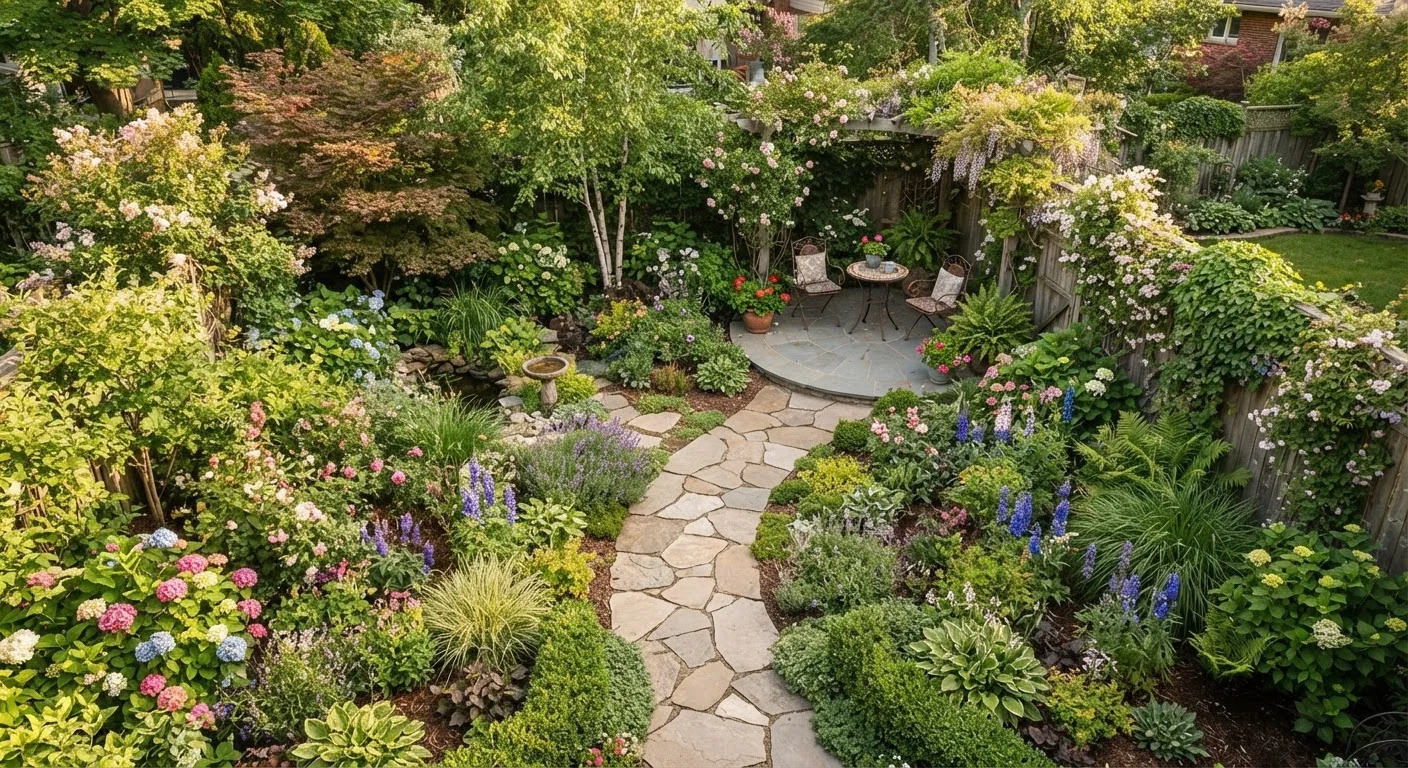
A garden path does two jobs simultaneously: it tells visitors where to walk and keeps them from walking everywhere else. Without defined paths, informal shortcuts through planting beds become inevitable, compacting soil and damaging root systems over time.
Paths range from simple gravel or stepping stone arrangements to fully mortared flagstone or poured concrete. The right choice depends on how often the path will be used, the aesthetic you're after, and your budget for materials and installation. Heavily trafficked routes between a back door and a garage, for example, may warrant a more durable, level surface than a winding secondary path through a flower garden.
Width matters too. A primary path should accommodate two people walking side by side - typically 48 inches or more - while a secondary garden path can be as narrow as 18 to 24 inches. Consider how the path will drain; a slight crown or cross-slope prevents water from pooling on the surface.
Plan Paths Before You Plant
Laying out your path routes before installing plants prevents the common mistake of having to remove established plantings later to make room for circulation. Use a garden hose or rope to trace potential routes and live with them for a day or two before committing to a material or installation.
Patios: Creating Outdoor Rooms
A patio is essentially an outdoor floor, and it functions much the same way an interior room does - it anchors furniture, defines a gathering space, and sets the tone for how that area of the yard is used. The material you choose shapes everything from the patio's maintenance demands to its visual weight in the landscape.
Concrete pavers, natural stone, brick, and poured concrete are all common options. Each has trade-offs: poured concrete is durable and cost-effective but can crack over time; natural stone is long-lasting and elegant but typically more expensive to source and install; concrete pavers offer a middle ground and allow for easier repairs since individual units can be replaced. For larger patios that involve grading, drainage work, or proximity to your home's foundation, consulting a licensed landscape contractor is worthwhile.
Patios work best when proportioned to the space they serve. A patio that's too small feels cramped with furniture; one that's too large can overwhelm plantings and feel disconnected from the rest of the garden. As a general planning note, allow roughly 25 square feet per person for comfortable seating. See ideas beyond the basic patio for ways to extend your thinking around outdoor space planning.
~36"
Minimum recommended patio depth per seating group
Landscape design guidelines generally suggest allowing sufficient depth for a table, chairs, and comfortable circulation around furniture.
48"+
Recommended width for primary garden paths
A 48-inch-wide path comfortably accommodates two adults walking side by side, according to general landscape planning conventions.
Up to 10°F
Temperature increase over impermeable hardscape vs. lawn
Studies on urban heat islands indicate that hard surfaces like concrete and asphalt can be significantly warmer than surrounding vegetated areas on hot days.
Edging: The Detail That Ties Everything Together
Edging is arguably the most underappreciated hardscape element. A clean, defined edge between a planting bed and a lawn or path is what separates a maintained garden from one that looks overgrown, even when both contain healthy plants. It also reduces the physical labor of trimming by creating a physical barrier grass and mulch can't easily cross.
Materials range widely: steel and aluminum edging create clean modern lines and hold their shape well over time; natural stone or brick edging adds a more traditional or rustic quality; plastic edging is the most affordable option but can be prone to heaving or cracking in freeze-thaw climates. For beds that follow curved or irregular shapes, flexible metal or plastic options generally install more easily than rigid alternatives.
Edging also plays a functional role when paired with organic materials in planting beds. Mulch does significant work for soil health, but without edging, it tends to migrate onto paths and lawns over time, requiring frequent redistribution.
Balancing Hard and Soft Elements
Effective garden design isn't about maximizing hardscape - it's about finding the right ratio for your specific space, goals, and climate. Too much impermeable surface limits water absorption, raises surface temperatures in summer, and leaves little room for the plants that make a garden feel alive. Too little structure results in a maintenance-heavy landscape that's difficult to navigate or define.
A useful approach is to plan your hardscape first, then fit planting zones around it. Identify where you need to move through the space regularly, where you want to sit or gather, and where plants can grow without interruption. This kind of zoning often reveals that modest hardscape investments - a simple path, a small patio, consistent edging - produce the most noticeable improvements in a garden's usability and appearance.
For gardeners deciding how to use the planted areas between hardscape elements, choices like raised beds versus in-ground planting will shape how those soft zones function over time.