

Key Takeaways
- A basic patio is just the starting point - layered outdoor features dramatically expand how you use your yard.
- Many outdoor additions, like pergolas and fire pits, can be phased in over time to suit different budgets.
- Living elements such as edible hedges and rain gardens blend function with beauty in sustainable ways.
- Some structures require permits - always check local codes before building anything permanent.
- Thoughtful design connects outdoor zones into a cohesive experience rather than isolated features.
Why Stop at the Patio?
A concrete or paver patio is a practical foundation, but it rarely fulfills the full potential of an outdoor space. Yards - large or small - can be layered with structures, plantings, and surfaces that transform them into destinations rather than afterthoughts. The ideas below aren't prescriptive wish-list items; each one addresses a real function, whether that's shade, food production, water management, or year-round usability.
If you're also thinking about the bones of your outdoor layout - paths, edging, and hardscape materials - our guide to hardscaping elements covers those fundamentals in plain language.
Pergolas and Shade Structures
A pergola adds architectural definition to an otherwise open yard. Unlike a solid roof, a pergola's open lattice filters sunlight and supports climbing plants - wisteria, grapevines, or climbing roses - creating dappled shade that deepens over time. Freestanding versions can be positioned anywhere; attached pergolas tied to the house require footings and often a permit, so check with your local building department before breaking ground.
At a minimum, a pergola anchors seating and dining areas visually, making outdoor rooms feel intentional rather than improvised.
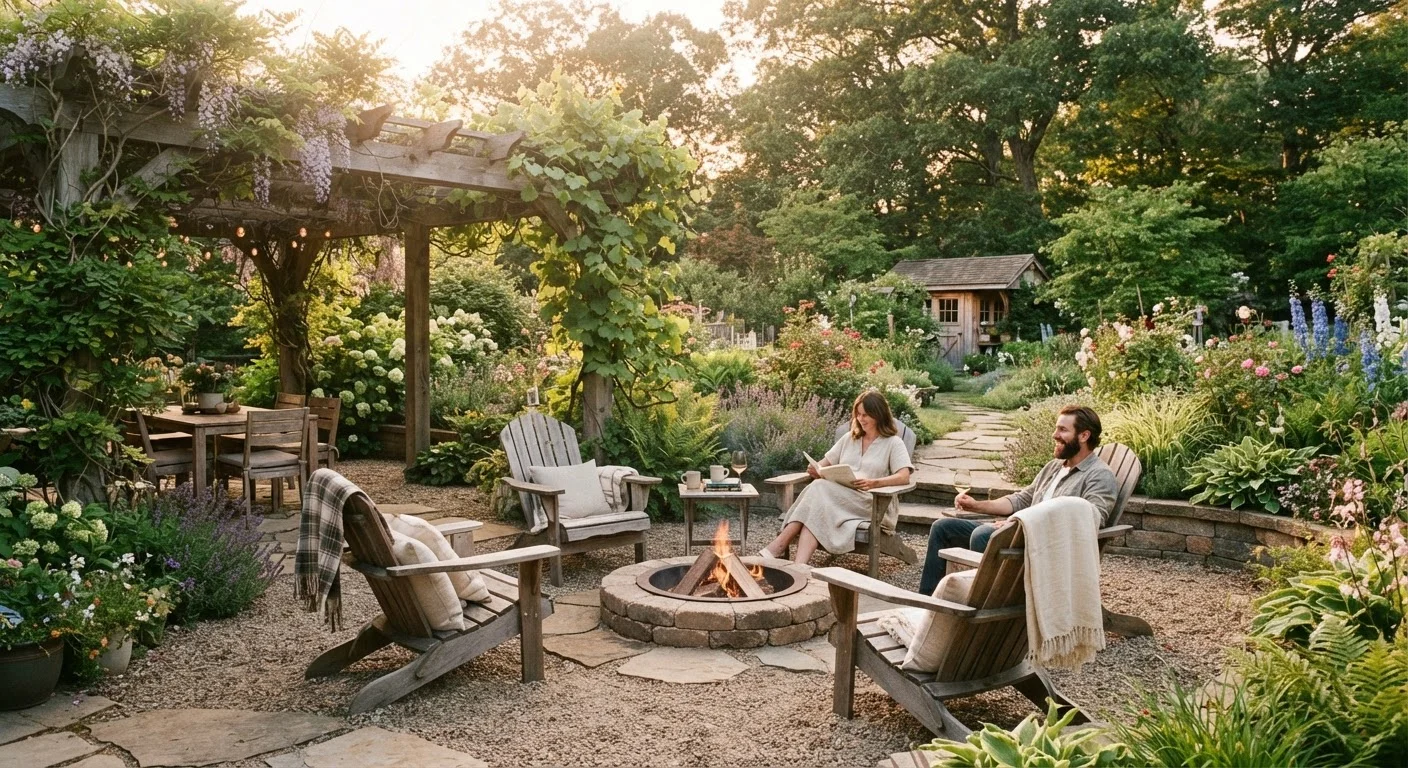
A pergola turns an open yard into an outdoor room with genuine architectural presence.
Fire Pit Areas
A fire pit extends outdoor usability into cooler months and creates a natural social focal point. In-ground fire pits, above-ground ring-style pits, and propane fire tables each have different installation requirements and fuel costs. Wood-burning pits produce more ambiance but require proper ventilation clearance from structures and fences - typically a minimum of 10 feet, though local ordinances vary.
Surfacing around the pit matters as much as the pit itself. Gravel, decomposed granite, or flagstone are all fire-safe choices that keep the area defined and low-maintenance.
The right surface material around a fire pit is as important as the pit itself for safety and usability.
Outdoor Kitchen or Prep Station
A full outdoor kitchen - countertops, grill, storage, and a sink - is a significant investment, but even a modest prep station changes how you cook and entertain outdoors. A weatherproof counter, a side burner, and a small prep sink can be added incrementally. If a sink connection is planned, plumbing to an outdoor location should be handled by a licensed plumber.
Position any cooking area away from overhanging branches and consider the prevailing wind direction so smoke doesn't blow toward seating.
Even a simple outdoor prep counter meaningfully improves how you cook and entertain outside.
Edible Hedges and Food Forests
A traditional privacy hedge doesn't have to be purely ornamental. Blueberry shrubs, espaliered apple trees, currant bushes, and dwarf citrus (in warmer climates) can form productive hedges that provide privacy, habitat, and edible yield simultaneously. This concept is sometimes called a food forest or edible landscape.
Layering tall fruiting trees, mid-height shrubs, and ground-level herbs mirrors natural forest structure and tends to be more resilient once established. For herbs specifically, our kitchen herb garden guide covers placement and care in practical detail.
Blueberry shrubs and espaliered fruit trees pull double duty as privacy screens and productive food plants.
Rain Gardens
A rain garden is a shallow depression planted with deep-rooted native species, designed to absorb stormwater runoff from roofs, driveways, or compacted lawn areas. Rather than letting water pool or flow into storm drains, a rain garden directs it into the soil where plants can use it - reducing erosion, recharging groundwater, and supporting local pollinators all at once.
Siting is critical: rain gardens should be located downhill from the water source but at least 10 feet from the foundation. Native plants are the best candidates because their root systems are adapted to local rainfall patterns.
A well-sited rain garden manages stormwater while supporting native pollinators - a genuinely functional landscape feature.
Raised Bed Kitchen Gardens
Raised beds elevate vegetable and herb growing above poor native soil, compaction, and slugs. They also make garden maintenance easier on the back and allow you to control soil composition precisely. Beds positioned near the kitchen door encourage regular harvesting and herb use.
If you're deciding between raised beds and traditional in-ground planting, our comparison of raised beds vs. in-ground gardening lays out the trade-offs clearly. Building your own compost to fill and replenish beds is another worthwhile investment - see our home composting guide for setup basics.
Raised beds placed near the kitchen door make fresh harvesting a daily habit rather than an occasional project.
Gravel Courtyards and Dry Garden Areas
In drought-prone regions or yards with poor drainage, a gravel courtyard offers a low-water, low-maintenance alternative to lawn. Decomposed granite, pea gravel, and crushed basalt each have different textures and drainage rates. Paired with ornamental grasses, sedums, or Mediterranean-style plantings, a gravel area can be visually striking year-round while consuming far less water than turf.
A weed-suppressing landscape fabric beneath the gravel reduces maintenance significantly, though no fabric eliminates weeds entirely over the long term.
Gravel courtyards offer a striking, low-water alternative to lawn that actually improves with the right plant pairings.
Bringing It All Together
The best outdoor spaces aren't built all at once. Most homeowners add one element per season or year, letting each addition inform the next. Starting with a clear sense of how you want to use the space - cooking, entertaining, relaxing, gardening - makes it easier to prioritize. Structures that require permits, such as pergolas with footings or decks, are worth tackling early because the approval process takes time. See our overview of the deck permit process for a realistic look at what that typically involves.
Phase Your Outdoor Projects Strategically
If budget is a consideration, tackle structural projects - pergolas, raised bed frames, fire pit surrounds - before planting. Structures define the space and tell you how much planting area you actually have. Adding plants last also means you won't inadvertently disturb them during construction. For broader household budgeting context, the budgeting and saving hub has practical frameworks for planning larger home projects.
Whether your yard is a quarter-acre or a narrow urban lot, the ideas above scale. Container plantings, vertical trellises, and compact fire bowls bring similar benefits to smaller footprints. Check out container gardening strategies if space is your primary constraint.