

Key Takeaways
- Defensive driving means anticipating hazards, not just reacting to them after they appear.
- Maintaining adequate following distance is one of the most protective habits a driver can build.
- Scanning ahead and checking mirrors regularly reduces surprise - the leading factor in late reactions.
- Speed management and yielding the right-of-way proactively prevents the majority of common collision types.
- Defensive driving applies on every road type, from neighborhood streets to high-speed highways.
Defensive Driving
Defensive driving is a set of skills and habits that allow a driver to anticipate hazards, respond to the actions of others, and reduce the likelihood of a crash - even when other road users make mistakes. It goes beyond following traffic laws. It means actively managing space, speed, and attention to create a safety buffer at all times.
Traffic safety researchers often describe defensive driving through the lens of "hazard perception" - the cognitive ability to identify developing risks before they become emergencies. Studies consistently link stronger hazard perception scores with lower crash involvement rates.
More Than Staying Alert
Most drivers understand that paying attention is important. But defensive driving is a more structured concept than simply keeping your eyes open. It describes a proactive approach to every trip - one where you constantly read the road ahead, account for what other drivers might do, and position your vehicle to minimize exposure to risk.
The core idea is that you cannot control other drivers, road conditions, or unexpected events. What you can control is how much time and space you give yourself to respond. Defensive driving is about engineering that buffer into every mile you drive.
It contrasts directly with passive driving - where a driver follows the rules but reacts only after a hazard is already present. And it sits at the opposite end of the spectrum from aggressive driving, which actively shrinks safety margins in pursuit of speed or convenience.
Start With the 'What If' Habit
As you drive, practice asking 'what if?' about the vehicles and conditions around you. What if that car runs the stop sign? What if a pedestrian steps off that curb? This mental habit builds anticipation naturally over time, without requiring formal training to begin.
The Four Pillars of Defensive Driving
Safety educators generally organize defensive driving around four interconnected principles:
- Anticipation: Reading the environment - traffic patterns, pedestrian behavior, road geometry - to identify hazards before they fully develop. This means watching not just the car in front of you, but the two or three vehicles ahead of that one.
- Space management: Keeping adequate distance on all sides of your vehicle. The three-second following-distance rule (or longer in adverse conditions) gives you reaction time. Side clearance matters too, especially near cyclists, parked cars, and merging vehicles.
- Speed management: Traveling at a speed that matches actual conditions - not just the posted limit. In heavy rain or fog, posted speeds may be unsafe. Adjusting for poor weather conditions is a direct application of this principle.
- Communication: Using signals early, making eye contact with pedestrians, and positioning your vehicle to make your intentions clear. Unpredictability from other drivers is a major crash contributor - being predictable yourself reduces that risk.
~94%
Crashes with a human behavior factor
The National Highway Traffic Safety Administration (NHTSA) has reported that human error is a critical factor in approximately 94% of serious crashes in the United States.
3 seconds
Recommended minimum following distance
Traffic safety organizations widely recommend a minimum three-second following gap under normal conditions, extending to four or more seconds in rain, fog, or heavy traffic.
1 in 101
Lifetime odds of dying in a motor vehicle crash
According to the National Safety Council, the lifetime odds of dying in a motor vehicle crash in the United States are approximately 1 in 101 - underscoring the stakes of everyday driving decisions.
Where Defensive Driving Gets Applied
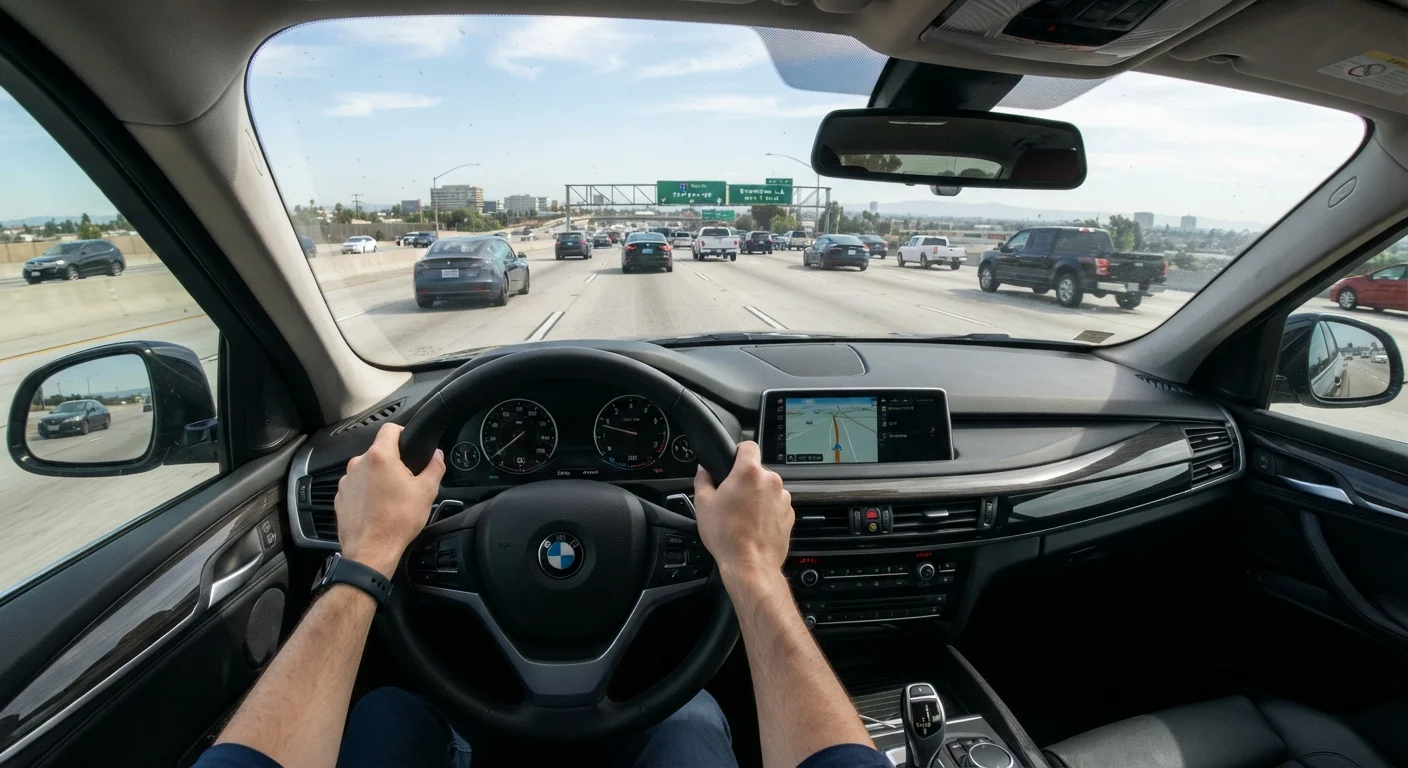
These principles don't look the same on every road. Highway and city driving demand different applications of the same core habits. On a highway, space management becomes critical at higher speeds - a three-second gap at 70 mph covers far more ground than at 30 mph, and lane-change decisions carry more consequence. In city driving, the challenge is volume: intersections, pedestrians, cyclists, and stop-and-go patterns all create dense hazard environments where anticipation matters most.
Defensive driving also requires managing your own state as a driver. Distraction is one of the most significant threats to defensive awareness. Distraction takes visual, manual, and cognitive forms - all of which erode the attentional bandwidth defensive driving depends on.
Equally important is recognizing habits that feel routine but quietly elevate risk. Rolling through stop signs, delayed turn signals, and tailgating are precisely the behaviors that raise crash probability without feeling dangerous in the moment.
Defensive Driving Courses and Your Record
In many U.S. states, completing an approved defensive driving course can result in the dismissal of a minor traffic violation or a reduction in DMV points. Requirements and eligibility vary by state and court. Always verify current rules with your state's DMV or traffic court before enrolling for this purpose.
Building the Habit
Defensive driving isn't a fixed skill you acquire once - it's a set of habits that require ongoing reinforcement. Formal defensive driving courses, offered by organizations like the National Safety Council and AAA, provide structured frameworks and are recognized by many state DMVs. These courses can be especially valuable after a long break from driving, after a minor incident, or when new road environments (like rural highways or dense urban corridors) become part of your regular routine.
Beyond formal training, the most reliable way to strengthen defensive habits is deliberate practice on every trip. Before pulling into traffic, ask: what is my following distance? Have I checked my mirrors in the last 5-8 seconds? Is my speed appropriate for what I can actually see? These small, consistent checks compound over time into a fundamentally safer driving style.
The goal is not anxiety or hyper-vigilance - it is calm, informed confidence. A driver who understands the road environment is less likely to be surprised by it.