

Key Takeaways
- Distracted driving has three distinct types: visual, manual, and cognitive - and many activities trigger all three at once.
- Texting while driving is among the most dangerous distractions because it combines all three distraction categories simultaneously.
- Hands-free phone calls still cause significant cognitive distraction, even though your hands remain on the wheel.
- Passengers, eating, and adjusting in-car controls are common non-phone distractions that drivers routinely underestimate.
- Even a brief 2-second glance away from the road at 55 mph covers the length of a football field.
Distracted Driving
Distracted driving is any activity that diverts a driver's attention away from the primary task of operating a vehicle safely. It falls into three overlapping categories: visual (eyes off road), manual (hands off wheel), and cognitive (mind off driving). Because these categories often overlap, certain distractions - like texting - are especially dangerous.
Research by the National Highway Traffic Safety Administration (NHTSA) classifies texting as a 'triple threat' distraction because it simultaneously involves all three distraction types.
The Three Categories of Distraction
Most drivers associate distracted driving with smartphones, and for good reason. But distraction is a broader problem that researchers and safety agencies break into three distinct types:
- Visual distraction - taking your eyes off the road. Glancing at a navigation screen, checking a mirror unnecessarily, or watching a roadside incident all qualify.
- Manual distraction - removing one or both hands from the steering wheel. Eating, adjusting the radio, or reaching for an item in the back seat are common examples.
- Cognitive distraction - allowing your mind to disengage from the driving task. This is the least visible and most underestimated category.
The reason texting is so persistently dangerous is that it triggers all three simultaneously. You look away from the road, manipulate the device, and focus cognitively on a conversation - all while traveling at highway speeds. Understanding these categories helps drivers recognize risks they might otherwise dismiss as harmless.
Distraction Categories Often Overlap
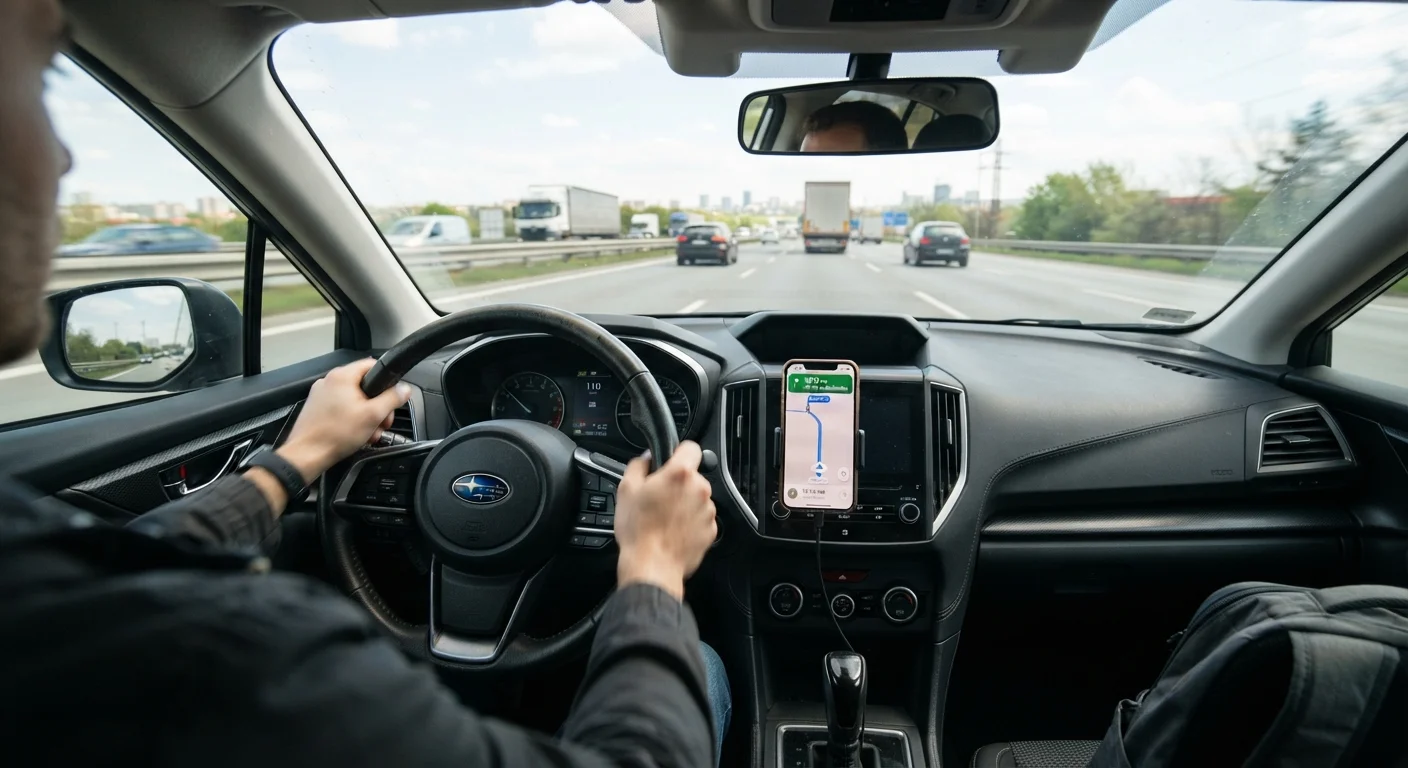
Many everyday driving distractions are not purely one type. Texting, entering a GPS address, or adjusting a touchscreen infotainment system all involve visual, manual, and cognitive distraction simultaneously. When multiple categories combine, the effect on driving performance is substantially greater than any single distraction type alone.
Cognitive Distraction: The Hidden Risk
Cognitive distraction deserves special attention because it is invisible. A driver who appears fully attentive - eyes forward, both hands on the wheel - may still be dangerously distracted if their mental focus has drifted elsewhere.
Hands-free phone calls are the clearest example. Many drivers assume that switching to a Bluetooth headset eliminates the risk of phone use. It eliminates manual and visual distraction, but not cognitive distraction. The mental load of sustaining a phone conversation - tracking what was said, formulating a response, managing social dynamics - competes directly with the attentional demands of driving. Drivers in phone conversations have been shown to scan the road less systematically, miss traffic signals more often, and react more slowly to sudden hazards than drivers who are not on a call.
Daydreaming is another major cognitive distractor and is harder to control. NHTSA data indicates that mind-wandering is involved in a significant share of crashes, even when no device was in use. The habits that quietly raise crash risk often involve this kind of passive inattention rather than obvious device use.
“Driver distraction is not just a phone problem. Any activity that pulls attention away from the driving task - whether mental, visual, or physical - increases crash risk in ways most drivers consistently underestimate.”
— NHTSA Traffic Safety Research Division, Federal agency overseeing US highway safety research and policy
Non-Phone Distractions Drivers Routinely Underestimate
The cultural and legal focus on smartphones has created a blind spot: drivers often ignore equally disruptive behaviors because they feel routine or harmless.
Eating and Drinking
Unwrapping food, managing a drink cup, or wiping a spill are all manual distractions that require attention to manage. Eating while driving demands repeated short visual and manual interruptions - exactly the type of fragmented attention pattern that characterizes distracted crashes.
Passenger Interaction
Conversations with passengers produce cognitive distraction similar to phone calls, though the risk differs in one important way: passengers present in the vehicle can read the driving situation and often pause conversation naturally when conditions change. Remote callers cannot do this.
In-Car Controls and Infotainment
Modern touchscreen systems require drivers to navigate menus visually and manually, sometimes for several seconds at a time. Adjusting climate control, selecting music, or entering a destination while moving should be treated as genuine hazards - not background tasks. If possible, configure these settings before pulling out of the driveway.
Building defensive driving habits means accounting for these everyday distractions, not just the obvious ones.
Set It Before You Drive
Configure your GPS route, music playlist, and climate controls before moving. If you need to make adjustments mid-trip, pull safely off the road or into a parking area first. Even a few seconds of setup at the start of a journey can eliminate multiple distractions along the way.
The Real Cost: Distance and Reaction Time
Abstract warnings about distraction become more concrete when expressed in physical distance. At 55 mph, a vehicle travels approximately 80 feet per second. A two-second glance at a phone covers roughly 160 feet - more than half the length of a city block - during which the driver has essentially no awareness of what is happening ahead.
~400 ft
Distance traveled in a 5-second glance at 55 mph
Cited by the NHTSA as a benchmark for illustrating how far a vehicle travels without meaningful driver awareness.
8-9%
Share of fatal crashes involving distraction
According to NHTSA crash data, distraction is a consistently identified contributing factor in a significant portion of fatal traffic crashes each year in the US.
3 types
Distinct distraction categories recognized by safety researchers
Visual, manual, and cognitive distraction are the three classifications used by NHTSA and traffic safety researchers to categorize driver inattention.
Reaction time compounds the risk further. Even after a driver returns their eyes to the road, it takes additional time - typically 1.5 seconds or more under normal alertness - to perceive a hazard, decide on a response, and begin executing it. If the vehicle ahead brakes suddenly during a distraction, the gap needed to avoid collision expands dramatically.
This is especially relevant at night, when visibility is already reduced and hazards appear later in a driver's visual field. Reviewing the common myths about night driving reveals how many drivers overestimate their ability to compensate for reduced conditions.
The goal is not to eliminate every source of sensory input - that is not realistic. The goal is to recognize which actions genuinely remove your attention from driving, and to create habits that minimize those lapses. Staying alert on extended trips also plays a role; the evidence-informed approaches to alertness on long drives complement the distraction-reduction strategies outlined here.