

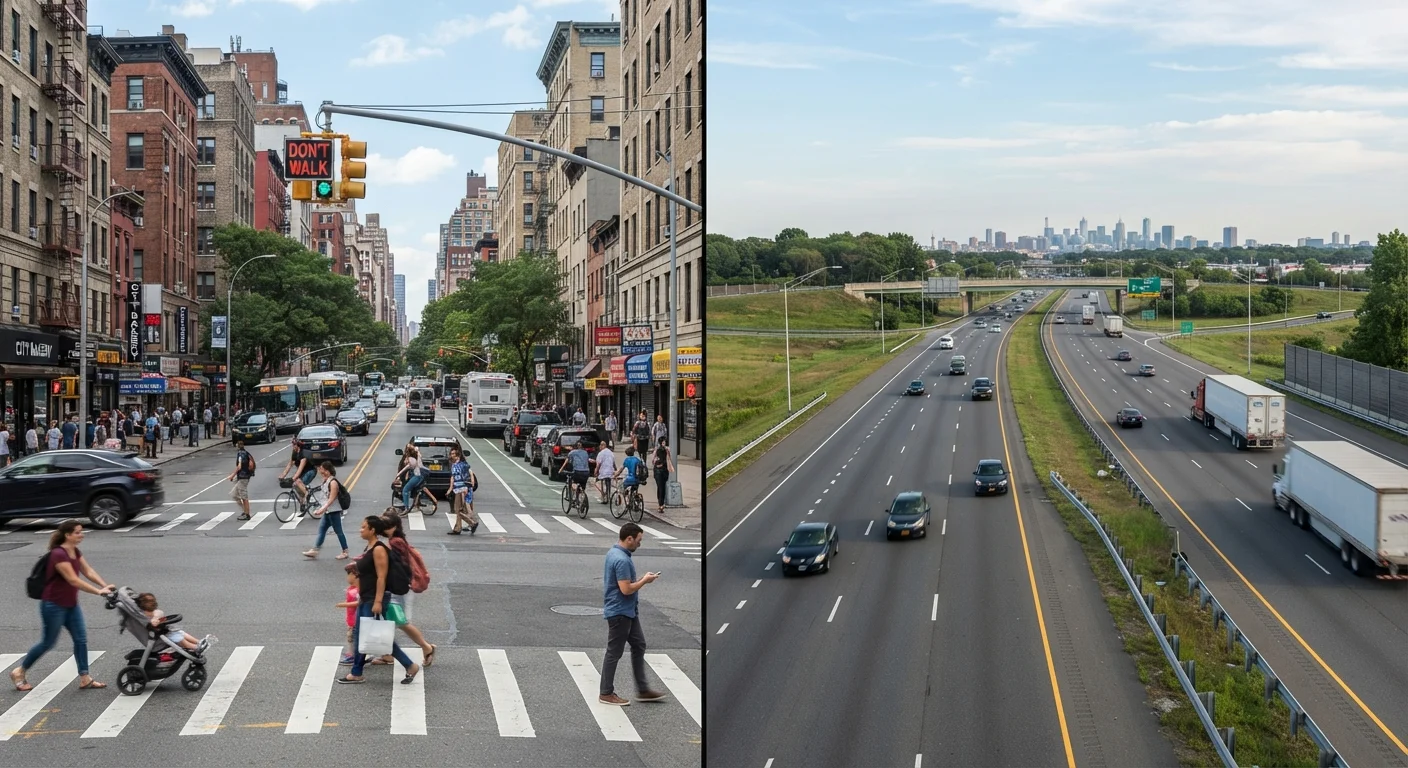
Key Takeaways
- Highway driving requires sustained focus on speed management, safe following distance, and proper merging technique.
- City driving demands constant situational awareness, frequent decision-making, and anticipation of pedestrians and cyclists.
- Crash severity differs: highway accidents tend to be more serious due to speed, while city crashes are more frequent.
- Blind spot management is critical on highways; scanning intersections thoroughly is essential in urban environments.
- Fatigue is a greater highway hazard; distraction and aggression are more dangerous in city conditions.
- Both environments reward drivers who build consistent, deliberate habits rather than relying on autopilot.
Option A
Highway Driving
High-speed, long-distance travel demanding sustained focus.
Best for: Drivers covering long distances who need to manage speed, lane discipline, and merging safely.
Option B
City Driving
Dense, unpredictable environments requiring sharp situational awareness.
Best for: Drivers navigating stop-and-go traffic, pedestrians, cyclists, and frequent intersections.
If you primarily commute on interstates or travel long distances
Highway Driving
Focus on mastering merge discipline, following distance at speed, and fatigue management to stay safe on long stretches.
If you spend most of your time navigating urban streets
City Driving
Prioritise intersection scanning, pedestrian awareness, and smooth speed transitions to reduce your risk in dense traffic.
If you regularly switch between both environments
Highway Driving
Highway entry and exit points are where transitions go wrong most often - sharpening those transitions protects you in both worlds.
How Each Environment Shapes the Driving Challenge
Most licensed drivers can operate a vehicle in both settings, but comfort isn't the same as competence. Highway and city driving impose fundamentally different cognitive and physical demands - and treating one like the other is where many drivers quietly accumulate risk.
On the highway, the primary challenge is managing speed and distance over time. Vehicles travel at 55-75 mph, leaving far less margin for error. A momentary lapse in attention - a glance at a notification, a few seconds of fatigue-related micro-sleep - can have consequences before a driver even registers a hazard. The highway rewards patience, lane discipline, and a firm understanding of following distance. At 65 mph, a vehicle covers roughly 95 feet per second, which is why a two-second following gap in the city becomes a three-to-four-second minimum on the highway.
City driving is physically slower but cognitively relentless. Intersections, pedestrian crossings, cyclists entering the lane, delivery vehicles double-parked, and constantly changing traffic signals all compete for attention simultaneously. Habits that feel routine - rolling through stop signs, signalling late, or accelerating through yellow lights - are measurably more dangerous in urban environments where other road users are unpredictable and close.
| Criterion | Highway Driving | City Driving |
|---|---|---|
| Typical speed range | 55-75 mph | 15-45 mph |
| Primary hazard type | Speed, fatigue, merging errors | Intersections, pedestrians, cyclists |
| Crash severity | Generally higher impact force | Generally lower impact force |
| Crash frequency | Lower per mile traveled | Higher in absolute numbers |
| Key skill required | Following distance, lane discipline | Intersection scanning, space management |
| Fatigue risk | High (monotony, long duration) | Lower, but distraction risk is higher |
| Blind spot management | Critical during lane changes, merges | Important, but lower-speed consequence |
Key Skills Each Environment Demands
Highway: Merging, Lane Discipline, and Fatigue Awareness
Safe highway driving begins before you reach cruising speed. Merging is one of the most technically demanding highway maneuvers: drivers must match the flow of traffic on the on-ramp, check mirrors and blind spots, signal early, and slot into a gap without forcing other vehicles to brake. Entering too slowly is as dangerous as cutting across lanes.
Once at speed, lane discipline matters more than many drivers acknowledge. The left lane is for passing, not cruising - staying in it without overtaking increases rear-end risk and frustrates other drivers in ways that can escalate. For more on that dynamic, see our article on aggressive driving vs. road rage.
Fatigue is a highway-specific hazard. Long, monotonous stretches suppress alertness. If you notice yourself correcting drift, missing exits, or struggling to recall the last few miles, pull off safely - fatigue impairs judgment similarly to alcohol impairment at certain levels.
95 ft/sec
Distance covered at 65 mph
At highway speeds, a vehicle travels roughly 95 feet every second, highlighting why following distance is so critical.
~40%
Share of fatal crashes at intersections
According to the Federal Highway Administration, approximately 40% of all traffic fatalities in the US involve intersections.
3-4 seconds
Recommended highway following distance
Most road safety guidelines recommend at least a 3-to-4-second gap at highway speeds, increasing in poor conditions.
City: Intersections, Scanning, and Space Management
Urban drivers need to scan intersections early - not just checking that the light is green, but watching for pedestrians still in the crosswalk, cyclists approaching from the right, and vehicles that may run a red. The defensive habit of covering the brake (hovering a foot over it without pressing) when approaching intersections reduces reaction time meaningfully.
Space management - keeping a buffer around your vehicle in all directions - is harder in city traffic but just as important. It gives you room to react to a door opening, a child stepping off a curb, or a vehicle cutting in from a side street. Weather adds another layer to both environments; adapting your technique in rain or fog is especially important when visibility drops and road surfaces change unpredictably.
Crash Patterns: Where Each Environment Is Most Dangerous
Understanding where crashes happen - and why - helps drivers focus their attention where it counts most.
Highway crashes are less frequent per mile traveled than city crashes, but they tend to be more severe. Higher speeds mean greater impact force, longer stopping distances, and less time to correct errors. Multi-vehicle pile-ups, often triggered by sudden braking or a single vehicle drifting, are disproportionately a highway phenomenon. Rear-end collisions and run-off-road incidents dominate highway crash statistics.
City driving generates far more crashes in absolute terms, largely due to the sheer volume of potential conflict points - intersections, crosswalks, parking maneuvers, and lane changes in tight quarters. Angle crashes (T-bone collisions at intersections) and sideswipes are common urban crash types. Vulnerable road users - pedestrians and cyclists - face far greater exposure in urban settings.
The implication for drivers is practical: on the highway, protect yourself from speed-related severity by maintaining distance and staying alert. In the city, reduce frequency by slowing down at intersections, eliminating distractions, and anticipating unpredictable behavior from others. Both environments also reward additional caution at night - common night driving myths can give drivers false confidence about their visibility and reaction time after dark.
New Drivers Face Both Environments Differently
Newer drivers often find city driving more stressful initially because of its constant demands, while highway driving can create a false sense of ease due to fewer immediate decisions. In practice, both environments carry serious risks. Driver education programs in most states now include structured exposure to both settings for this reason. If you're newly licensed or returning after a long gap, deliberate practice in each environment - ideally with an experienced driver present - builds the habits that reduce risk over time.