

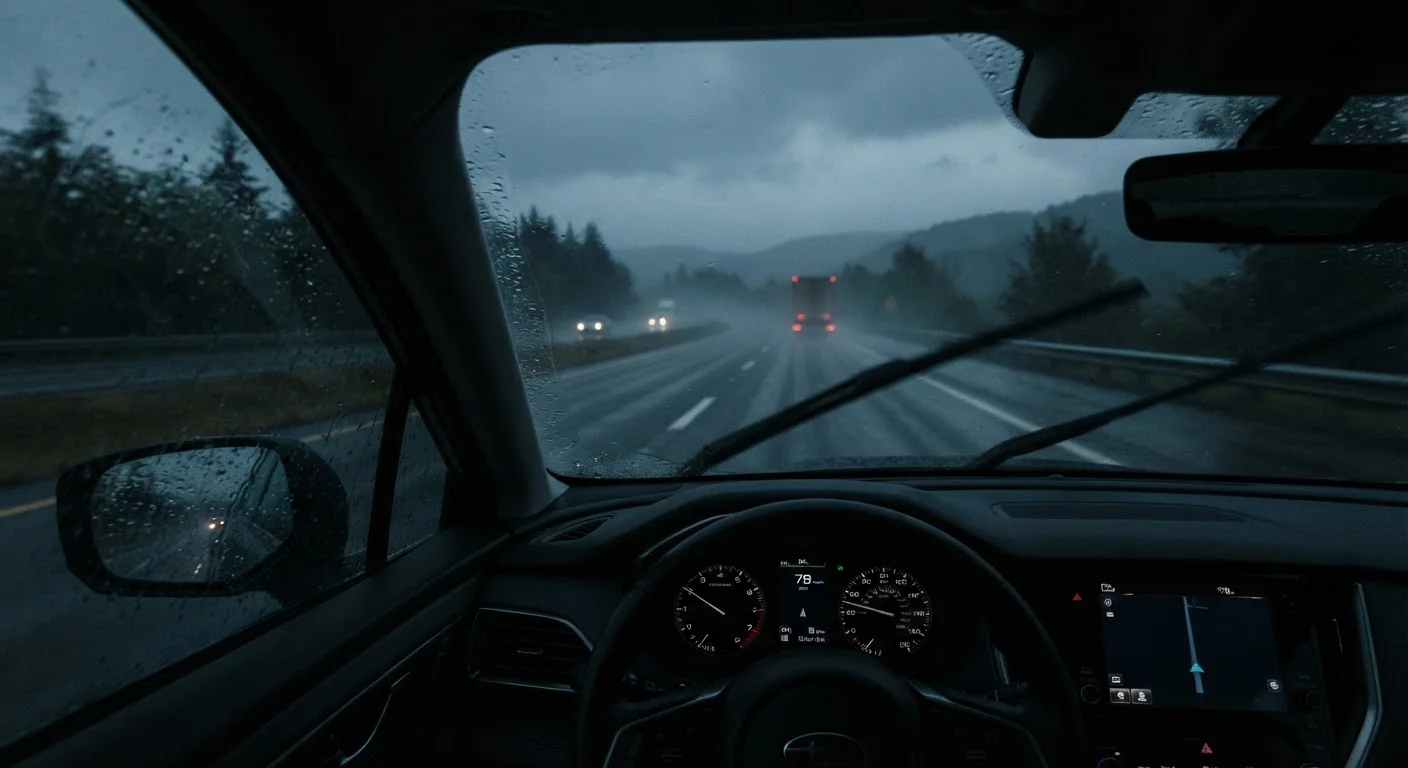
Key Takeaways
- Reduce speed well below the posted limit in rain, snow, or fog - stopping distances increase dramatically.
- Black ice gives almost no visual warning; treat shaded or bridge surfaces as potentially frozen when temperatures are near freezing.
- Use low-beam headlights in fog - high beams reflect glare back and reduce your effective sight line.
- Increase following distance to at least four seconds in wet conditions and six or more in snow or fog.
- Sudden steering or braking inputs on slippery roads significantly raise the risk of skidding or losing control.
- A well-maintained vehicle - tires, brakes, wipers - is your first line of defense before any technique.
What you will need
Why Weather Demands a Fundamentally Different Mindset
Most drivers adjust their habits slightly when conditions deteriorate - they slow down a little, grip the wheel a bit tighter. But weather-related driving isn't just about incremental caution. It requires a genuine shift in how you think about speed, space, and your vehicle's limits.
Roads in rain, snow, and fog don't just become slippery - they become unpredictable. A surface that handled fine thirty seconds ago may have a patch of black ice around the next curve. Visibility that was adequate at highway speed may be dangerously insufficient once fog thickens. The core challenge is that the road itself cannot communicate these changes to you in real time. That means the driver must compensate with margin: more time, more space, more restraint.
Understanding why your vehicle behaves differently in these conditions is just as important as knowing what to do. Traction is the grip your tires have on the road surface, and it is finite. Rain, ice, and snow all reduce it significantly. Every action you take - braking, accelerating, turning - draws on that traction budget. When you exceed it, the vehicle stops responding predictably.
What you will need
All-season or winter tires
Provide adequate grip on wet and snowy surfaces; winter tires offer significantly better cold-weather traction than all-season tires.
Tire pressure gauge
Cold temperatures reduce tire pressure; checking before a winter drive ensures optimal contact patch and handling.
Ice scraper and snow brush
Remove snow and ice from all windows, mirrors, and lights before driving - not just the windshield.
Emergency road kit
Includes a flashlight, jumper cables, blanket, and basic supplies in case you become stranded in poor conditions.
Step-by-Step: Adjusting Your Driving for Rain, Snow, and Fog
The following steps apply broadly across adverse weather conditions, with condition-specific notes where the approach differs meaningfully. Work through them as a mental checklist each time conditions deteriorate.
Prepare your vehicle before you leave
No driving technique compensates for a vehicle that isn't ready for adverse conditions. Before departing, confirm all windows are fully clear of snow, ice, condensation, or dirt - not just a small cleared patch. Ensure headlights, taillights, and turn signals are all working and not obscured by snow or grime. Check that your tires are properly inflated; cold air causes pressure to drop, and underinflated tires reduce wet-road grip.
Top up windshield washer fluid with a formulation rated for low temperatures, and confirm your wipers are leaving a clean, streak-free surface. A few minutes of preparation reduces reaction time and improves situational awareness throughout the entire drive.
Reduce your speed - meaningfully, not marginally
Speed limits reflect ideal conditions. In rain, snow, or fog, those numbers no longer represent a safe ceiling. On wet pavement, stopping distances can increase by 50% or more compared to dry roads. On packed snow or ice, the increase can be several times greater. Reducing speed is the single most impactful adjustment you can make.
Treat posted speed limits as a maximum under ideal conditions, not a target in poor weather. Speed misjudgment is one of the leading contributors to weather-related crashes - drivers often feel slower than they actually are when visibility is limited or roads appear uniform and white.
Extend your following distance significantly
The standard three-second following distance applies to dry roads. In rain, increase this to at least four seconds. In snow, ice, or dense fog, six seconds or more is a reasonable target. To measure following distance, pick a fixed roadside object and count the seconds between when the vehicle ahead passes it and when you do.
A longer gap gives you more time to perceive and respond to a hazard and more road space to slow gradually rather than braking hard. Hard braking on a slick surface - even with ABS - extends stopping distance and can cause directional instability. Your goal is to avoid needing emergency stops entirely by leaving enough space to react smoothly.
Use headlights correctly for the conditions
In rain and fog, turn on your low-beam headlights. This is required by law in most US states whenever visibility is reduced or wipers are in use - check your state's specific rules. Low beams keep you visible to others without creating glare.
In fog specifically, avoid high beams. The light scatters off water droplets and reflects back toward you, actually reducing how far you can see. If your vehicle has dedicated front fog lights, use them; they are designed to project a wide, low beam below the fog layer. Rear fog lights, where available, make you more visible to drivers behind you. For more context on how headlights perform under reduced conditions, see our night driving myths guide.
Brake, steer, and accelerate smoothly
On any slippery surface - wet, icy, or snow-covered - abrupt inputs are your enemy. Sudden braking, sharp steering, or aggressive acceleration can overwhelm available traction and cause a skid. Think of your available grip as a limited resource: the more you demand at once, the more likely you are to exceed it.
Apply brakes early and progressively. If your vehicle has ABS, apply firm, steady pressure and let the system modulate - do not pump the pedal. Steer with deliberate, smooth movements. When accelerating from a stop on ice or snow, use light throttle and, if available, engage a snow or low-traction driving mode.
Recognize hidden hazards: black ice and aquaplaning
Black ice is a thin, nearly transparent layer of ice that forms on road surfaces - particularly on bridges, overpasses, shaded stretches, and intersections - when temperatures hover near or below freezing. It is called 'black ice' because it takes on the color of the pavement beneath it, making it almost impossible to detect visually. If road surfaces look wet but temperatures are at or below 32°F, treat all pavement as potentially icy.
Aquaplaning (also called hydroplaning) occurs when a layer of water builds up between your tires and the road surface faster than the tread can disperse it, causing you to lose contact with and control of the road. It typically happens at higher speeds on wet roads. If you feel your steering suddenly lighten or your vehicle begin to float, ease off the throttle gently - do not brake sharply - and allow the tires to reestablish contact.
Adapt your lane positioning and situational awareness
In poor visibility, increase your visual scanning range - look further ahead than you normally would and check mirrors more frequently. Watch for brake lights earlier than usual to give yourself maximum reaction time. In fog or heavy snow, use road markings and lane lines as reference points to hold your position rather than following the vehicle ahead too closely.
Be especially cautious when changing lanes in adverse conditions - blind spots are harder to clear when visibility is compromised and following distances are longer. Signal early and move gradually. Roads can also behave differently depending on whether you're on a highway or navigating city traffic - city conditions introduce pedestrians, cross-traffic, and more frequent stops, all of which compound risk in wet or icy weather.
Check Your Vehicle Before the Season Changes
Tread depth, tire pressure, wiper blade condition, brake responsiveness, and headlight function all degrade gradually and are easy to overlook. A quick pre-season inspection - or a professional check-up - means your vehicle is ready before the first bad-weather drive. See our seasonal car care guide for a full breakdown of what to check and when.
Never Use Cruise Control on Wet or Icy Roads
Cruise control maintains speed by adjusting throttle automatically, which can cause wheel spin on slippery surfaces and delay the driver's natural response to traction loss. Disengage it entirely any time road conditions are compromised. Maintaining conscious, active control of your speed is critical in adverse weather.
When to Pull Over and Stop
If visibility drops below what you can safely navigate - heavy snow, dense fog, or blinding rain - pull completely off the road onto a shoulder or into a parking area and activate your hazard lights. Driving slowly in near-zero visibility puts both you and others at serious risk. Waiting out the worst conditions is not a sign of inexperience; it is sound judgment.