

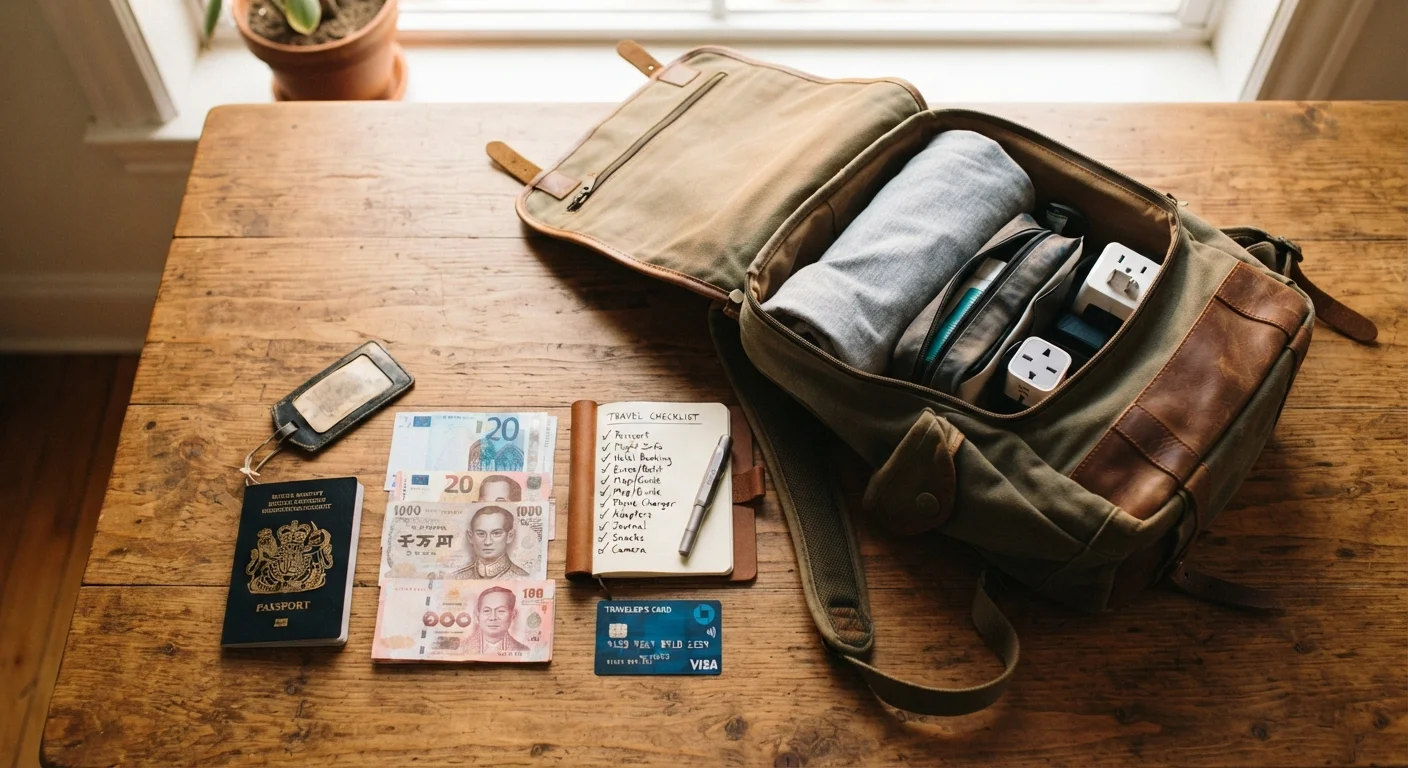
Key Takeaways
- Notifying your bank before departure prevents your cards from being frozen abroad.
- Foreign transaction fees and ATM surcharges can quietly drain your travel fund if left unchecked.
- A realistic daily spending estimate—not a wishful one—is the foundation of any working travel budget.
- Carrying a backup payment method separate from your primary card is essential risk management.
- Knowing the local currency's approximate exchange rate before you arrive protects you from airport-kiosk markups.
- Travel insurance decisions should be made before you leave, not after something goes wrong.
Summary
22 items · 30–60 minutes
Why Financial Prep Is Part of Packing
Most travelers pack their bags the night before departure, but the financial prep often gets skipped entirely — or left to the airport. That's where avoidable costs creep in: surprise card blocks, punishing currency exchange rates, and the creeping realization that the daily budget was built on optimism rather than math.
This checklist is designed for cost-conscious US travelers who want to hit the ground running, not scrambling. Whether you're heading abroad for the first time or refining habits from past trips, running through these items before you leave puts you in control from day one. For a broader orientation on traveling affordably, see our budget travel starting point guide for foundational concepts and habits.
Work through the checklist below in the order it appears — budget foundation first, then banking logistics, then the smaller but important details that are easy to forget.
Budgeting or expense-tracking app
Log daily spending in real time so you can see exactly where your money is going throughout the trip.
XE Currency or similar converter
Check live exchange rates before and during the trip to recognize fair rates and avoid overpriced conversions.
Secure password manager
Store bank contact numbers, policy numbers, and card PINs securely without carrying paper copies everywhere.
Spreadsheet or notes template
Build a simple per-day budget breakdown before departure and update it at each destination.
How to Use This Checklist
Aim to complete the Budget Foundation and Cards & Banking groups at least one week before departure — some bank notifications and insurance purchases need lead time. The Home Financial Housekeeping group is best handled 48–72 hours before you leave, once you know your exact schedule.
Items marked must are non-negotiable if you're traveling on a tight budget. Items marked should are strongly recommended and take minimal effort. Nice-to-have items add an extra layer of security or convenience if time allows.
Budget Foundation
Cards & Banking
Currency & Cash
Travel Insurance & Protections
Tracking & Accountability
Home Financial Housekeeping
If you're driving to your destination, pair this checklist with our driver safety checklist to cover both the mechanical and financial side of a road trip. And if you haven't locked in your research and entry logistics yet, the pre-trip research checklist is worth running through before you commit to any bookings.
Airport Currency Kiosks Cost More Than You Think
Exchange kiosks at airports and hotel desks routinely offer rates 10–15% worse than mid-market rates, plus additional service fees. The convenience is real, but so is the cost. Withdraw modest amounts at a destination ATM instead, and compare the fee structure before committing.
Skipping Travel Insurance Is a Calculated Risk
A single medical evacuation abroad can cost tens of thousands of dollars — far more than most travel insurance premiums. If your existing health coverage doesn't extend internationally and you have no credit card trip protections, traveling uninsured is a meaningful financial exposure, not just a minor oversight.
The Spending Areas That Catch Travelers Off Guard
Even well-prepared travelers routinely overspend in the same few categories. Food is one of the most common — see our guide on eating well without draining your travel fund for practical strategies. Ground transport is another; understanding your options in advance can mean the difference between a $3 bus and a $30 taxi to the same destination. Our ground transport reference breaks down low-cost options by mode.
For a deeper look at where budget travelers predictably lose money, where budget travelers consistently overspend is worth reading before you finalize your daily estimates. If you're calibrating spending across a multi-week itinerary, stretching a travel budget across different trip lengths covers how your allocation strategy should shift with trip duration.
Always Carry a Backup Payment Method
Cards get skimmed, blocked, or lost — often at the worst possible moment. Keep a second card (ideally from a different bank network) in a separate location from your primary wallet. This single step has rescued more budget travelers from travel meltdowns than any other financial precaution.
One last note: the financial habits that make travel work are the same ones that serve you at home. The Budgeting & Saving hub is a useful resource for building stronger money tracking habits that travel well — literally.
This article provides general financial information for educational purposes. It is not personalized financial or legal advice. Please consult a qualified financial professional for guidance specific to your situation.