

Key Takeaways
- Tire pressure, tread depth, and fluid levels are the most critical mechanical checks before any long drive.
- A properly stocked emergency kit can make the difference between a minor inconvenience and a dangerous situation.
- Driver readiness - rest, route knowledge, and medication awareness - is just as important as vehicle condition.
- Verifying your documents and insurance coverage before departure protects you legally and financially.
- Most pre-trip checks take under an hour and can prevent costly, time-consuming roadside breakdowns.
Summary
22 items · 30-60 minutes
Why This Checklist Matters
Most road trip breakdowns aren't sudden mechanical failures - they're the result of small, detectable problems that were never caught before departure. Worn tires, low brake fluid, a neglected spare, or simple driver fatigue are entirely preventable causes of highway incidents. This checklist is designed to close those gaps in 30 to 60 minutes, giving you a structured way to confirm your vehicle and your own readiness before you pull out of the driveway.
For a deeper look at the mechanical side of preparation, see our mechanical walk-around checklist - it complements this driver safety guide with a step-by-step exterior and under-hood inspection routine.
Verify Fluid Levels Before Every Long Trip
Low coolant or brake fluid levels can lead to engine overheating or brake failure - both potentially catastrophic on a highway. Don't assume levels are fine because the car seems to be running normally. Our fluid check guide walks you through exactly how to inspect each system safely and correctly.
What to Check and What You'll Need
Before you begin working through the checklist, gather the basic tools you'll need. Most items below are inexpensive and should already be in your vehicle or garage. The goal isn't to perform full repairs - it's to identify anything that needs professional attention before you're 200 miles from the nearest service center.
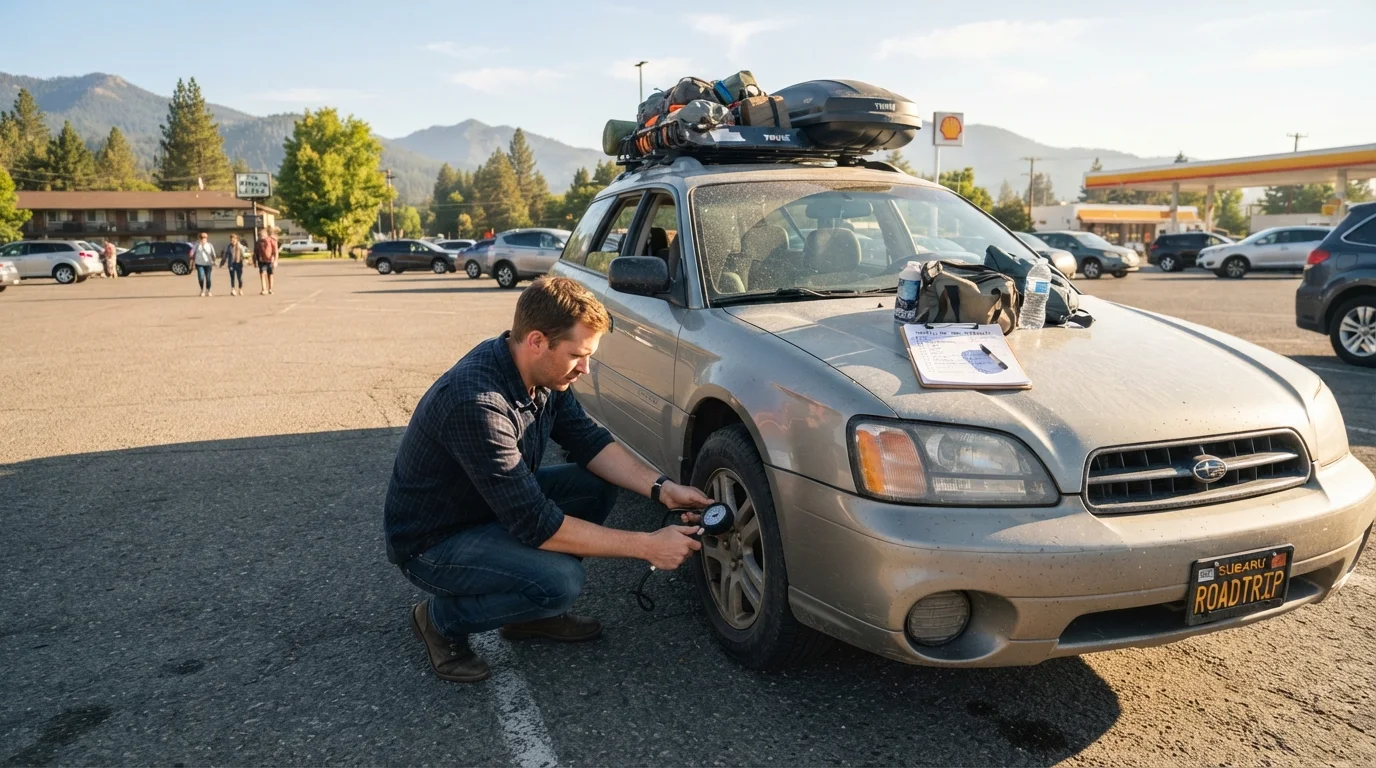
Tire Pressure Gauge
Measures tire inflation accurately so you can adjust to the manufacturer's recommended PSI.
Portable Jump Starter
Allows you to restart a dead battery without needing another vehicle nearby.
First-Aid Kit
Provides basic medical supplies to manage minor injuries until professional help is available.
Reflective Warning Triangles or Road Flares
Alerts oncoming traffic to your disabled vehicle position, reducing accident risk.
Portable Power Bank
Keeps your phone charged for navigation and emergency communication during the trip.
Offline Maps App
Provides navigation even in areas with no cell service or unreliable data coverage.
Once you have your tools ready, work through the checklist groups below systematically. Start with mechanical checks while the engine is cold (especially for fluid levels), then move to equipment and documents.
Vehicle Mechanical Checks
Safety Equipment & Emergency Kit
Documents & Coverage
Driver Readiness & Route Planning
Driver Readiness: The Often-Overlooked Factor
A mechanically sound vehicle can't compensate for an impaired driver. Fatigue, distraction, and unfamiliarity with your route are contributing factors in a significant share of highway crashes. Before every long drive, take an honest inventory of your own condition.
Don't Skip Brake Checks Before Long Drives
If you notice spongy brake pedal feel, vibration when stopping, or hear grinding or squealing noises, do not attempt a long road trip without having the brakes inspected by a qualified mechanic. Brake failure at highway speeds is one of the most dangerous mechanical emergencies a driver can face. This is not a DIY check for most drivers - have a professional assess brake pad thickness and rotor condition.
Fatigue Is a Serious Safety Risk
Studies consistently show that driving after 18 or more hours without sleep produces impairment comparable to a blood alcohol level above the legal limit in most US states. If you feel sleepy during the trip, pull off safely and rest - do not rely on caffeine alone to compensate for genuine fatigue. See our guide to staying alert on long drives for evidence-based strategies.
Route awareness also matters. Knowing where rest areas, fuel stops, and service centers are located along your route allows you to make proactive decisions rather than reactive ones. If you're also planning the broader logistics of your trip, the pre-trip research checklist covers the planning groundwork that pairs well with this driver-focused preparation.
Understanding the road environment you'll be driving in is equally important. Refreshing your knowledge of highway signs and traffic regulations - especially if you're traveling through unfamiliar states - is a practical step many drivers overlook. Our road signs reference guide is a useful quick review before you depart.