

Key Takeaways
- Eating where locals eat consistently delivers more flavor and lower prices than tourist-facing restaurants.
- Grocery stores and markets are powerful tools for cutting daily food costs without sacrificing quality.
- A light, low-cost breakfast and lunch frees up budget for one memorable dinner each day.
- Understanding how purchasing power works abroad helps you plan smarter food budgets before you leave.
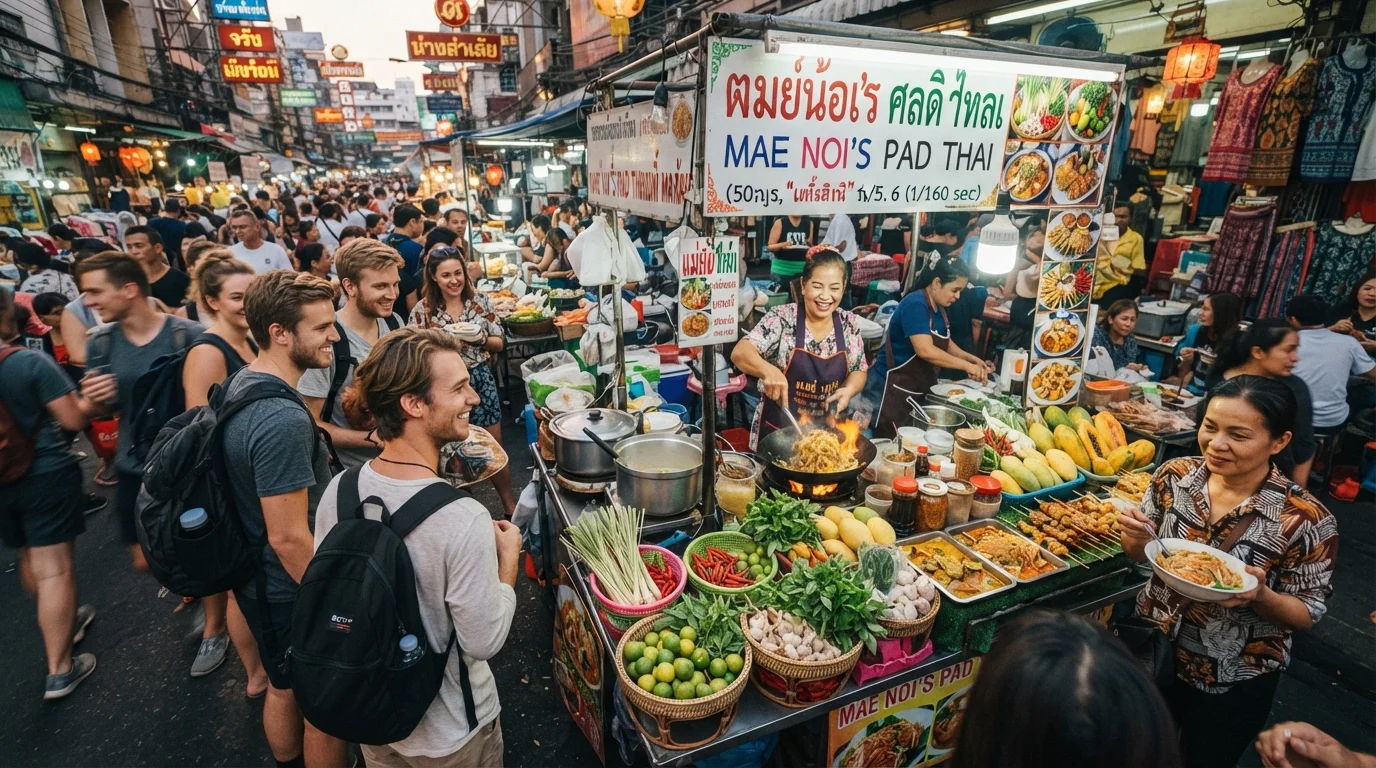
- Street food, when chosen carefully, is often the most authentic and affordable meal option anywhere.
Why Food Costs Spiral—and How to Stop It
Food is one of those travel expenses that sneaks up on you. Unlike flights or hotels, meals happen three times a day—and every convenience-driven choice adds up fast. A grab-and-go airport sandwich, a tourist-strip dinner with an English-language menu, and a hotel minibar snack can quietly burn $80 in a single day without a single memorable bite to show for it.
The good news: eating well on the road doesn't require sacrifice. It requires strategy. Travelers who eat memorably and affordably share a few core habits—and most of them are easy to adopt. For a broader look at where travel budgets commonly bleed, see where budget travelers consistently overspend.
The Local Mindset: Your Most Valuable Meal Strategy
The single biggest lever you can pull is simple: go where locals go. Tourist-zone restaurants pad margins precisely because foot traffic is guaranteed. Step two or three blocks away, and prices often drop significantly while portion sizes and freshness improve.
Markets—whether a covered municipal hall or a weekend farmers' stall—are ground zero for affordable, authentic eating. You can assemble a full meal from fresh bread, cheese, cured meats, fruit, and local snacks for a fraction of a restaurant tab. This approach also lets you interact with vendors and experience daily life in a way no sit-down menu can replicate.
If you're traveling to regions where the US dollar stretches further, your food budget goes even farther. Our guide to destinations where the US dollar travels far explains how to choose destinations with strong purchasing power.
Building a Daily Food Budget That Actually Works
A practical structure many experienced travelers use: spend minimally at breakfast and lunch, then invest in one quality dinner. A coffee and pastry from a bakery, a market sandwich or street snack at midday, and a proper sit-down meal in the evening keeps daily food costs lean while still delivering real satisfaction.
~30%
Average share of travel budget spent on food
Industry travel surveys consistently find that food and drink represent roughly a quarter to a third of total trip spending for leisure travelers.
2–3x
Price difference: tourist vs. local restaurants
Travel cost comparison resources frequently document that tourist-oriented restaurants in popular destinations charge two to three times as much as neighborhood equivalents nearby.
Accommodation with kitchen access—hostel kitchens, vacation rentals, or extended-stay apartments—unlocks another level of savings. Even cooking two or three meals per week from local grocery hauls meaningfully reduces total food spend. This ties directly into the economics of slow travel and staying longer in one place, where a kitchen becomes a practical asset rather than a luxury.
Before you depart, it's worth building food into your overall pre-trip financial planning. Our pre-trip financial checklist for budget travelers includes food budgeting alongside currency and fee planning.
Food Safety Abroad: A Practical Note
Street food is generally safe when chosen thoughtfully — look for stalls with high turnover, food cooked to order, and crowds of local diners. Tap water safety varies widely by destination; check official travel advisories or reputable travel health resources before your trip. When in doubt about local water, stick to bottled or filtered options for drinking and use it for brushing teeth as well.
Eating Affordably Without Eating Poorly
Budget eating and nutritious eating aren't at odds—they just require a bit more intentionality on the road. Fresh produce from markets, protein-rich street foods like grilled meats, legume-based dishes, and eggs are filling, affordable, and widely available across most destinations. The challenge is resisting the default toward processed convenience foods when you're tired or rushed.
If you're interested in how to apply nutrition-forward thinking to budget eating more broadly, our related guide on eating well on a budget backed by nutrition principles offers strategies that translate well to travel contexts too.
The bottom line: your food budget is one of the most flexible parts of any travel plan. Approach it with curiosity instead of anxiety, and it becomes one of travel's genuine pleasures—not a drain on the experience.