
Destinations Where the US Dollar Travels Far: Understanding Purchasing Power Abroad

Key Takeaways
- Purchasing power varies significantly by country due to exchange rates and local cost-of-living differences.
- Southeast Asia, Central America, Eastern Europe, and parts of South America frequently offer strong value for US dollar holders.
- Exchange rates alone don't tell the full story — local prices matter just as much.
- Understanding purchasing power parity (PPP) helps travelers estimate true value at a destination.
- Entry requirements, safety conditions, and seasonal factors should always be verified before booking.
- Combining a strong-dollar destination with smart on-the-ground habits multiplies your travel budget significantly.
Why Your Dollar Buys More in Some Places Than Others
Every traveler has heard the phrase "your dollar goes further" applied to some exotic destination — but what does that actually mean? Two forces are at work: the exchange rate (how many units of local currency one US dollar buys) and the local cost of living (what those units actually purchase). When both align in your favor, the effect on a travel budget can be dramatic.
Economists describe this overlap using the concept of purchasing power parity (PPP) — a measure of how far a standard basket of goods and services costs in different countries relative to one another. For travelers, PPP is a practical lens: a destination where the exchange rate is favorable and where locals themselves spend modestly is a place where US dollar holders genuinely feel wealthy. For a broader framework on planning and budgeting your trip from scratch, see our end-to-end trip planning guide.
The regions below consistently rank well on both metrics, though conditions shift — always verify current exchange rates and entry requirements through official sources before you travel.
Southeast Asia: Vietnam, Thailand, Cambodia, Indonesia
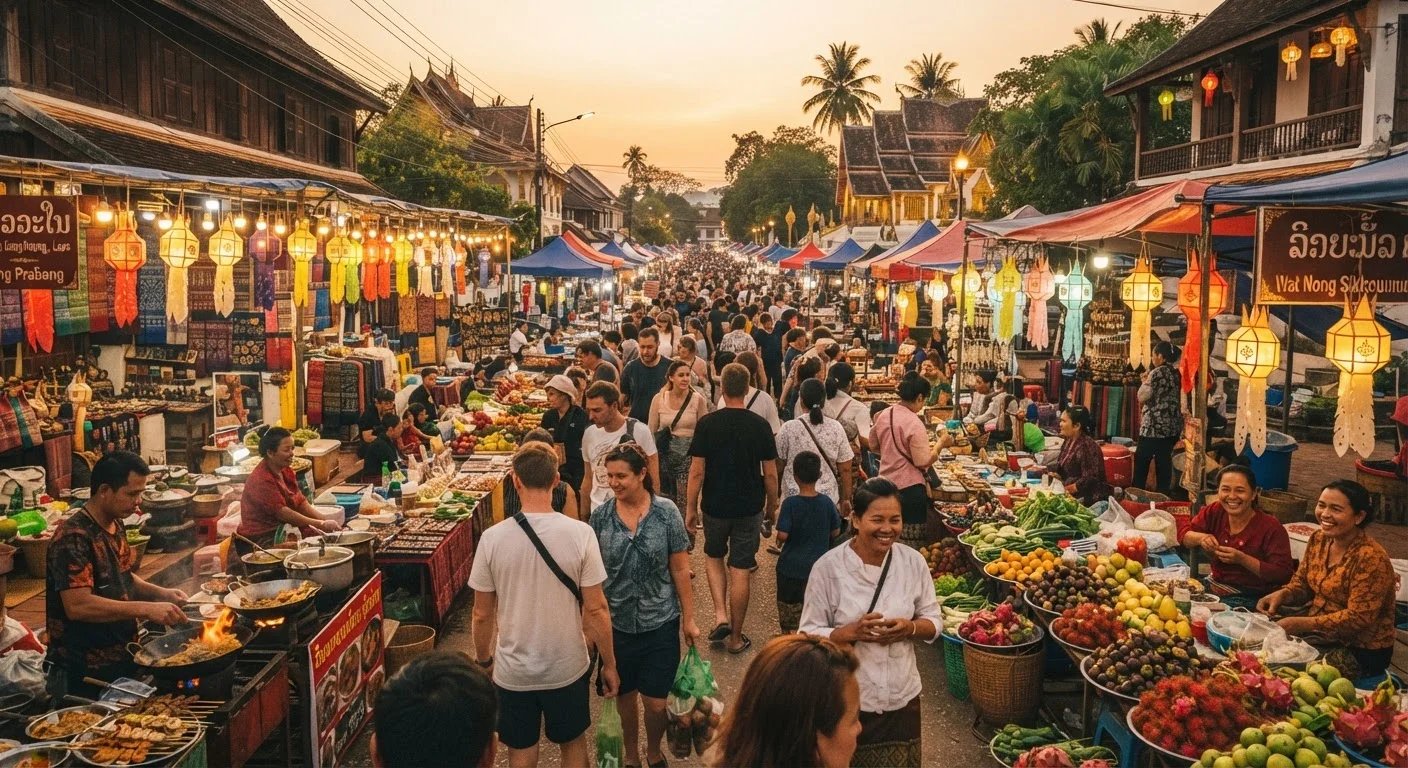
Southeast Asia has long been the benchmark for strong-dollar travel value. In Vietnam, a filling bowl of phở from a street vendor costs the equivalent of a dollar or two. In Thailand, guesthouses in smaller cities regularly rent for single-digit nightly rates, while tuk-tuk rides, local meals, and temple entry fees collectively keep daily budgets modest even for comfort-oriented travelers. Cambodia and Indonesia (particularly outside of Bali's tourist core) round out a region where the combination of favorable exchange rates and genuinely low local prices is hard to match elsewhere.
The region's travel infrastructure is well developed — buses, trains, and domestic flights connect major destinations at low cost. Visa rules vary by country and nationality, so check official consulate sources for current requirements well before departure.
A day's worth of meals, transport, and sightseeing in Vietnam can cost less than a single lunch back home.
Central America: Guatemala, Nicaragua, Honduras
For US travelers who prefer not to cross an ocean, Central America offers compelling purchasing power with the added advantage of manageable flight times from most American cities. Guatemala is a standout: Lake Atitlán village stays, colonial Antigua accommodations, and Mayan archaeological sites can all be experienced on a daily budget that would feel absurdly low by domestic standards. Nicaragua and Honduras present similar economics — where tourist infrastructure is less dense, prices tend to drop further.
Safety conditions vary significantly between and within these countries, and conditions can change. Consult the US Department of State's country-specific travel advisories and research specific regions, not just national-level impressions, before you go.
Central America's proximity to the US makes it one of the most accessible strong-dollar destinations for shorter trips.
Eastern Europe: Poland, Hungary, Romania, Bulgaria
Much of Eastern Europe sits in a productive middle ground: developed infrastructure, rich history, and genuinely sophisticated food and culture — at prices well below Western European counterparts. Warsaw, Kraków, Budapest, Bucharest, and Sofia all offer excellent museums, historic architecture, and restaurant scenes where a full dinner with drinks may cost a fraction of what it would in Paris or Amsterdam. The euro is not used in all of these countries, which means exchange rate dynamics can work in travelers' favor compared to the eurozone.
These destinations also reward slower travel — a week in Kraków or Budapest allows deep exploration of neighborhoods that most visitors flying through on a three-country tour never see.
Eastern European cities combine high-quality travel experiences with some of Europe's most accessible price points.
South America: Colombia, Bolivia, Ecuador, Peru
South America's purchasing-power landscape is uneven — Argentina's long-running economic volatility has created complex dynamics, while Brazil's cost structure fluctuates sharply with the real — but several countries offer durable value. Colombia (particularly Medellín and Cartagena's less touristy neighborhoods), Bolivia, Ecuador, and Peru consistently offer accommodation, food, and local transport at prices that make multi-week trips feasible on modest budgets.
Peru's sol and Colombia's peso have historically traded at rates favorable to dollar holders, and local staple foods — markets selling fresh fruit, grains, and prepared meals — are priced for local incomes, not visitor wallets. As elsewhere, research current safety advisories for specific regions rather than treating any country as uniformly safe or risky.
In parts of South America, a week of comfortable travel can cost less than a single weekend city break in the US.
South Asia: India, Nepal, Sri Lanka
India offers perhaps the widest spectrum of any country on this list: from budget guesthouses near the Ghats in Varanasi to heritage palace hotels in Rajasthan, the dollar-to-rupee ratio makes experiences at multiple price points feel affordable to US travelers. Nepal — particularly outside of peak trekking season — is one of the few places where multi-day hiking adventures, including permit fees and teahouse accommodation, can be completed on budgets that would barely cover a gym membership at home. Sri Lanka, after a period of significant economic turbulence, has seen its tourism infrastructure stabilize while prices remain accessible.
All three destinations require attention to entry documentation — e-visas and visa-on-arrival rules differ — and health precautions; consult a travel medicine professional and your government's official health guidance well before departing.
India's rupee exchange rate means multi-week itineraries covering vast distances remain realistic on tight budgets.
Making the Most of a Strong-Dollar Destination
Arriving in a favorable-currency country is only the beginning. How you handle money once you're there can meaningfully change what you bring home — or how long you can stay. Fees on ATM withdrawals and foreign transactions quietly erode purchasing power; our guide to currency exchange and ATM fees breaks down exactly where those costs hide and how to reduce them.
Use Local ATMs Strategically
In strong-dollar destinations, withdrawing larger amounts less frequently from ATMs affiliated with major local banks can reduce per-transaction fees significantly. Notify your bank before traveling and use a checking account that reimburses foreign ATM fees if possible. Avoid currency exchange kiosks at airports, which typically offer the least favorable rates.
Food spending is another major lever. In high-PPP destinations, eating where locals eat — street stalls, market canteens, neighborhood restaurants without English menus out front — can cost a fraction of tourist-facing prices while delivering some of the most memorable meals of a trip. Explore specific strategies in our piece on eating well without draining your travel fund.
Ground transport is the third big category. In many of the regions listed below, a robust network of buses, trains, and shared rides exists at prices that feel almost implausible to US travelers. Understanding those systems in advance pays off — see our ground transportation reference for budget travelers for a region-by-region breakdown. If you're planning a multi-week trip, our article on stretching a travel budget across different trip lengths can help you allocate funds strategically. The Destinations & Stays hub is also a useful starting point for researching where to go and where to sleep.
Exchange rates, visa policies, and travel advisories change. Always consult official government sources — including the US Department of State travel advisories — and your airline or accommodation provider before finalizing plans.