

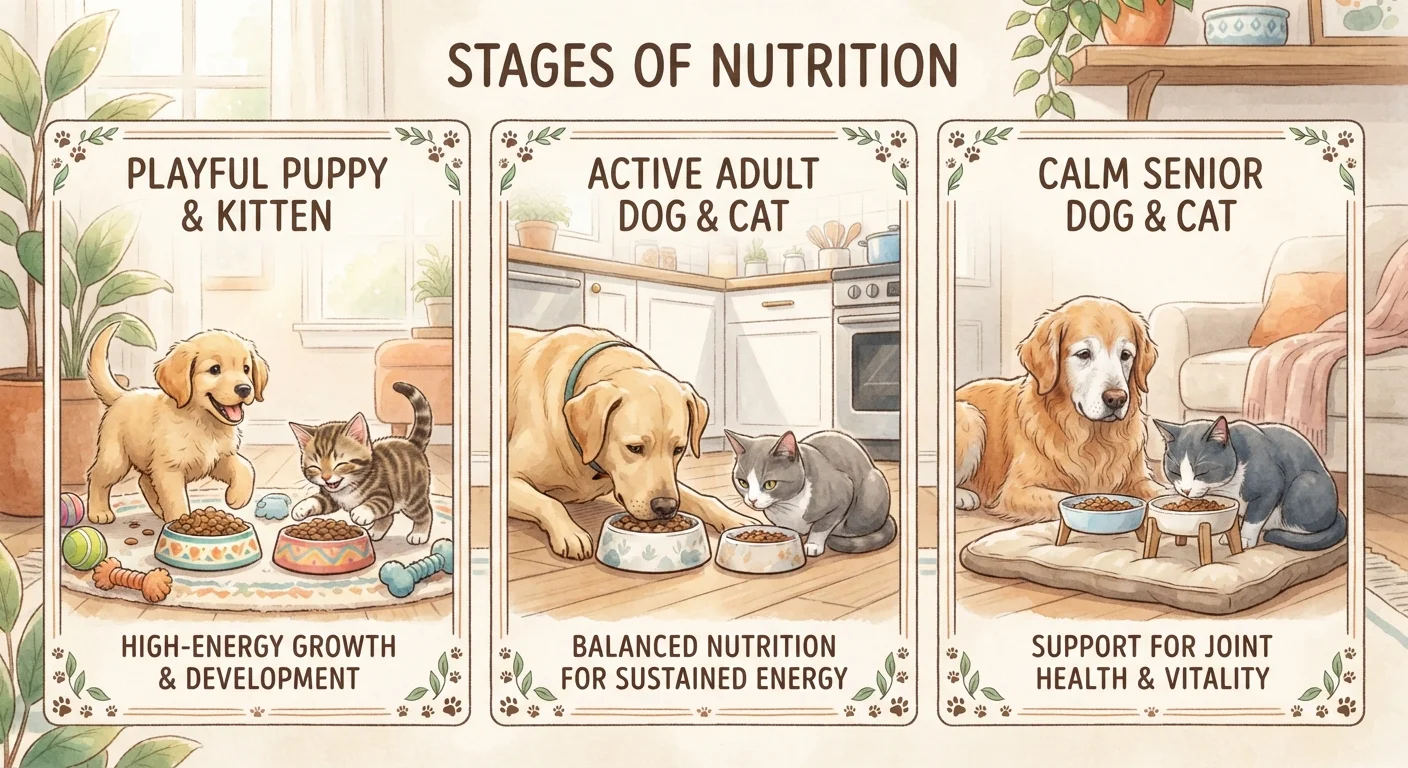
Key Takeaways
- Puppies and kittens need calorie-dense, protein-rich food formulated specifically for growth.
- Adult pets benefit from portion-controlled diets that prevent gradual weight creep.
- Senior pets often require fewer calories but higher-quality protein and joint-supportive nutrients.
- Life stage transitions should be gradual — abrupt food changes cause digestive upset.
- Veterinary input is essential before making major dietary changes at any life stage.
Why Life Stage Nutrition Matters
A pet's body changes profoundly from birth through old age, and food that was appropriate at one stage can be inadequate — or even harmful — at another. Caloric density, protein ratios, fat levels, and micronutrient profiles all require adjustment as animals grow, mature, and slow down.
The Association of American Feed Control Officials (AAFCO) establishes nutrient profiles for distinct life stages in dogs and cats: growth (puppies and kittens), adult maintenance, and reproduction. Foods labeled "for all life stages" must meet the most demanding of these thresholds, which means they may over-deliver certain nutrients for a sedentary senior. Understanding these distinctions helps owners make informed choices rather than defaulting to marketing language on a bag.
For a grounding introduction to reading labels and portion fundamentals, see our guide for new pet owners.
~2x
Caloric need per pound vs. adults
Growing puppies can require roughly twice the calories per pound of body weight compared to adult dogs during peak growth phases.
30%
Minimum protein for growing kittens
AAFCO nutrient profiles recommend approximately 30% protein (dry matter basis) for kittens, higher than the adult cat maintenance threshold.
~Age 7
When most pets enter senior classification
Most veterinary guidelines define dogs and cats as seniors around age seven, though large-breed dogs may reach this threshold earlier.
Puppyhood and Kittenhood: Fueling Rapid Growth
Young animals have metabolic demands that dwarf those of adults relative to their body weight. Puppies can need up to twice the calories per pound of body weight as adult dogs during peak growth phases. Kittens are obligate carnivores with even greater protein requirements — growing kittens need approximately 30% of their diet from protein, compared to around 26% for adult cats, according to AAFCO guidelines.
Key priorities during this stage include:
- Calcium and phosphorus balance: Critical for bone development. Excess calcium in large-breed puppies, for instance, can disrupt skeletal growth and contribute to orthopedic problems. Choose a food specifically formulated for large breeds if applicable.
- DHA (docosahexaenoic acid): An omega-3 fatty acid that supports brain and vision development. Many puppy and kitten formulas include it from fish oil or egg sources.
- Frequent, smaller meals: Young animals have small stomachs. Three to four meals per day is typical for puppies under six months; kittens benefit from similar frequency.
Early developmental windows overlap with peak nutritional demands — what a young pet eats during this period shapes health well into adulthood.
For large-breed puppies, avoid calcium supplementation on top of a complete puppy food — excess calcium is more dangerous to bone development than a slight deficit in an otherwise balanced diet.
Research in large-breed dogs has linked oversupplementation of calcium to developmental orthopedic disease, including osteochondrosis and hip dysplasia risk.
Use a body condition score chart — available from most veterinary associations — every four to six weeks rather than relying solely on the scale. It catches fat gain before weight gain becomes obvious.
Body condition scoring evaluates fat coverage and muscle mass visually and by touch, giving a more accurate picture of nutritional status than weight alone.
The Adult Years: Maintaining Balance
Once skeletal growth is complete — typically around 12 months for dogs and cats, though giant breeds may continue growing until 18–24 months — caloric requirements stabilize. The adult maintenance phase is primarily about sustaining healthy body condition, energy levels, and organ function without excess.
The most common nutritional problem in adult pets is gradual caloric surplus. Activity levels naturally fluctuate, yet feeding amounts often stay fixed. This contributes to the steady weight gain many owners notice midlife. Our article on why pets gain weight on the same diet explains the metabolic mechanics in detail.
Practical priorities for adult pets:
- Feed to body condition score, not just the label's recommended amount — those ranges are starting points, not prescriptions.
- Account for treats in total daily calorie intake; treats can easily represent 10–20% of calories without owners realizing it.
- Review the nutritional trade-offs between dry and wet food — moisture content matters, especially for cats prone to urinary issues.
Treats Count Toward Daily Calories
Many owners underestimate treat calories, particularly in adult pets who receive frequent rewards during training. High-treat diets can push total daily intake well above maintenance needs without any change to the main meal. If your pet is gaining weight despite consistent feeding amounts, accounting for treats is often the first place to look.
Senior Pets: Adjusting for an Aging Body
Dogs and cats are generally considered seniors around age seven, though this varies by size and species. Large-breed dogs age faster; a Great Dane is geriatric at six or seven, while a small terrier may not show significant age-related changes until nine or ten.
The aging body presents distinct nutritional challenges. Lean muscle mass tends to decline — a process called sarcopenia — even as fat tissue increases. This means senior pets may need fewer total calories but higher-quality protein to preserve muscle. Some research suggests older dogs may actually benefit from increased protein compared to previous recommendations, provided kidney function is normal. Cats maintain a high protein requirement throughout life.
Common senior-specific considerations include:
- Joint health: Glucosamine and chondroitin appear in many senior formulas. Evidence for their efficacy is mixed, but veterinary-guided supplementation remains a common recommendation for dogs with arthritis.
- Kidney function: For pets with diagnosed chronic kidney disease, phosphorus restriction is typically indicated — but this requires veterinary oversight, not self-directed dietary change.
- Digestibility: Older gastrointestinal tracts may absorb nutrients less efficiently. Higher digestibility foods, or smaller, more frequent meals, can help.
See our complementary resource on how health needs shift after age seven for a broader picture of geriatric care. Pair nutritional changes with the preventive care practices that support aging dogs at every stage.
Phosphorus Restriction Requires Vet Guidance
Low-phosphorus senior diets are sometimes marketed broadly, but phosphorus restriction is clinically indicated primarily for pets with diagnosed chronic kidney disease. Healthy senior pets generally do not require it, and overly restrictive diets can reduce overall palatability and intake. Always confirm with your veterinarian before restricting major macrominerals.
Transitioning Between Life Stages Safely
Switching foods abruptly — even to a higher-quality option — frequently causes vomiting, loose stools, or appetite refusal. The gut microbiome needs time to adapt to new protein sources, fat levels, and fiber content. A gradual transition over seven to ten days is the standard recommendation: introduce the new food at roughly 25% of the total meal, increasing incrementally every two to three days.
Before switching, assess whether the new food is nutritionally complete for the intended life stage. Our pre-switch checklist provides a structured way to evaluate this. For step-by-step transition guidance, transitioning your pet to a new diet without digestive upset covers the process in detail.
Pets with underlying conditions — digestive disease, kidney disease, food allergies — should only change diets under direct veterinary supervision. Weight management goals, which often require caloric restriction at life stage transitions, also benefit from a vet's input to avoid muscle loss alongside fat loss. See our guide on recognizing and addressing obesity in dogs and cats for more on this intersection.
This article is for general informational and educational purposes only and does not constitute veterinary or medical advice. Always consult a licensed veterinarian before making significant changes to your pet's diet, especially for animals with diagnosed health conditions.