

Key Takeaways
- Schedule a baseline vet exam within the first week of bringing a new pet home.
- Core vaccines and parasite screenings should begin or be verified at that first visit.
- Microchipping is a simple, low-cost procedure that significantly improves lost-pet recovery rates.
- Nutrition and early socialization during the first month shape long-term health and behavior.
- Know the warning signs — lethargy, vomiting, or appetite loss — that warrant urgent veterinary attention.
Start here
Why the First 30 Days Matter Most
Next
Day One to Seven: The Baseline Vet Visit
Then
Vaccines, Parasite Prevention, and Microchipping
Also important
Nutrition, Behavior, and Settling In
Finally
What to Watch For During the First Month
Why the First 30 Days Matter Most
The first month with a new pet is far more than a honeymoon period. It is a medically significant window during which the decisions you make — and the care you arrange — directly shape your animal's immune function, parasite load, behavioral development, and long-term health trajectory. Young animals are especially vulnerable: their immune systems are still maturing, they may carry parasites from prior environments, and they have not yet completed vaccine series that protect against life-threatening diseases.
Older adopted pets carry their own considerations. A rescue dog or cat may have incomplete vaccination records, undetected chronic conditions, or stress-related immune suppression from shelter life. Establishing veterinary care in the first week gives your vet a true baseline — bodyweight, temperature, heart rate, coat condition — that makes every future visit more informative.
This guide walks you through what to prioritize, in what order, so nothing important gets missed.
Day One to Seven: The Baseline Vet Visit
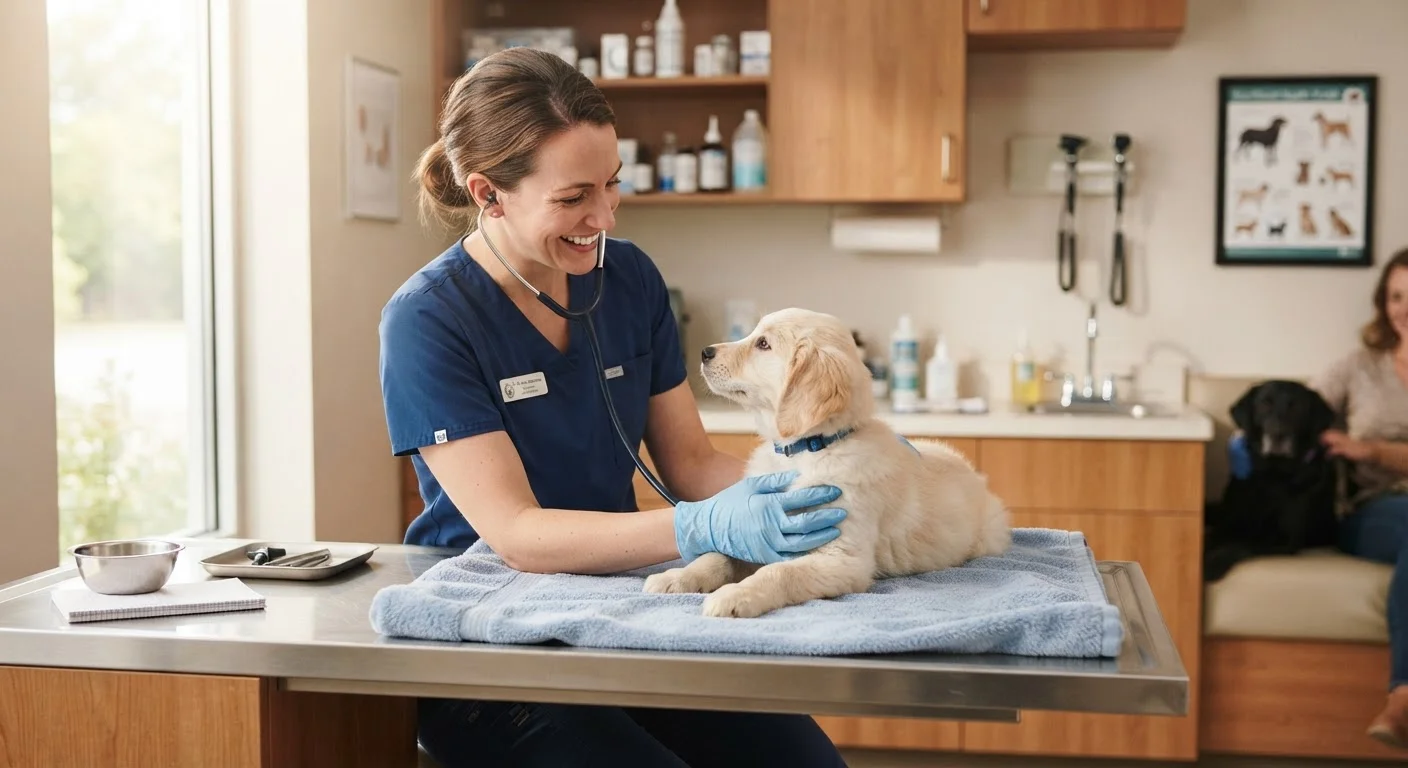
Book a comprehensive exam before or immediately after bringing your pet home — ideally within 48 to 72 hours. Bring any documentation provided by the breeder, shelter, or rescue organization, including prior vaccine records and deworming history.
During this visit, your veterinarian will conduct a full physical examination covering eyes, ears, teeth, skin, lymph nodes, heart, and lungs. A fecal flotation test screens for common intestinal parasites such as roundworms, hookworms, giardia, and coccidia — conditions that are very common in young animals and easily treated when caught early. If your pet is anxious about the car ride or clinic environment, our vet visit prep checklist offers practical strategies to ease the experience.
Make the Most of Your First Appointment
Come prepared with a list of questions — about diet, vaccines, dental care, and spay/neuter timing. Bringing a fresh stool sample (collected within 24 hours) saves a follow-up trip and allows parasite screening to happen at the same visit. The more information you share with your vet upfront, the more tailored your pet's care plan will be.
This first visit is also the right time to ask about spay and neuter timing, dental care expectations, and whether your pet's current diet is appropriate for their life stage.
Vaccines, Parasite Prevention, and Microchipping
Vaccination protects your pet and, in some cases, your household. Core vaccines are recommended for virtually all dogs and cats regardless of lifestyle; non-core vaccines are selected based on geographic risk, environment, and exposure. Your vet will review what your pet has already received and map out the remaining schedule. For a deeper explanation of how these categories work, see our guide to core vs. non-core vaccines.
Parasite prevention should begin as early as the product label allows. Fleas, ticks, and heartworm are not just seasonal nuisances — they pose genuine health risks, and some parasites can also be transmitted to humans. Our overview of monthly flea, tick, and heartworm prevention explains the main categories of preventives and why year-round use is generally advised.
Microchipping is a quick, low-discomfort procedure typically done during this first visit or at a follow-up. The chip — roughly the size of a grain of rice — is injected under the skin between the shoulder blades and assigned a unique ID number. Register that number with a national pet recovery database immediately; the chip is only useful if the registration is current and accurate.
Core vaccines
Immunizations recommended for all pets of a given species regardless of lifestyle, because the diseases they prevent are widespread, severe, or transmissible to humans.
Fecal flotation test
A laboratory procedure that detects intestinal parasite eggs in a stool sample, used routinely to screen new pets for worms and protozoa.
Microchip
A small electronic chip implanted under a pet's skin that stores a unique ID number, used to reunite lost pets with their owners when scanned at shelters or vet clinics.
Socialization window
A developmentally sensitive period in young animals when positive exposure to new experiences, people, and environments has the greatest lasting effect on temperament.
Zoonotic disease
An illness caused by a pathogen that can be transmitted between animals and humans under certain conditions.
Nutrition, Behavior, and Settling In
What your pet eats during the first month matters. If the shelter or breeder was feeding a specific food, continue that diet initially and transition gradually to avoid gastrointestinal upset. Our article on transitioning your pet to a new diet outlines a week-by-week approach that minimizes digestive disruption. For first-time owners uncertain about portion sizes and life-stage nutrition, feeding a pet for the first time is a practical starting point.
Behavioral foundations are also established during this window. Puppies and kittens are in sensitive socialization periods during which positive exposure to people, environments, and other animals shapes future temperament. The socialization windows guide explains these developmental timelines in detail. For dogs specifically, dog training from day one covers the fundamentals new owners need before the first session.
Learning to read your pet's body language also helps you gauge how well they are adjusting and communicate that information clearly to your veterinarian.
What to Watch For During the First Month
Even with an excellent vet visit in the first week, health issues can emerge as your pet settles in. Stress from a new environment can temporarily suppress immune function, making animals more susceptible to infections they were already exposed to before you adopted them.
Contact your veterinarian promptly if you notice any of the following:
- Lethargy or sudden drop in energy lasting more than a day
- Vomiting or diarrhea lasting more than 24 hours, or containing blood
- Refusal to eat or drink for more than 24 hours
- Coughing, sneezing, or nasal discharge
- Straining to urinate or defecate
- Visible parasites on the skin or in the stool
Some of these signs can also reflect zoonotic conditions — illnesses transferable between animals and people. Our article on zoonotic diseases pets can share with owners outlines standard precautions worth knowing. Once your pet has passed through this initial adjustment period in good health, you can focus on building a lifetime preventive care routine that supports them at every life stage.
Don't Wait If Symptoms Are Severe
Bloody diarrhea, collapse, seizures, or difficulty breathing are emergencies that require immediate veterinary attention — do not wait for a scheduled appointment. Keep the number of your nearest 24-hour emergency animal hospital saved in your phone from day one.
This article provides general educational information and is not a substitute for professional veterinary advice. Always consult a licensed veterinarian for guidance specific to your pet's health and circumstances.