

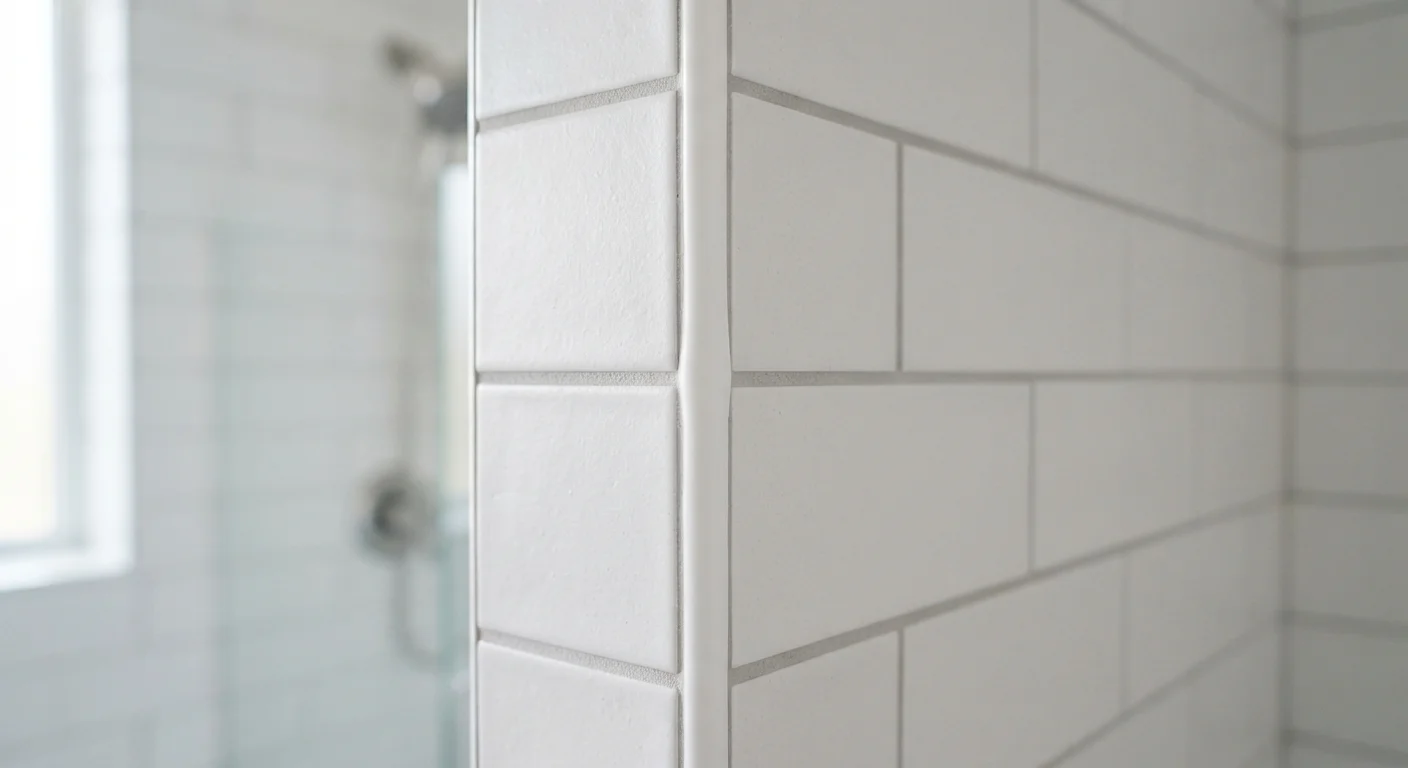
Key Takeaways
- Grout is rigid and belongs between tiles on flat, stable surfaces; caulk is flexible and belongs wherever two surfaces meet at an angle or transition.
- Using grout in a movement joint will cause it to crack; using caulk where grout is required leaves a joint that stains and compresses unevenly.
- Silicone caulk excels in fully wet areas like tub surrounds; sanded or unsanded grout choice depends on the gap width between tiles.
- All tub-to-tile, floor-to-wall, and countertop-to-backsplash corners require caulk, not grout, regardless of what the rest of the surface uses.
- Proper surface prep - fully cured substrate, clean dry joints - determines how long either material will hold.
Option A
Grout
The rigid, cement-based filler built for stable tile fields.
Best for: Filling the uniform gaps between tiles on flat, stable surfaces where minimal movement is expected.
Option B
Caulk
The flexible sealant engineered for movement-prone joints and transitions.
Best for: Sealing corners, changes in plane, fixture perimeters, and any joint that will shift, expand, or contract over time.
If you are filling the field joints between tiles on a shower wall or floor
Grout
Flat, stable tile fields need a rigid filler that resists foot traffic, scrubbing, and water penetration without compressing. Grout is engineered for exactly this environment.
If you are sealing the corner where a tub meets tile, or where a floor meets a wall
Caulk
These joints flex as the building moves and as fixtures expand with temperature. Flexible caulk absorbs that movement; rigid grout will crack and allow water behind the tile.
If you are finishing the perimeter around a sink, toilet base, or shower door frame
Caulk
Fixture perimeters experience vibration and minor shifting. A waterproof silicone or latex-silicone blend caulk keeps the seal intact without cracking.
If you are tiling a countertop backsplash transition on a new installation
Caulk
Countertops flex under load and temperature changes. The joint where the counter meets the backsplash tiles should be caulked to prevent water infiltration and tile pop-off.
What Each Material Is - and What It Is Not
Grout and caulk occupy neighboring spots in the tile aisle, and both fill gaps, so it is easy to treat them as interchangeable. They are not. Understanding the core difference prevents the most common and expensive tiling mistakes.
Grout is a cement-based (or occasionally epoxy-based) filler that cures rigid. It is designed to fill the uniform joints between tiles - spaces that, once the mortar or adhesive beneath the tile has fully cured, should not move significantly. Grout bonds the tile field together, resists abrasion, and, when sealed, resists moisture penetration. It comes in two primary forms: unsanded grout for joints narrower than 1/8 inch, and sanded grout for joints 1/8 inch or wider where the sand particles prevent shrinkage cracking.
Caulk is a polymer-based sealant that stays flexible after it cures. That flexibility is the point. Buildings shift. Fixtures vibrate. Temperature swings cause materials to expand and contract. Wherever two surfaces meet at a change of plane - a corner, a threshold, a fixture edge - a rigid material will eventually crack under that stress. Caulk accommodates the movement without breaking the seal.
| Criterion | Grout | Caulk |
|---|---|---|
| Composition | Cement- or epoxy-based | Silicone, acrylic, or latex polymer |
| Flexibility after cure | Rigid | Flexible |
| Primary joint type | Between tiles on flat planes | Corners, transitions, fixture perimeters |
| Handles movement/expansion | No - will crack under stress | Yes - designed to flex |
| Waterproofness | Requires sealer (cement); inherent (epoxy) | High (silicone); moderate (acrylic) |
| Paintable | Yes, when dry | Depends - silicone is not; latex is |
| Typical lifespan in wet areas | 10-20+ years with proper sealing | 5-10 years; inspect and reapply as needed |
For deeper context on how tile choices themselves affect joint requirements, see our comparison of tile vs. luxury vinyl plank for bathrooms.
Where Each Material Belongs
The simplest rule: flat tile fields get grout; corners and transitions get caulk. Here is how that plays out across the most common household applications.
Use Grout
- Between wall tiles on a flat shower surround
- Between floor tiles in a bathroom, kitchen, or entryway
- Between backsplash tiles that sit on a single flat plane
- Between tiles on a countertop surface (not the perimeter edge)
Use Caulk
- The inside corner where two tiled walls meet in a shower
- The joint where the tub or shower base meets the first row of wall tiles
- The perimeter where a tile floor meets a wall (often hidden under baseboard, but should be caulked, not grouted)
- Around the edges of a sink, toilet base, or faucet deck plate
- The joint between a countertop and a vertical backsplash
- Anywhere an expansion joint is specified in large-format tile layouts
The Grout-Caulk Boundary Rule
Tile industry standards - including guidelines from the Tile Council of North America - specify that wherever a surface changes plane (wall meets floor, wall meets wall at a corner) or where dissimilar materials meet, a flexible sealant joint is required, not rigid grout. This is not merely a best practice; it is the standard that tilework warranties are typically written around. If you are grouting over one of these joints, the grout will crack - the question is only when.
Many shower leaks originate not from failed grout in the tile field but from cracked or missing caulk at the tub-tile junction. Caulk fails silently in ways that can cause significant moisture damage, often before homeowners notice any visible sign of a problem.
Choosing the Right Type Within Each Category
Once you know which material a joint requires, select the correct formulation for the conditions.
Grout Formulations
Standard cement grout is widely available and workable for most applications, but it is porous and requires a penetrating sealer applied after curing to resist staining in wet areas. Epoxy grout is non-porous, highly stain-resistant, and chemical-resistant, making it a strong option for kitchen floors and commercial-grade wet areas - though it is significantly more difficult to work with and less forgiving during application.
Caulk Formulations
100% silicone caulk is the most waterproof and durable choice for tub surrounds, shower corners, and any joint in constant contact with water. It does not accept paint, however, so color-matching matters at purchase. Latex or acrylic caulk is easier to tool and clean up, and paintable, making it appropriate for drier interior transitions like baseboards and window trim. Siliconized latex blends offer a middle ground - paintable and more flexible than pure acrylic.
For shower and tub joints specifically, look for a product labeled mold- and mildew-resistant; the antimicrobial additives slow the biofilm growth that grays grout lines over time.
1/8"
Gap width threshold: unsanded vs. sanded grout
Tile industry guidelines specify unsanded grout for joints narrower than 1/8 inch and sanded grout for joints 1/8 inch and wider to prevent shrinkage cracking.
5-10 years
Typical caulk service life in wet areas
Even quality silicone caulk in showers and tub surrounds typically requires inspection and potential replacement every 5 to 10 years, depending on cleaning habits and water chemistry.
72 hours
Minimum grout cure time before sealing
Most cement-based grout manufacturers recommend waiting at least 72 hours after application before applying a penetrating sealer to allow full hydration of the cement matrix.
Application and Repair Fundamentals
Both materials require clean, dry, fully cured surfaces to bond correctly. Applying either to damp or dusty joints is the single most common cause of premature failure.
Grouting a Joint
- Ensure tile adhesive or mortar is fully cured per the manufacturer's specifications before grouting - typically 24 hours minimum, longer for large-format tile.
- Mix grout to a peanut-butter consistency and work it across the tile surface at a 45-degree angle with a rubber float, pressing firmly into joints.
- Clean excess grout from tile faces with a damp sponge in circular motions before it hardens; rinse the sponge frequently.
- Allow grout to cure fully (generally 72 hours) before applying a penetrating sealer in wet areas.
Caulking a Joint
- Remove any old caulk completely using a utility knife or oscillating tool; residual caulk prevents adhesion.
- Clean the joint with rubbing alcohol and allow it to dry thoroughly.
- Apply painter's tape along both edges of the joint for a clean bead line.
- Cut the caulk tube tip at a 45-degree angle and apply a steady, continuous bead without stopping and starting.
- Tool the bead smooth with a wet finger or caulk tool, then remove the tape immediately before the caulk begins to skin over.
If you are dealing with moisture issues in other parts of the home, our guide to tackling a basement waterproofing project outlines how interior sealants fit into a broader moisture-control strategy.