

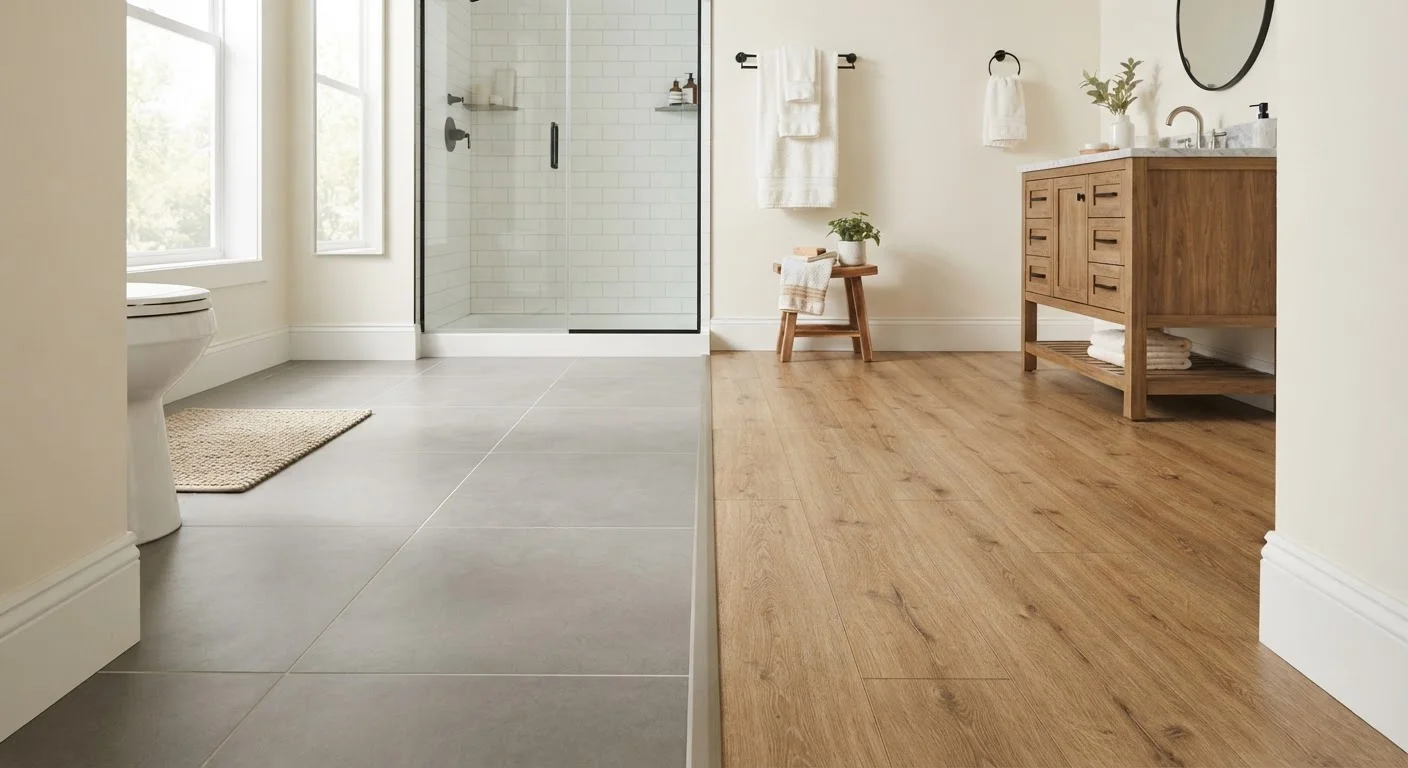
Key Takeaways
- Ceramic and porcelain tile is fully waterproof at the tile surface but requires properly sealed grout lines to prevent moisture infiltration.
- Luxury vinyl plank is water-resistant rather than waterproof - prolonged standing water at seams can eventually reach the subfloor.
- Tile installation typically demands more skill, time, and tools, while LVP is considered one of the more DIY-friendly flooring options.
- LVP offers a softer, warmer feel underfoot compared to the hard, cold surface of tile without an in-floor heating system.
- Tile has a longer expected lifespan and can add resale value; LVP has lower upfront costs and is easier to replace if damaged.
Option A
Ceramic / Porcelain Tile
The time-tested, water-proof standard for wet areas.
Best for: Homeowners who want maximum durability and a permanent, high-end finish and are comfortable with a more involved installation.
Option B
Luxury Vinyl Plank (LVP)
The resilient, budget-friendly alternative with fast installation.
Best for: DIYers and renters seeking a warm, comfortable surface that installs quickly and tolerates occasional moisture.
If your bathroom sees heavy moisture or a walk-in shower
Ceramic / Porcelain Tile
Tile's completely waterproof surface makes it the safer choice in consistently wet zones, provided grout lines are properly sealed and maintained.
If you're renovating on a tighter budget or timeline
Luxury Vinyl Plank (LVP)
LVP has lower material and labor costs and can typically be installed in a single day, reducing both project expense and disruption.
If comfort underfoot is a priority
Luxury Vinyl Plank (LVP)
LVP has natural give and retains ambient warmth, making it far more comfortable on bare feet than tile without radiant heating.
If long-term home value and durability matter most
Ceramic / Porcelain Tile
Well-installed tile can last decades and is widely regarded by appraisers as a durable, premium finish in bathrooms.
If you plan to DIY the installation yourself
Luxury Vinyl Plank (LVP)
LVP's click-lock systems require minimal specialized tools and are forgiving for first-time installers compared to tile-setting, which involves mortar, spacers, and grouting.
Waterproofing and Moisture Performance
Bathrooms are demanding environments - humidity, splashing, and occasional flooding put flooring through constant stress. Understanding how each material handles moisture is the most critical factor in this comparison.
Ceramic and porcelain tile is inherently waterproof at the tile body itself, meaning the material does not absorb water. Porcelain, in particular, has an extremely low porosity rating, making it the preferred tile for wet areas like shower floors and surrounds. The vulnerability, however, lies in the grout joints. Unsealed or deteriorating grout can allow moisture to migrate beneath the tile and damage the subfloor or underlayment. Regular resealing - typically every one to three years depending on grout type - is essential. For more on managing joints in tiled areas, see our guide to grout vs. caulk.
Luxury vinyl plank (LVP) is marketed as water-resistant, and the planks themselves shed water well. However, LVP is generally not considered fully waterproof at the seam level. If standing water sits at joints or edges for extended periods, it can seep through to the subfloor. LVP is appropriate for bathroom floors - including around toilets and vanities - but is generally not recommended as a primary material inside shower pans or on shower walls.
| Criterion | Ceramic / Porcelain Tile | Luxury Vinyl Plank (LVP) |
|---|---|---|
| Waterproofing | Tile is waterproof; grout requires sealing | Water-resistant; seams can allow seepage |
| Installation difficulty | High - multi-step, professional recommended | Low to moderate - DIY-friendly click-lock |
| Typical material cost | Moderate to high per sq. ft. | Low to moderate per sq. ft. |
| Comfort underfoot | Hard and cold without radiant heat | Softer, warmer feel |
| Expected lifespan | 25-50+ years with proper care | 10-25 years depending on quality |
| Maintenance | Periodic grout sealing required | No sealing needed; easy to clean |
| Damage repair | Individual tiles replaceable | May require removing full plank run |
| Design variety | Extensive shapes, sizes, and finishes | Wide but primarily mimics wood or stone |
Installation: Complexity and Cost
The installation process differs significantly between the two materials and directly affects both project cost and timeline.
Tile installation requires preparing a flat, stable, and moisture-resistant substrate - typically cement backer board - then setting tiles in thinset mortar, spacing them evenly, allowing the mortar to cure, and finally applying grout. The process typically spans multiple days and requires tools including a wet tile saw, notched trowel, float, and grout sponge. Errors in leveling or alignment are difficult to correct once the mortar sets. Most homeowners without tile experience hire a professional for this work.
LVP installation, by contrast, is designed for accessibility. Most modern LVP uses a floating click-lock system that snaps planks together without adhesive. A basic utility knife, pull bar, and tape measure are often sufficient for straightforward rooms. Many competent DIYers complete a small bathroom floor in a single afternoon. The material cost for LVP is also generally lower per square foot than comparable quality tile, and labor costs - when professionals are hired - are typically lower as well.
10-25 yrs
Typical LVP lifespan in residential use
Manufacturer warranties and flooring industry guides generally place quality LVP at 10-25 years depending on wear-layer thickness and traffic levels.
25-50+ yrs
Expected lifespan of well-installed tile
Ceramic and porcelain tile installed on a solid substrate with maintained grout is widely cited by flooring professionals as lasting several decades.
1-3 yrs
Recommended grout resealing interval
Flooring and tile associations generally recommend resealing unsealed or cement-based grout every one to three years in bathroom applications to prevent moisture infiltration.
Comfort, Aesthetics, and Long-Term Maintenance
Beyond performance, everyday livability matters when choosing a bathroom floor.
Tile is hard underfoot and tends to feel cold, particularly in the morning. Adding an in-floor radiant heating system resolves the temperature issue but adds meaningful cost and installation complexity. On the aesthetic side, tile offers an enormous variety of sizes, shapes, colors, and textures - from large-format porcelain slabs to small mosaic patterns - giving designers and homeowners nearly unlimited creative range.
LVP mimics the look of wood or stone convincingly, and technology has advanced to the point where many products are difficult to distinguish visually from natural materials. It is softer and warmer underfoot than tile, which many homeowners find meaningfully more comfortable in a daily-use bathroom. However, LVP can be scratched or gouged by sharp objects and may show wear patterns in high-traffic areas over time more readily than tile.
For maintenance, tile floors are relatively straightforward to clean - routine mopping and occasional grout sealing are the main requirements. Damaged tiles can be replaced individually, though matching older tiles can be a challenge. LVP is also easy to clean and does not require sealing, but a damaged plank typically requires replacing the entire run from the nearest wall due to the interlocked system, unless the damage is at a seam where individual planks can be disassembled.
Check Subfloor Conditions Before You Decide
Both tile and LVP require a flat, structurally sound subfloor, but tile is less forgiving of flex or movement. If your subfloor has significant bounce or unevenness, additional preparation - such as adding a layer of cement backer board or self-leveling compound - may be needed before tile installation. LVP tolerates very minor subfloor imperfections better than tile does. Inspecting and addressing subfloor conditions before committing to either material can prevent costly failures later.