

Key Takeaways
- Resource guarding is a normal canine behavior, not a sign of dominance or a 'bad' dog.
- Early recognition of warning signals — stiffening, hard stares, hovering — can prevent escalation.
- Punishment typically worsens guarding; positive reinforcement-based approaches are more effective.
- Severe or escalating guarding warrants consultation with a certified applied animal behaviorist or veterinary behaviorist.
- Management strategies reduce risk while training addresses the underlying emotional response.
Resource Guarding
Resource guarding is a behavior in which a dog uses body language, growling, snapping, or other signals to communicate that it wants to keep something — food, a toy, a resting spot, or even a person — to itself. It is rooted in normal survival instincts shared across all canines. While common, it can become a safety concern if it escalates or goes unaddressed.
In behavioral science, resource guarding is classified as a form of agonistic behavior — a suite of responses evolved to resolve competition over valued resources without necessarily requiring physical conflict.
What Resource Guarding Looks Like
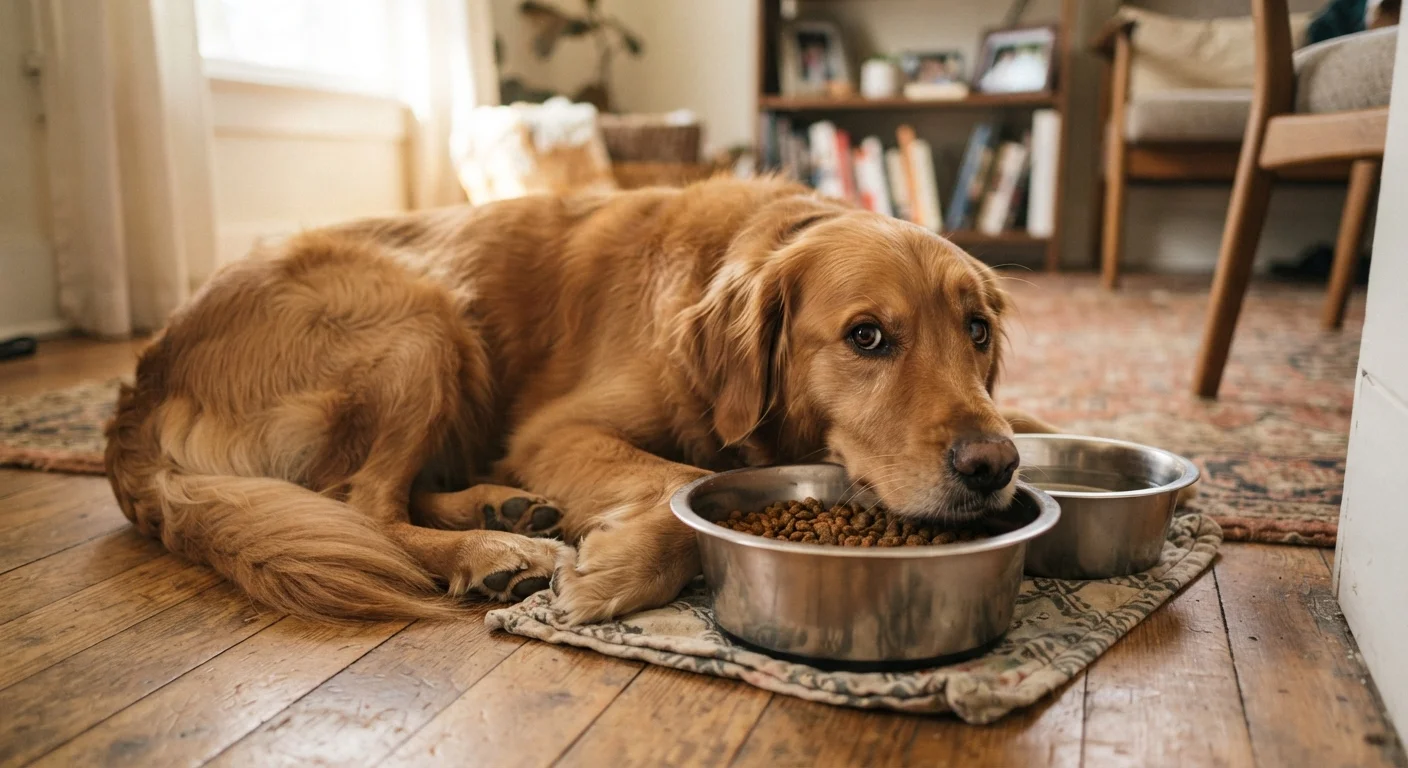
Resource guarding can be subtle or overt. In its mildest form, a dog may simply freeze or eat faster when someone approaches its bowl. More visible signals include stiffening the body, lowering the head over the item, delivering a hard, unblinking stare, or producing a low growl. At the more severe end of the spectrum, a dog may snap or bite.
Dogs can guard a wide range of things: food bowls, high-value chews, toys, sleeping spots, or even a specific person. Understanding that growling is a communication signal — not simply bad behavior — is essential. It means your dog is feeling threatened enough to warn before escalating. Suppressing that signal without addressing the cause removes an important safety cue.
Learning to read these early warning signs is a foundational skill for any dog owner. The guide to behavioral cues every pet owner should recognize provides a broader look at the stress signals and body language dogs use to communicate discomfort.
Never Punish a Growl
Growling is a dog's way of communicating discomfort before resorting to a bite. Punishing a growl may suppress the warning without resolving the underlying anxiety — leaving a dog that bites with less prior warning. If your dog growls, treat it as valuable information and remove the trigger safely rather than responding with correction.
Why Dogs Guard Resources
Resource guarding is an evolutionarily adaptive behavior. In the wild, canines that successfully defended food, resting spots, and mates were more likely to survive and reproduce. Domestic dogs retain this wiring even though most live in homes where resources are reliably available.
Several factors can influence how strongly a dog guards. Genetics and breed history play a role — some lines were selectively bred in contexts where competition over resources was common. Early life experience matters too: dogs that experienced food scarcity or inconsistent care as puppies may guard more intensely. Anxiety also amplifies guarding; a dog that feels generally insecure is more likely to perceive a human approaching its bowl as a genuine threat.
Importantly, resource guarding is not about dominance over owners. This explanation, while once popular, is not supported by current behavioral science. Treating it as a dominance issue and responding with confrontational techniques can make guarding significantly worse and increases bite risk.
“The goal of behavior modification is not to suppress warning signals but to change the emotional state that makes those signals necessary in the first place.”
— Applied Animal Behavior Science — general principle, Core principle in veterinary behavioral medicine
Evidence-Based Strategies for Managing and Modifying Guarding
Addressing resource guarding involves two parallel tracks: management to prevent situations that trigger guarding, and behavior modification to change the dog's underlying emotional response.
Management Comes First
Before any training begins, reduce the chance of a guarding incident. Feed the dog in a separate, low-traffic area. Pick up high-value items when guests arrive. Do not reach into a food bowl while the dog is eating — this is a common trigger that rarely serves a useful training purpose.
Counter-Conditioning and Desensitization
The most well-supported behavioral approach is counter-conditioning — pairing the approach of a person near a guarded item with something the dog values highly, like a small piece of meat. Over many repetitions, the dog begins to associate a person approaching with good things rather than perceived loss. This shifts the emotional response from anxiety or threat to anticipation.
The technique requires patience, consistency, and careful management of intensity. Start with significant distance and very low-value items, then gradually increase proximity and item value only as the dog remains comfortable. Similar principles are used when helping fearful dogs build confidence at home.
Trade-Up: A Simple Starting Exercise
Teach a 'trade' cue by offering your dog a high-value treat in exchange for voluntarily releasing an item. Hold the treat near the dog's nose, say 'trade,' and let the dog drop the item to take the treat. This builds a positive association with giving things up and gives you a reliable way to retrieve objects without confrontation. Practice with low-value items before attempting it with items the dog guards.
Progress should be gradual. Pushing too fast can sensitize the dog further rather than reducing the response. If you are unsure how to structure sessions, a certified professional trainer or behaviorist can design a program tailored to your dog.
For context on how these training principles fit into overall canine care, the lifetime preventive care guide for dogs covers behavioral health as part of a broader wellness picture.
When to Bring in a Professional
Many mild cases of resource guarding can be managed with consistent owner-led strategies. However, professional support is strongly advisable when: the dog has already snapped or bitten; guarding is escalating over time; children, elderly individuals, or other pets are in the home; or the owner feels unsafe implementing training exercises.
Look for a Certified Applied Animal Behaviorist (CAAB) or a board-certified veterinary behaviorist (DACVB) for complex or high-intensity cases. These professionals have the training credentials to assess risk, rule out medical contributors, and design evidence-based treatment plans. A veterinary evaluation may also be warranted — pain or illness can increase irritability and exacerbate guarding.
~20%
Dogs referred for aggression that involve resource guarding
Studies of dogs referred to veterinary behavior practices suggest resource guarding is among the most commonly reported aggression complaints.
~44%
Reduction in guarding intensity with systematic counter-conditioning
Research published in behavioral journals has found structured desensitization and counter-conditioning programs can meaningfully reduce guarding responses in many dogs.
This article provides general educational information about canine behavior. It is not a substitute for individualized assessment or guidance from a qualified animal behavior professional or veterinarian.