

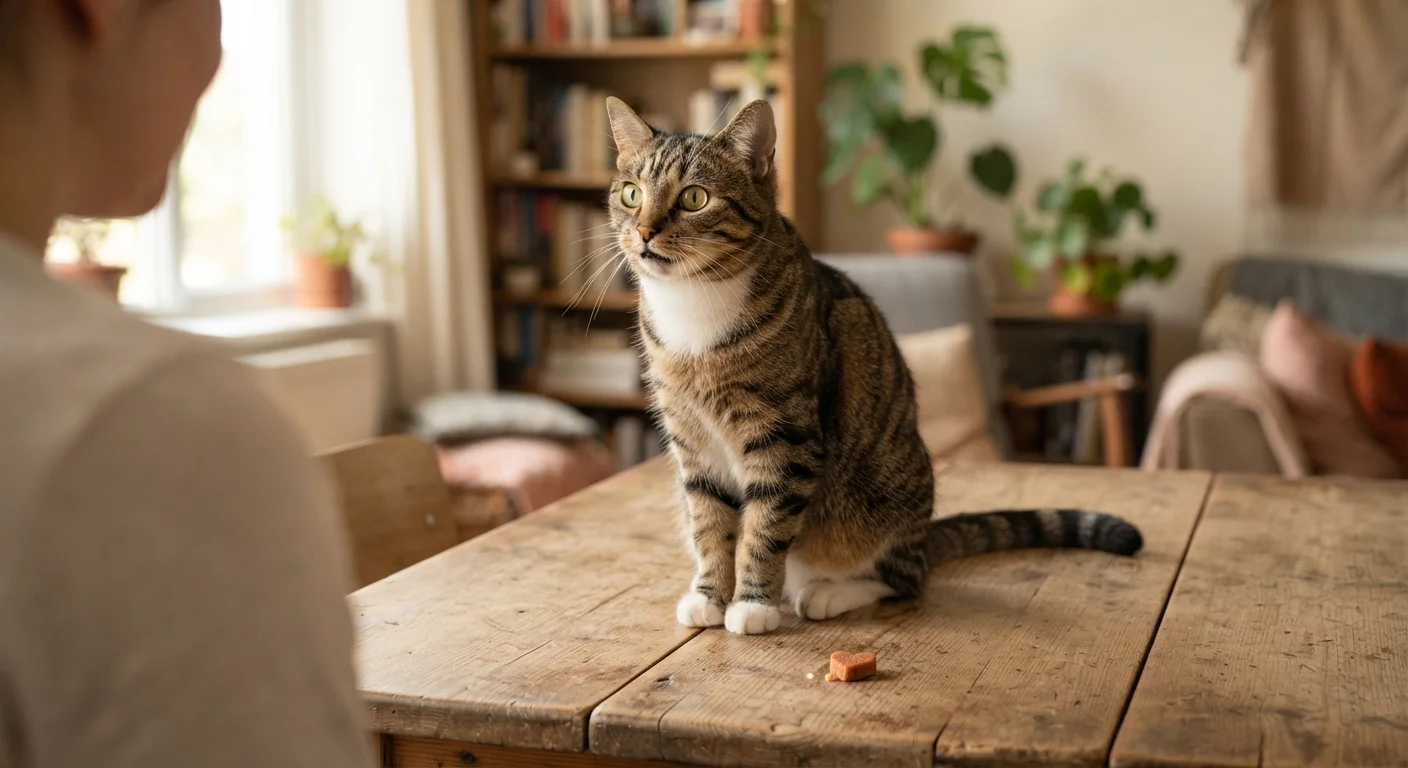
Key Takeaways
- Cats are fully capable of learning behaviors — they simply require motivation-based methods, not compliance-based ones.
- Positive reinforcement, timed precisely within seconds of a behavior, is the most effective training approach for cats.
- Short, frequent sessions of two to three minutes outperform long, repetitive drills every time.
- Understanding feline instincts — like predatory drive and territorial awareness — helps you design training that actually sticks.
- Punishment-based methods erode trust and are counterproductive with cats; they should always be avoided.
Why Cats Aren't 'Untrainable' — They're Just Differently Motivated
The idea that cats can't be trained is one of the most persistent myths in pet ownership. In reality, cats learn constantly — they just don't default to pleasing their owners the way many dogs do. Their evolutionary history as solitary hunters means they weigh every interaction for personal relevance. If a behavior doesn't pay off for them, they won't repeat it.
This is actually a useful insight: cats aren't stubborn, they're selective. Once you understand that training a cat is about making the desired behavior genuinely rewarding — not about asserting authority — the whole process becomes more straightforward. See our breakdown of common animal behavior myths for more on why the 'untrainable cat' belief persists despite evidence to the contrary.
“The key to training cats is understanding that they are not small dogs. They are highly intelligent, motivated by context and reward, and perfectly capable of learned behavior — on their own terms.”
— Mikel Delgado, Certified Cat Behavior Consultant and animal behavior researcher
Core Practices for Effective Cat Training
The following evidence-informed practices reflect how cats actually process, retain, and respond to learning. Applying them consistently will yield far better results than repetition alone.
Use high-value food rewards timed within two seconds of the desired behavior
Cats form associations quickly but the window for connecting a reward to a specific action is narrow. Delayed rewards teach cats nothing useful — they simply experience an unconnected treat. High-value rewards (small pieces of meat, a favored treat) increase the motivation to engage.
Keep every training session under three minutes
Cats have shorter voluntary attention windows than dogs and disengage quickly when sessions drag. Brief, frequent sessions — two to three per day — produce faster learning with less frustration for both owner and cat.
Use a clicker or consistent marker word to bridge the gap between behavior and reward
A marker — a click or a short word like 'yes' — signals to the cat the exact moment the correct behavior occurred, even before the treat arrives. This precision dramatically speeds up learning and reduces confusion.
Train in line with natural predatory sequences
Cats are hard-wired to stalk, pounce, and capture. Training that incorporates movement, targeting, or chase-style engagement taps into this drive and sustains interest far longer than static repetition.
Always end on a successful repetition, even if you simplify the task
Ending a session on a failed or incomplete attempt can create avoidance around training. Dropping back to an easier version of the behavior ensures the cat's last experience is positive and rewarding.
Never use punishment or negative reinforcement
Spray bottles, loud noises, or physical corrections don't teach cats what to do — they create fear, stress, and damaged trust. A cat that associates training with discomfort will simply disengage or become avoidant.
Setting Up for Success Before You Begin
The environment and timing of a training session matter almost as much as the technique itself. Cats are acutely sensitive to context — a hungry cat in a quiet room before dinner will outperform a full, distracted cat mid-afternoon every time.
Time Sessions Around Your Cat's Appetite
The single most reliable way to boost treat motivation is to train before meals, not after. A cat that has just eaten has little incentive to work for food rewards. Scheduling sessions 30 to 60 minutes before scheduled feeding times dramatically increases engagement and response rates.
Before starting any new routine, it helps to have your goals, reward preferences, and session structure clearly mapped out. Our pet owner's preparation checklist walks through exactly what to consider before your first session.
2–3 min
Optimal cat training session length
Applied animal behaviorists generally recommend sessions no longer than two to three minutes to maintain feline attention and prevent disengagement.
~2 sec
Reward timing window for effective learning
Behavioral science research indicates that rewards delivered within approximately two seconds of a behavior are most effective at forming reliable associations in cats.
Quick Wins You Can Start Today
You don't need a formal training program to begin building a more cooperative relationship with your cat. These high-impact actions can be introduced immediately and will lay a strong foundation for more complex training later.
This article is for general informational and educational purposes. For concerns about your cat's health, appetite, or behavior that may have a medical basis, consult a licensed veterinarian.