

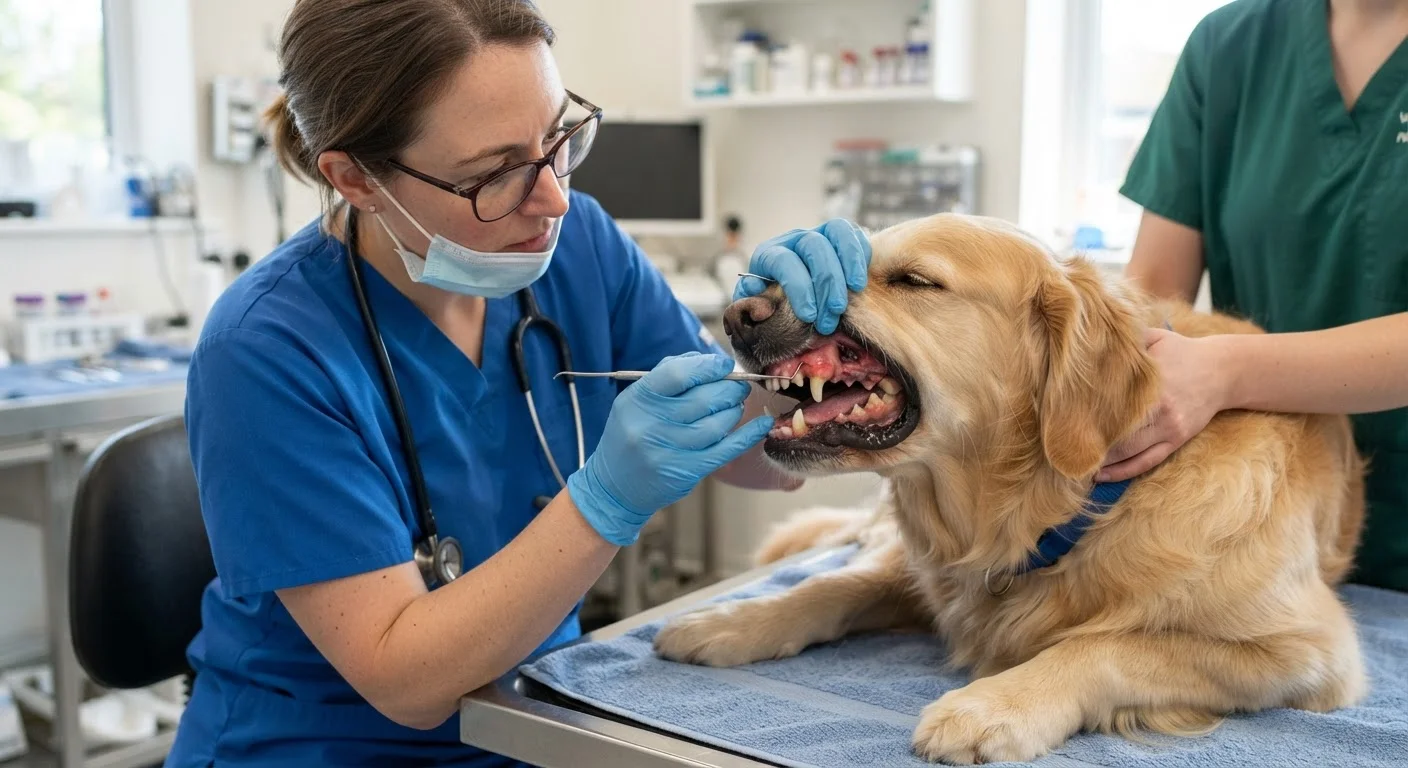
Key Takeaways
- By age three, most dogs and cats show signs of periodontal disease, often without obvious symptoms.
- Bad breath is not normal in pets — it's frequently a sign of bacterial buildup or active infection.
- Home brushing and professional cleanings work together; neither alone is sufficient long-term.
- Dental disease can affect the heart, kidneys, and liver if bacteria enter the bloodstream.
- Annual wellness exams are a key checkpoint for catching oral disease before it advances.
Why Pet Dental Disease Goes Undetected for So Long
Periodontal disease is consistently ranked among the most common conditions diagnosed in adult dogs and cats — yet it remains one of the least managed by pet owners. The primary reason is visibility: the disease develops silently, progressing beneath the gumline long before it produces obvious signs. Pets rarely vocalize dental pain, and behavioral changes are easy to attribute to aging or mood rather than oral discomfort.
The condition begins with plaque, a bacterial film that forms on tooth surfaces within hours of eating. When plaque isn't removed, it mineralizes into calculus (tartar) within days. Over time, bacteria colonize the space between the tooth and gum, causing inflammation, bone loss, and eventually tooth loss or systemic effects. By the time an owner notices discolored teeth or reluctance to chew, meaningful damage may already have occurred.
Understanding what's actually true about dental health — and what's myth — is the most practical first step. For a broader look at how preventive habits compare to reactive treatment, see our article on preventive care vs. reactive treatment.
Myth
Bad breath in pets is just normal — it's what animal mouths smell like.
Fact
Persistent bad breath is a clinical sign, not a baseline. It typically indicates bacterial overgrowth, plaque accumulation, or active infection in the gum tissue.
Many owners assume that a dog or cat's mouth naturally smells unpleasant, but veterinary dental guidelines describe persistent halitosis as a warning sign rather than an expected trait. The odor usually comes from volatile sulfur compounds produced by bacteria colonizing plaque and tartar. Early-stage periodontal disease is frequently odorless, meaning by the time a smell is obvious, disease may already be progressing beneath the gumline. If your pet's breath has changed noticeably, a veterinary evaluation — including an oral exam — is appropriate.
Myth
Dry kibble cleans a pet's teeth and makes brushing unnecessary.
Fact
Kibble provides minimal mechanical cleaning and does not remove tartar or prevent gum disease on its own.
The idea that crunching dry food scrapes teeth clean is widespread but not well supported by evidence. Most kibble shatters on contact rather than abrading the tooth surface the way chewing designed dental treats or textured chews might. While certain veterinary dental diets are specifically formulated with fiber orientation and kibble size to provide some cleaning action — and carry the Veterinary Oral Health Council (VOHC) seal — standard commercial kibble does not qualify for that designation. Brushing remains the most effective home-care method for removing plaque before it mineralizes into tartar.
Myth
If my pet is eating normally, their teeth must be fine.
Fact
Pets instinctively continue eating despite significant oral pain, making normal appetite an unreliable indicator of dental health.
Prey animals and domesticated species have a strong drive to eat even when experiencing discomfort, partly as a survival mechanism. A cat with a resorptive lesion or a dog with a fractured molar may still approach the food bowl enthusiastically, making it easy for owners to miss the problem. Subtle behavioral clues — chewing on one side, dropping food, reduced interest in hard treats, or pawing at the mouth — may be the only outward signals. This is one reason professional oral exams, sometimes including dental X-rays performed under anesthesia, are necessary to assess what owners cannot see at home.
Myth
Anesthesia-free dental cleanings are a safe, effective alternative to professional cleanings.
Fact
Anesthesia-free cleanings remove surface tartar but cannot address subgingival disease, and major veterinary organizations do not consider them a substitute for proper dental care.
While anesthesia-free scaling may make teeth look cleaner on the surface, the most clinically significant plaque accumulates below the gumline — where the procedure cannot safely reach in a conscious animal. The American Veterinary Dental College (AVDC) has stated that non-professional dental scaling is potentially harmful because it provides a false sense of security without treating active disease. Safe, thorough professional cleanings require anesthesia so that a veterinarian can probe gum pockets, take radiographs, and perform extractions if needed. For owners concerned about anesthetic risk, a pre-anesthetic blood panel can help assess individual health status.
Myth
Cats rarely develop dental disease compared to dogs.
Fact
Cats are highly susceptible to periodontal disease and tooth resorption, a painful condition with no known prevention.
Feline oral disease is underdiagnosed partly because cats are expert at concealing discomfort. Studies suggest that tooth resorption — a process where tooth structure is gradually destroyed — affects a substantial proportion of adult cats, with some estimates suggesting it occurs in roughly half or more of cats seen in general practice, though exact prevalence figures vary by study. Periodontal disease is similarly common. Because resorptive lesions can be excruciatingly painful yet behaviorally invisible, routine oral exams and dental radiographs are particularly important in feline patients. See our guide to annual wellness exams for what vets assess during a routine visit.
Myth
Home dental care is only worth starting when a pet is already showing signs of disease.
Fact
Home care is most effective when started early, before disease is established — and is harder to introduce once a pet is already in pain.
Establishing a toothbrushing routine is significantly easier with a puppy or kitten than with an adult pet that has existing tartar, inflamed gums, or pain. Brushing removes plaque — a soft biofilm — before it hardens into calculus, which requires professional removal. Starting early also conditions pets to accept oral handling, which reduces stress during veterinary exams. Pet-safe enzymatic toothpaste can make the process more tolerable; human toothpaste contains ingredients that are unsafe for animals and should never be used. Even brief, daily sessions of 30–60 seconds offer meaningful benefit when done consistently.
What Effective Dental Care Actually Looks Like
Veterinary dental care operates on two complementary tracks: professional evaluation and treatment, and consistent home maintenance. Neither replaces the other.
~80%
Adult dogs with periodontal disease by age 3
According to the American Veterinary Medical Association, approximately 80% of dogs show signs of oral disease by their third birthday.
~70%
Adult cats affected by dental disease
Veterinary dental specialists estimate that the majority of cats over age three have some degree of periodontal or resorptive disease.
1 in 3
Pet owners who brush their pet's teeth regularly
Surveys of US pet owners consistently suggest that regular at-home toothbrushing remains far less common than vets recommend.
Professional cleanings performed under general anesthesia allow veterinarians to scale above and below the gumline, probe gum pockets for depth, and take full-mouth radiographs — the only way to evaluate root and bone health. How frequently a pet needs professional cleaning varies based on breed, age, and individual disease susceptibility; your veterinarian is the appropriate source for a personalized recommendation.
At home, daily toothbrushing with a pet-safe enzymatic toothpaste remains the gold standard. VOHC-accepted products — including certain water additives, dental chews, and rinses — may offer supplemental benefit for pets that resist brushing, but they function as additions rather than replacements. Senior pets often develop oral disease more rapidly; our senior pet care guide covers how oral health needs evolve with age.
Never Use Human Toothpaste on Pets
Human toothpastes commonly contain fluoride, xylitol, or other ingredients that are toxic to dogs and cats when swallowed. Pets cannot rinse and spit, so anything applied to their teeth will be ingested. Always use a toothpaste specifically formulated for pets, ideally one with enzymatic action. Ask your veterinarian to recommend an appropriate product for your pet's species and size.
Dental health connects to overall wellness in ways that make consistency matter. For a structured preventive care framework specifically for dogs, the lifetime preventive care guide for dogs is a useful companion resource.
This article provides general pet health information for educational purposes only and is not a substitute for veterinary advice. Consult a licensed veterinarian for guidance specific to your pet's health needs.