
Key Takeaways
- Payment history is the single most influential factor, accounting for 35% of your FICO score.
- Credit utilization — how much of your available credit you're using — makes up 30% of your score.
- A thin or nonexistent credit file can hurt your score just as much as negative marks.
- Checking your own credit score never lowers it; only hard inquiries from lenders can.
- Your score affects more than loan approvals — it influences interest rates, insurance premiums, and rental applications.
- Small, consistent habits like on-time payments and low balances drive the biggest long-term improvements.
Credit Score
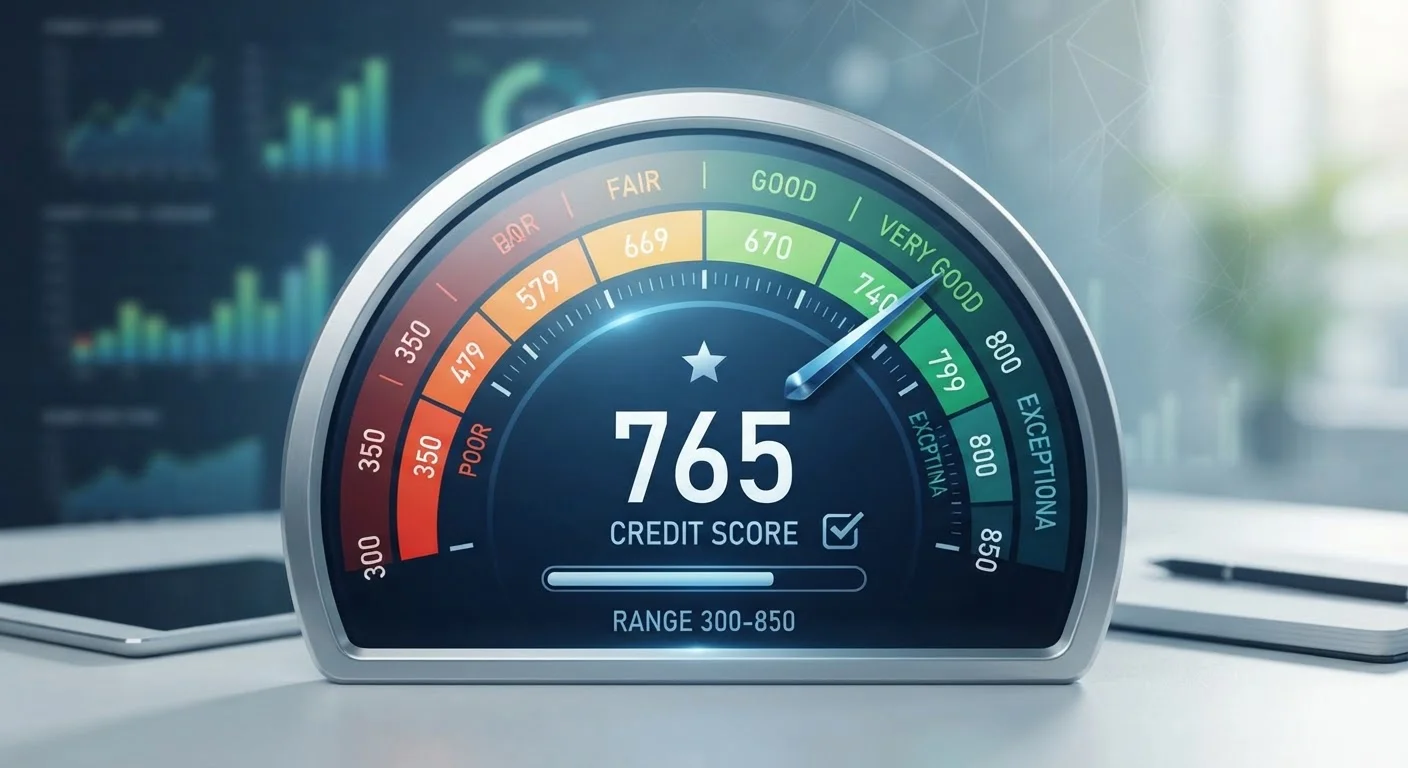
A credit score is a three-digit number, typically ranging from 300 to 850, that summarizes how reliably you've managed borrowed money over time. Lenders, landlords, and even some employers use it to assess how likely you are to repay future obligations. The higher the number, the lower the perceived risk you represent to a creditor.
The most widely used scoring model is FICO®, though VantageScore is also common. Both use credit report data from the three major bureaus — Equifax, Experian, and TransUnion — but weight factors slightly differently.
The Five Factors Behind Your Score
Credit scores aren't arbitrary — every point on the scale maps to specific behaviors tracked in your credit report. FICO, which powers the majority of lending decisions in the US, breaks the calculation into five weighted categories:
- Payment history (35%): Whether you've paid bills on time. Even one 30-day late payment can drop a score significantly, especially if your file is otherwise thin.
- Amounts owed / Credit utilization (30%): The percentage of your available revolving credit you're currently using. Keeping utilization below 30% is a general guideline, but scoring models reward even lower rates — ideally under 10%.
- Length of credit history (15%): How long your accounts have been open, including the age of your oldest account, newest account, and the average across all accounts.
- Credit mix (10%): A blend of revolving accounts (credit cards) and installment loans (mortgages, auto, student loans) signals you can manage different types of debt responsibly.
- New credit (10%): Recent hard inquiries and newly opened accounts. Opening several new accounts in a short window can signal financial stress to lenders.
Understanding these weights reveals something important: two people with identical incomes and net worth can have dramatically different scores depending on how they've structured and maintained their accounts over time.
The Fastest Lever: Lower Your Utilization
Because credit utilization updates every billing cycle, paying down revolving balances can improve your score faster than almost any other action. If you're carrying high balances relative to your limits, even a partial paydown before your statement closes can shift your utilization ratio — and your score — within 30–60 days. Aim to keep each card's balance below 30% of its limit, and ideally lower.
Why Your Score Matters Beyond Loan Approvals
Most people associate credit scores with getting approved for a mortgage or car loan. That's accurate — but the number's reach extends further than most realize.
35%
Weight of payment history in FICO score
According to FICO's published scoring model breakdown, on-time payment behavior is the single largest factor in your score.
~57%
Americans with a 'good' score or higher
Data from Experian's annual State of Credit report shows the majority of US adults carry scores of 670 or above, though distributions vary significantly by age and geography.
300–850
FICO score range
The standard FICO scale runs from 300 (lowest) to 850 (perfect), with most lenders considering 670+ a qualifying threshold for competitive rates.
Interest rates: The difference between a 680 and a 760 score on a 30-year mortgage can translate to tens of thousands of dollars in additional interest over the life of the loan. Lenders price risk directly into your rate.
Rental applications: Landlords routinely pull credit reports as part of tenant screening. A low score can result in denial or a requirement to pay a larger security deposit.
Insurance premiums: In most US states, auto and homeowners insurers use credit-based insurance scores — closely related to credit scores — to help set premiums. Poor credit can meaningfully raise what you pay.
Employment: Some employers, particularly in financial services or roles with access to sensitive data, review credit reports (with your written consent) as part of background checks.
To understand how lenders look at the full picture alongside your score, see our guide on debt-to-income ratio and why it matters.
How to Read Your Score Accurately
One persistent confusion is the gap between what a score reports and what it predicts. Your score reflects your credit behavior up to the date your report was pulled — it is a backward-looking snapshot, not a forecast of financial health. A self-employed person with strong cash flow but limited credit accounts may score lower than someone with moderate income who has carefully managed several open accounts for years.
It's also worth knowing that you have multiple scores, not one. FICO alone has over 60 scoring models, including industry-specific versions for auto lenders and mortgage underwriters. The score you see on a free monitoring app may differ from the one a lender actually pulls — sometimes by 20–30 points.
Many people also hold misconceptions about what helps or hurts their numbers. Common credit score myths debunked walks through the most widespread errors, including why closing old cards often does more harm than good.
Your Score and Your Credit Report Are Not the Same Thing
Your credit report is the raw data — a detailed record of every account, balance, payment, and inquiry from the past seven to ten years. Your credit score is a number derived from that data using a mathematical model. Errors on your report directly affect your score, which is why reviewing the underlying report (free annually at AnnualCreditReport.com) is a distinct and necessary step from just checking your score.
If you've never established credit at all, your path forward looks a bit different. See our guide to building credit from scratch for a practical starting framework. And once you understand your score, reviewing your full credit report annually is the most reliable way to catch errors or fraud before they do lasting damage.
This article is for general informational and educational purposes only and does not constitute personalized financial or credit advice. Consult a qualified financial professional for guidance specific to your situation.