

Key Takeaways
- Chain-drive openers are durable and widely available but tend to be the noisiest option.
- Belt-drive systems operate quietly, making them ideal for garages attached to living spaces.
- Screw-drive openers have fewer moving parts but can struggle in climates with wide temperature swings.
- Direct-drive (jackshaft) systems mount beside the door and suit garages with low ceiling clearance.
- Motor power (measured in horsepower) matters most for heavier, oversized, or double garage doors.
Our Verdict
Each opener type balances noise, cost, maintenance, and climate performance differently. The right choice depends on your garage layout, how close living areas are to the garage, your local climate, and how much ongoing maintenance you're willing to do.
| Best for | Recommended |
|---|---|
| Budget-conscious homeowners who can tolerate some noise | Chain-drive opener |
| Attached garages adjacent to bedrooms or living areas | Belt-drive opener |
| Homeowners in moderate, stable climates wanting low maintenance | Screw-drive opener |
| Garages with limited overhead clearance or high ceilings | Direct-drive (jackshaft) opener |
How Garage Door Openers Work: The Basics
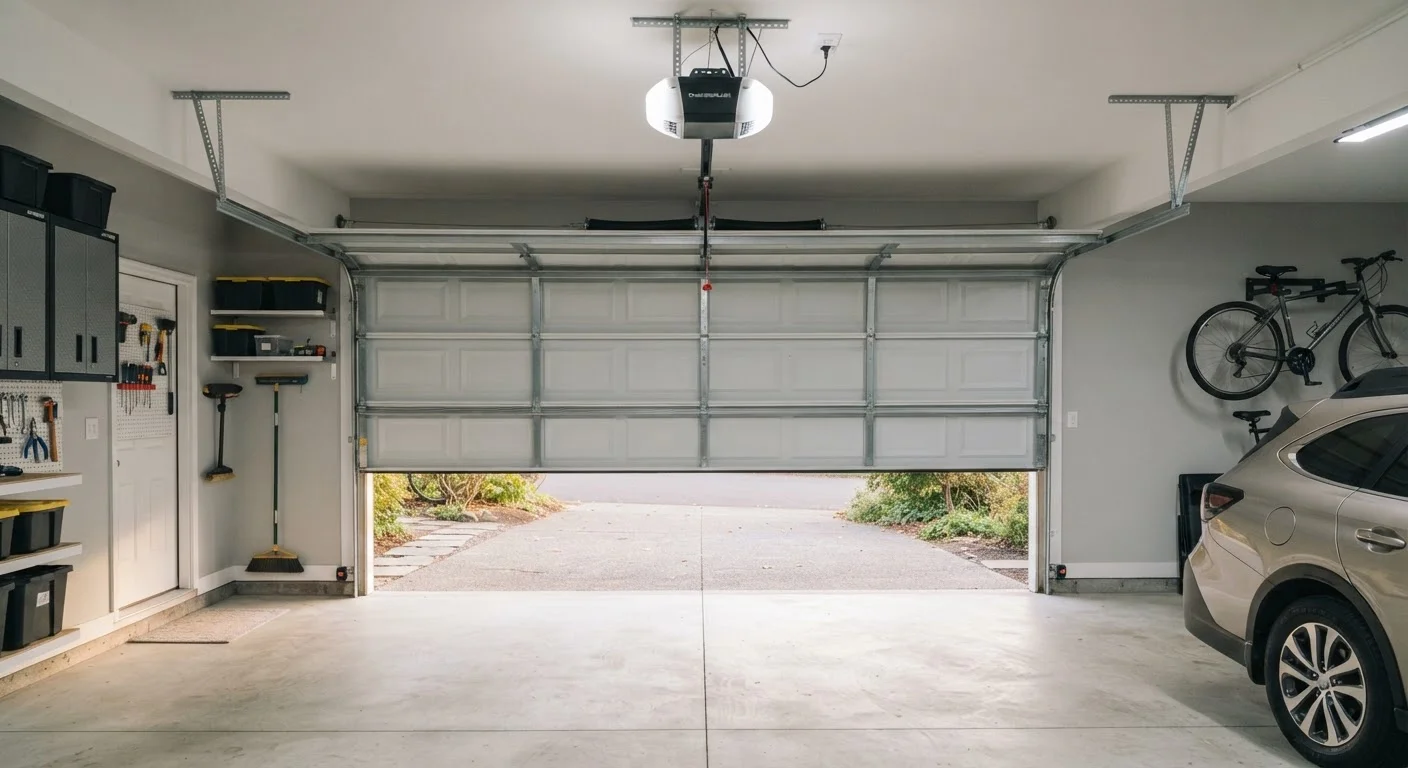
A garage door opener is an electromechanical system that translates motor power into linear motion, pulling or pushing your door along its track. Every system shares a few core components: a motor unit, a drive mechanism, a trolley that connects to the door, a rail or track assembly, and safety sensors near the floor that stop the door if something blocks its path.
Where systems differ is the drive mechanism - the physical means by which motor rotation becomes door movement. That single design choice shapes how loud the opener is, how much it costs, how often it needs lubrication, and how well it holds up in extreme heat or cold.
Most residential openers are rated by motor output in fractions of horsepower (HP). A HP rating of ½ HP handles most standard single and double doors. Heavier wood doors or oversized panels may benefit from ¾ HP or higher to reduce motor strain over time.
The Four Main Drive Types Compared
Here's a plain-English breakdown of each drive type, starting with the most common and working toward more specialized designs.
| Chain Drive | Belt Drive | Screw Drive | Direct Drive | |
|---|---|---|---|---|
| Noise level | Loudest | Quiet | Moderate | Very quiet |
| Typical upfront cost | Lower | Moderate | Moderate | Higher |
| Lubrication needed | Frequent | Minimal | Moderate | Minimal |
| Climate sensitivity | Low | Low | Higher | Low |
| Moving parts | Many | Several | Fewer | Fewest |
| Ceiling space required | Standard | Standard | Standard | None (wall-mount) |
| Best suited for | Detached garages | Attached/quiet spaces | Mild climates | Low headroom garages |
Chain Drive
A metal chain - similar to a bicycle chain - loops around a sprocket to move the trolley. Chain drives are mechanically proven, widely serviceable, and generally the most affordable to purchase. The trade-off is noise: the chain vibrates against the rail, creating a distinct rattling sound that travels through the house structure. They also require periodic lubrication to prevent rust and wear.
Belt Drive
A rubber, fiberglass-reinforced, or polyurethane belt replaces the metal chain. The result is significantly quieter operation, which matters considerably when a bedroom sits above or beside the garage. Belt drives cost somewhat more than chain drives but require less frequent lubrication. The belt can wear or stretch over many years, but replacement intervals are typically long.
Screw Drive
A threaded steel rod rotates to move the trolley - no chain or belt involved. Fewer moving parts means less to maintain and lubricate. However, screw drives are sensitive to temperature extremes: plastic components inside the drive nut can contract in severe cold or expand in intense heat, causing sluggish or erratic movement. They're a reasonable choice in mild-climate regions.
Direct Drive (Jackshaft)
Also called a wall-mount or jackshaft opener, this design mounts beside the door on the wall rather than overhead. The motor directly turns the door's torsion spring shaft, eliminating the rail and trolley entirely. This frees up ceiling space - useful for garages with storage lofts or high-lift door tracks - and produces very little vibration noise. Installation is more involved and these units typically cost more upfront.
Factors to Weigh Before Choosing
Check Your Door Before the Opener
An opener is only as good as the door system it's connected to. Before selecting a new unit, manually operate your door with the opener disconnected - it should move smoothly and stay in place when released at mid-height. If it feels heavy, jerky, or drops quickly, the springs or cables may need attention first. Address mechanical door issues before installing any opener to avoid premature motor wear.
Beyond the drive type, several practical factors should guide your decision:
- Garage attachment: An attached garage sharing walls with living spaces makes noise a higher priority, favoring belt or direct-drive systems.
- Door weight and size: Heavy solid-wood doors or wide two-car panels place more demand on the motor. Verify that any opener's HP rating matches your door's weight specifications - consult the door manufacturer's documentation.
- Climate: Homes in regions with harsh winters or scorching summers should look carefully at temperature range ratings for screw-drive systems in particular.
- Ceiling clearance: Standard rail-based openers need adequate headroom above the door. If clearance is tight, a jackshaft/direct-drive unit may be the only viable option.
- Smart-home integration: Many current openers - across all drive types - support Wi-Fi connectivity and app control. This is a feature layer separate from the drive mechanism itself.
If your project involves replacing an existing opener rather than a fresh install, also check whether your door's existing hardware, springs, and tracks are in good condition. A new opener paired with worn springs or a misaligned track won't perform reliably regardless of drive type. For spring replacement specifically, consult a licensed garage door technician - torsion spring work carries genuine injury risk.
Maintenance Expectations by Drive Type
Maintenance needs vary meaningfully between systems. Here's what routine upkeep generally looks like for each:
~85%
US homes with attached garages
According to the US Census Bureau's American Housing Survey, the large majority of garages in single-family homes are attached, making noise transmission a key consideration for opener selection.
½ HP
Standard motor rating for most doors
Most garage door opener manufacturers rate a ½ horsepower motor as sufficient for standard single and double doors up to roughly 500 lbs.
- Chain drive
- Lubricate the chain and sprocket every 6-12 months with a product designed for garage door systems (avoid WD-40 as a primary lubricant - it's a solvent, not a long-term lubricant). Inspect for rust or chain sag regularly.
- Belt drive
- Inspect the belt periodically for cracking or fraying. Lubrication needs are minimal. The drive mechanism is otherwise largely self-contained.
- Screw drive
- Lubricate the threaded rod 1-2 times per year. Monitor performance in temperature extremes and check the drive nut for wear annually.
- Direct drive
- Very low moving-part count means minimal routine maintenance. Inspect the torsion spring and shaft hardware periodically, and keep the motor unit clear of debris.
Regardless of drive type, test your door's auto-reverse safety feature monthly by placing a 2x4 flat on the ground in the door's path - the door should reverse upon contact. Check the photo-eye sensors for alignment and debris regularly as well. These safety checks apply to all opener types.
For homeowners who enjoy organizing their garage space around a reliable system, understanding how your opener fits into the broader layout of the space matters too. See our plain-language glossary of organizational systems for frameworks that pair well with a well-functioning garage setup.