

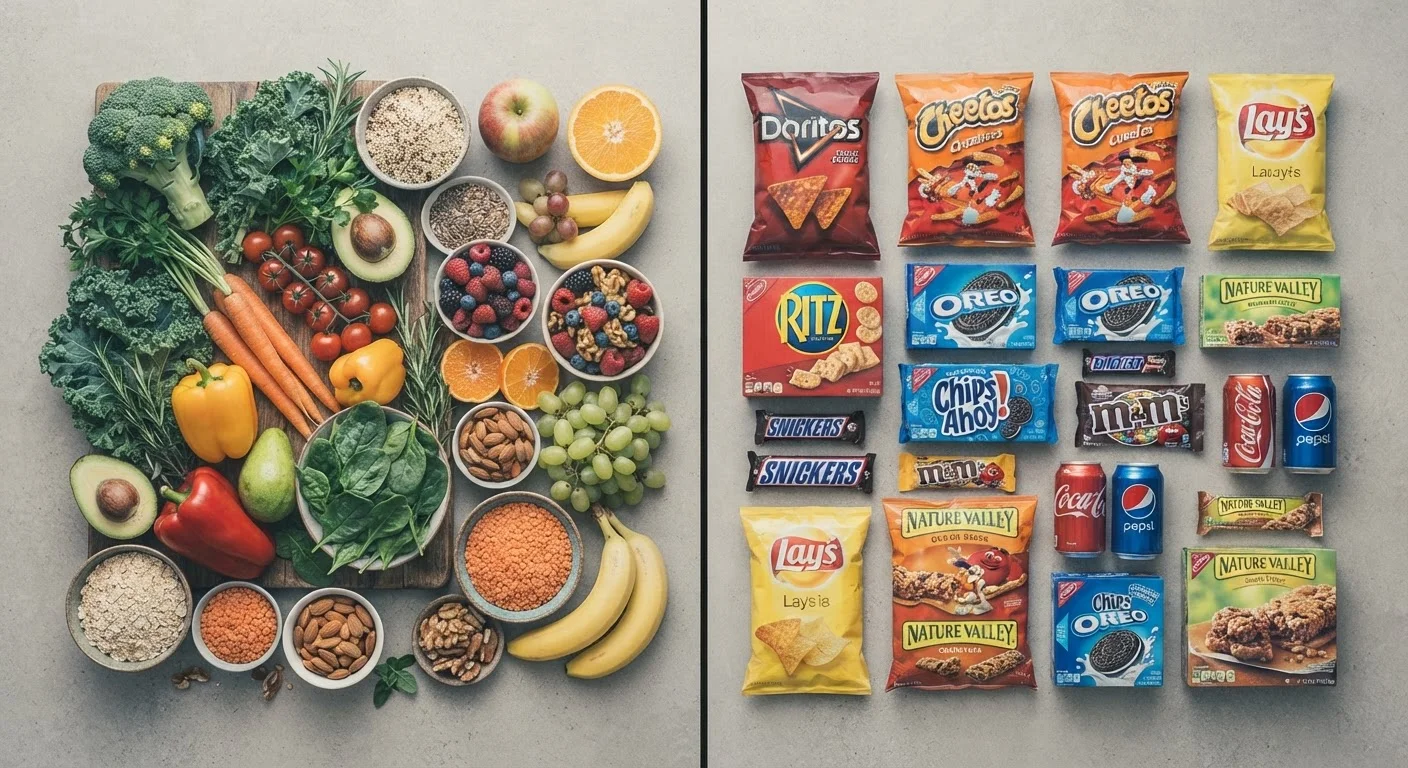
Key Takeaways
- "Ultra-processed" is a scientific classification based on industrial processing methods, not just a synonym for unhealthy food.
- The NOVA system categorizes foods into four groups; Group 4 (ultra-processed) includes additives not typically found in home cooking.
- Multiple large observational studies link high ultra-processed food intake to elevated risks of chronic disease.
- Nutrient labeling alone does not reveal whether a food is ultra-processed - the ingredient list is a more useful signal.
- Reducing ultra-processed food intake does not require eliminating all convenience foods - context and overall dietary patterns matter.
- Always consult a qualified healthcare professional or registered dietitian for personalized nutrition guidance.
Ultra-Processed Food
Ultra-processed foods are industrially manufactured products made mostly from substances extracted or derived from foods - such as refined starches, hydrogenated fats, and added sugars - plus additives like artificial flavors, emulsifiers, and preservatives. They are typically ready-to-eat or ready-to-heat and bear little resemblance to the whole or minimally processed ingredients they originated from. The category goes well beyond "junk food" and includes many products marketed as healthy, such as flavored yogurts, diet sodas, and packaged whole-grain cereals.
The term is defined by the NOVA food classification system, developed by researchers at the University of São Paulo, which groups foods into four groups based on the extent and purpose of industrial processing - not nutrient content alone.
Why "Ultra-Processed" Is More Than a Buzzword
Food labels and wellness media have popularized terms like "clean eating" and "whole foods," but "ultra-processed" carries a more precise meaning. It originates from the NOVA classification system, a research framework that sorts all foods and beverages into four groups based not on nutrients, but on the nature, extent, and purpose of industrial processing applied to them.
This distinction matters because a product can be high in fiber, low in saturated fat, and still be ultra-processed. Conversely, full-fat cheese or cured bacon - often dismissed as unhealthy - falls into a different NOVA category entirely. The framework forces a rethink of how we evaluate food quality beyond macro- and micronutrient profiles.
For everyday consumers, understanding the classification helps move the conversation from individual nutrients toward the broader question of what kind of food system is producing what we eat.
NOVA Is a Research Tool, Not a Regulatory Standard
The NOVA classification is used extensively in nutrition research and has been referenced by public health bodies in several countries, but it is not an official regulatory category in the United States. The FDA does not use NOVA groupings on food labels, and no legal definition of "ultra-processed" currently exists in US food law. Treat it as a useful analytical framework rather than an official stamp of approval or condemnation.
The Four NOVA Groups Explained
The NOVA system organizes foods as follows:
- Group 1 - Unprocessed or minimally processed foods: Fresh fruits, vegetables, plain meats, eggs, plain milk, and legumes. These are used as-is or subjected only to basic processes like drying, chilling, or pasteurization.
- Group 2 - Processed culinary ingredients: Oils, butter, flour, sugar, and salt - substances extracted from Group 1 foods and used in home or restaurant cooking.
- Group 3 - Processed foods: Products made by combining Group 1 and Group 2 items with preservation in mind. Examples include canned fish in oil, artisanal cheeses, and cured meats. They contain few, recognizable ingredients.
- Group 4 - Ultra-processed foods: Industrial formulations using ingredients rarely found in home kitchens - hydrolyzed proteins, modified starches, interesterified fats - plus additives like emulsifiers, stabilizers, artificial colors, and flavor enhancers. Examples include packaged snack cakes, soft drinks, reconstituted meat products, and many breakfast cereals.
The ingredient list is the most accessible diagnostic tool. If a label includes substances a home cook wouldn't stock, the product is likely in Group 4. For a complementary look at how carbohydrate processing affects food quality, see our guide on fiber, refined carbs, and whole grains.
Use the Ingredient List as Your Guide
When evaluating a packaged product, skip straight to the ingredient list. Ingredients like carrageenan, maltodextrin, artificial flavors, high-fructose corn syrup, and color additives (e.g., Red 40) are reliable markers of ultra-processing. The shorter and more recognizable the list, the closer the product tends to be to minimally processed. This habit takes seconds and delivers more useful information than most front-of-pack claims.
What the Research Shows - and Where It Falls Short
The volume of research linking ultra-processed food consumption to poor health outcomes has grown substantially over the past decade. Large prospective cohort studies - including analyses from the NutriNet-Santé study in France and the UK Biobank - have found associations between high ultra-processed food intake and increased risks of obesity, type 2 diabetes, cardiovascular disease, depression, and certain cancers.
57%
Share of US adult calories from ultra-processed foods
A 2016 analysis published in BMJ Open estimated that ultra-processed foods account for more than half of total daily energy intake among US adults.
2x
Relative obesity risk association in high consumers
Several large cohort studies have found that individuals in the highest ultra-processed food consumption quartiles face roughly double the odds of obesity compared to lowest-quartile consumers, though causality is not established.
+500 kcal/day
Extra calories consumed on ultra-processed diet
In the Hall et al. (2019) randomized controlled trial in Cell Metabolism, participants on an ultra-processed diet ate approximately 500 more calories per day than those assigned to an unprocessed diet.
A landmark randomized controlled trial published in Cell Metabolism (Hall et al., 2019) offered more direct evidence: participants randomly assigned to an ultra-processed diet consumed significantly more calories and gained more weight over two weeks compared to those on an unprocessed diet, even when both diets were matched for presented nutrients. This provided mechanistic support for what observational data had suggested.
Important caveats remain. Most evidence is observational, meaning it cannot definitively prove causation. People who eat more ultra-processed food often differ from those who eat less in income, stress levels, food access, and other health behaviors - factors that are difficult to fully control for. Additionally, NOVA classification itself has critics who note it groups nutritionally dissimilar products together. The science is compelling but still maturing.
For a broader view of evidence-based dietary patterns, plant-based eating research offers useful comparative context.
Practical Implications for Everyday Eating
Understanding ultra-processed foods doesn't require a rigid elimination approach. Dietary patterns - what you eat consistently over time - matter far more than individual meals or products. Some practical, evidence-informed considerations:
- Read ingredients, not just nutrition facts. A long list of unfamiliar additives is a stronger signal of ultra-processing than calorie or sugar content alone.
- Prioritize minimally processed staples. Building meals around Group 1 and Group 3 foods - produce, legumes, eggs, plain dairy, canned fish - reduces ultra-processed food exposure without demanding perfection.
- Context matters. A busy household relying on some packaged foods is not the same as a diet dominated by them. Gradual, sustainable shifts tend to be more effective than abrupt overhauls.
- Convenience and cost are real constraints. Food access, time, and budget shape what people can realistically eat. Moralizing about ultra-processed foods without acknowledging these realities is unhelpful.
This article is for general informational purposes only and does not constitute medical or nutritional advice. For personalized guidance on your diet, consult a registered dietitian or qualified healthcare professional.