

Key Takeaways
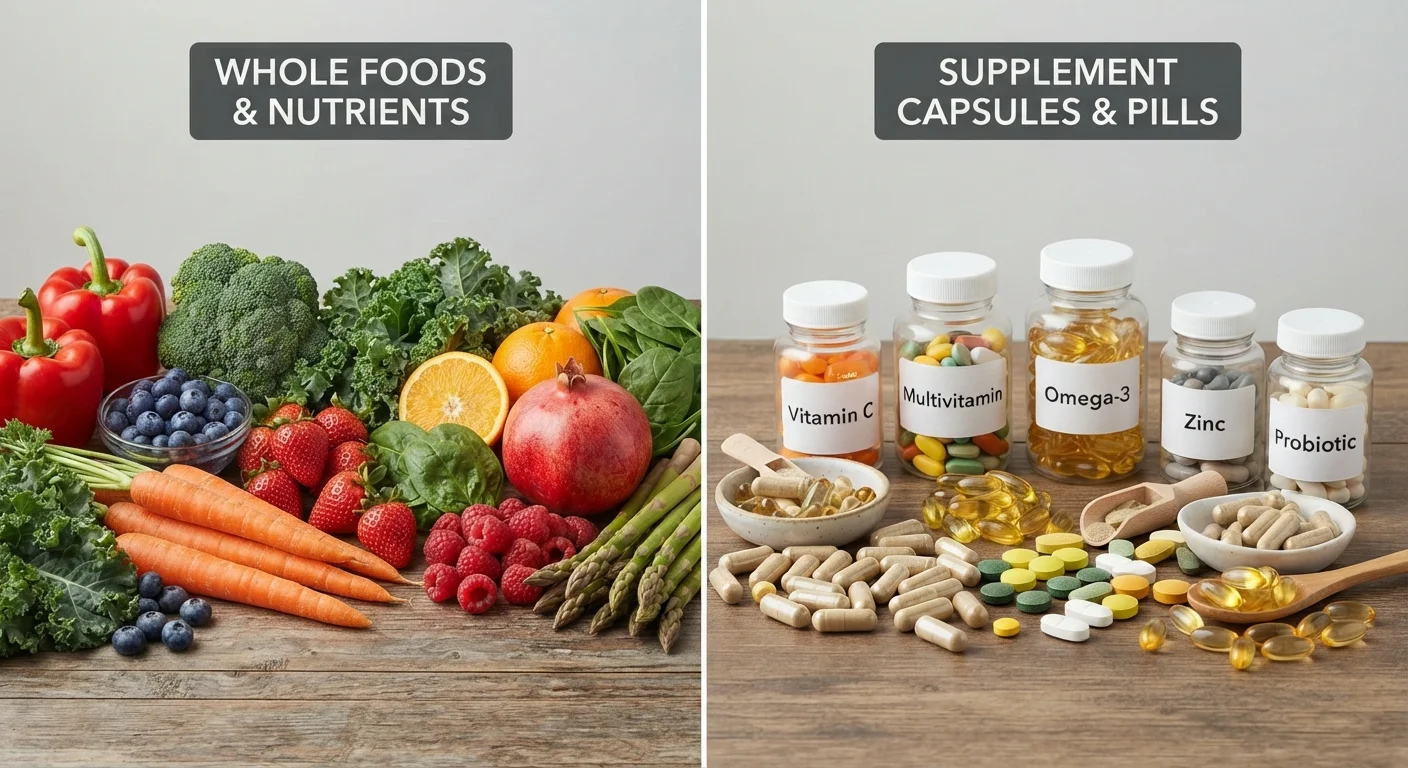
- Whole foods deliver a complex matrix of nutrients, fiber, and phytochemicals that supplements cannot fully replicate.
- Certain populations - including pregnant people, older adults, and those with absorption disorders - have evidence-backed reasons to supplement specific nutrients.
- Most healthy adults who eat varied diets are unlikely to benefit meaningfully from broad multivitamins.
- The supplement industry is not as tightly regulated as pharmaceuticals; quality and dosage accuracy vary widely.
- A qualified healthcare provider or registered dietitian can identify genuine deficiencies before supplementation begins.
Our Verdict
Whole foods remain the gold standard for meeting nutritional needs for most healthy adults, offering nutrient synergy and health-protective compounds that isolated supplements cannot match. Targeted supplementation, guided by lab-confirmed deficiencies or clinically recognized needs, can fill real gaps - but broad, precautionary supplement use has limited evidence of benefit for the general population.
| Best for | Recommended |
|---|---|
| Healthy adults eating a varied diet | Whole foods first |
| Pregnant people, or those planning pregnancy | Targeted supplementation (e.g., folate, iron) under provider guidance |
| Adults with confirmed deficiencies or absorption conditions | Targeted supplementation alongside dietary changes |
| Older adults with reduced dietary variety or absorption | Selective supplementation as recommended by a healthcare provider |
Why Whole Foods Are More Than the Sum of Their Nutrients
A medium orange contains vitamin C - but it also delivers hesperidin, naringenin, fiber, potassium, and folate, all in a form shaped by millions of years of plant evolution. Nutrition researchers refer to this interplay as the "food matrix": the physical and chemical structure of food that influences how nutrients are absorbed, metabolized, and used by the body.
This matrix effect is not trivial. Studies examining beta-carotene illustrate the point well. When consumed from food sources such as sweet potatoes or leafy greens, beta-carotene is associated with protective health outcomes. High-dose supplemental beta-carotene, however, was linked in two large clinical trials - the ATBC and CARET studies - to increased lung cancer risk in smokers. The isolated compound behaved differently than the food-bound version.
Fiber adds another dimension. Legumes, whole grains, and vegetables deliver both soluble and insoluble fiber alongside their vitamins and minerals. That fiber feeds beneficial gut bacteria, slows glucose absorption, and contributes to satiety - none of which a capsule replicates. For a deeper look at how diet shapes the gut, see our piece on gut health and diet.
| Whole Foods | Targeted Supplements | Broad Multivitamins | |
|---|---|---|---|
| Nutrient complexity | High - matrix of compounds | Single or few nutrients | Multiple isolated nutrients |
| Evidence base for healthy adults | Strong and consistent | Strong for specific gaps | Limited for general prevention |
| Bioavailability | Generally high, context-dependent | Variable by form and formulation | Variable; often lower than food |
| Regulatory oversight (US) | Standard food safety rules | FDA dietary supplement rules | FDA dietary supplement rules |
| Risk of excess intake | Very low in typical diets | Possible if poorly dosed | Possible for fat-soluble vitamins |
| Fiber and phytochemicals | Included naturally | Not included | Not included |
| Best suited for | Most healthy adults | Confirmed deficiencies, specific life stages | Limited evidence-based indications |
When Supplements Have Genuine, Evidence-Backed Roles
Dismissing all supplements is as inaccurate as assuming they are universally necessary. Several clinical situations have strong research support for targeted use:
- Folate in early pregnancy: The CDC and major obstetric organizations recommend folic acid supplementation before and during early pregnancy to reduce the risk of neural tube defects - a recommendation backed by robust evidence.
- Vitamin D in limited-sun populations: Many Americans, particularly those living at northern latitudes, with darker skin tones, or who spend little time outdoors, have insufficient vitamin D levels. Food sources are few, and supplementation is a reasonable, evidence-supported response to confirmed deficiency.
- Vitamin B12 for plant-based eaters: B12 is found almost exclusively in animal products. People following vegan or strict vegetarian diets face a genuine gap that diet alone cannot reliably close. Plant-based eating evidence covers this and other nutritional considerations in detail.
- Iron in confirmed deficiency: Iron-deficiency anemia is one of the most common nutritional deficiencies globally. Supplementation under medical supervision is appropriate, though the root cause should also be investigated.
Get Tested Before You Supplement
Rather than guessing at deficiencies, ask your healthcare provider for a blood panel that includes common markers such as vitamin D (25-OH), B12, ferritin, and folate. This transforms supplementation from a precautionary habit into a targeted intervention with a clear rationale. Re-testing after several months can confirm whether the chosen supplement and dose are achieving the intended result.
The key word across all of these examples is targeted. A specific nutrient, identified through clinical assessment, addressed with an appropriate form and dose under professional guidance - that is a different proposition from a broad-spectrum multivitamin taken prophylactically.
Where Broad Supplement Use Falls Short
Despite near-universal consumer familiarity, multivitamins have produced underwhelming results in large-scale trials. The Physicians' Health Study II, which followed over 14,000 male physicians for more than a decade, found no significant reduction in major cardiovascular events from daily multivitamin use. The U.S. Preventive Services Task Force has similarly concluded that evidence is insufficient to recommend multivitamins for the prevention of cardiovascular disease or cancer in healthy adults.
There are practical concerns, too. The supplement industry in the United States is regulated as a category of food, not as pharmaceuticals. The FDA does not require manufacturers to prove efficacy or standardized potency before a product reaches shelves. Third-party verification programs exist - such as USP, NSF International, and ConsumerLab - but participation is voluntary. This means label accuracy, contamination risk, and actual bioavailability can vary considerably across products.
Supplements Are Not Regulated Like Drugs
In the United States, dietary supplements reach store shelves without pre-market proof of efficacy or potency. Manufacturers are responsible for safety, but the FDA does not independently verify label claims before sale. Consumers looking for quality assurance should look for products that carry voluntary third-party certification marks from organizations such as USP or NSF International - and should be skeptical of dramatic health claims on supplement packaging.
Cost is another factor. Supplement spending in the U.S. runs into the tens of billions of dollars annually. For many households, redirecting even a portion of that toward nutrient-dense whole foods - beans, eggs, frozen vegetables, whole grains - could yield a more reliable nutritional return. Our article on eating well on a budget offers practical strategies for doing exactly that.
How to Think About Your Own Situation
Rather than defaulting to either blanket supplement use or blanket rejection, a more useful frame is to ask: Do I have a confirmed or clinically plausible gap? The answer depends on diet quality, health status, age, life stage, and individual absorption capacity - not on marketing claims.
57%
US adults taking dietary supplements
According to the National Institutes of Health Office of Dietary Supplements, more than half of American adults report using at least one dietary supplement.
~$50B
Annual US supplement industry revenue
The US supplement market generates tens of billions in annual revenue, reflecting widespread consumer adoption that often outpaces supporting clinical evidence.
42%
US adults with vitamin D insufficiency
Data from NHANES surveys have found a substantial proportion of American adults with vitamin D blood levels below recommended thresholds, particularly in northern states.
A registered dietitian or primary care provider can order blood panels to identify genuine deficiencies before money is spent on supplementation. This matters because some nutrients - fat-soluble vitamins A, D, E, and K among them - can accumulate to harmful levels when taken in excess. More is not automatically better.
It is also worth examining the pattern of your overall diet. A varied eating pattern rich in vegetables, legumes, whole grains, lean proteins, and healthy fats addresses the vast majority of nutrient needs for most adults. For those curious about how specific dietary patterns hold up to scrutiny, common nutrition myths provides a research-grounded reality check.
This article is for general informational and educational purposes only and does not constitute medical or dietary advice. Consult a qualified healthcare provider or registered dietitian before making decisions about supplementation or significant changes to your diet.