

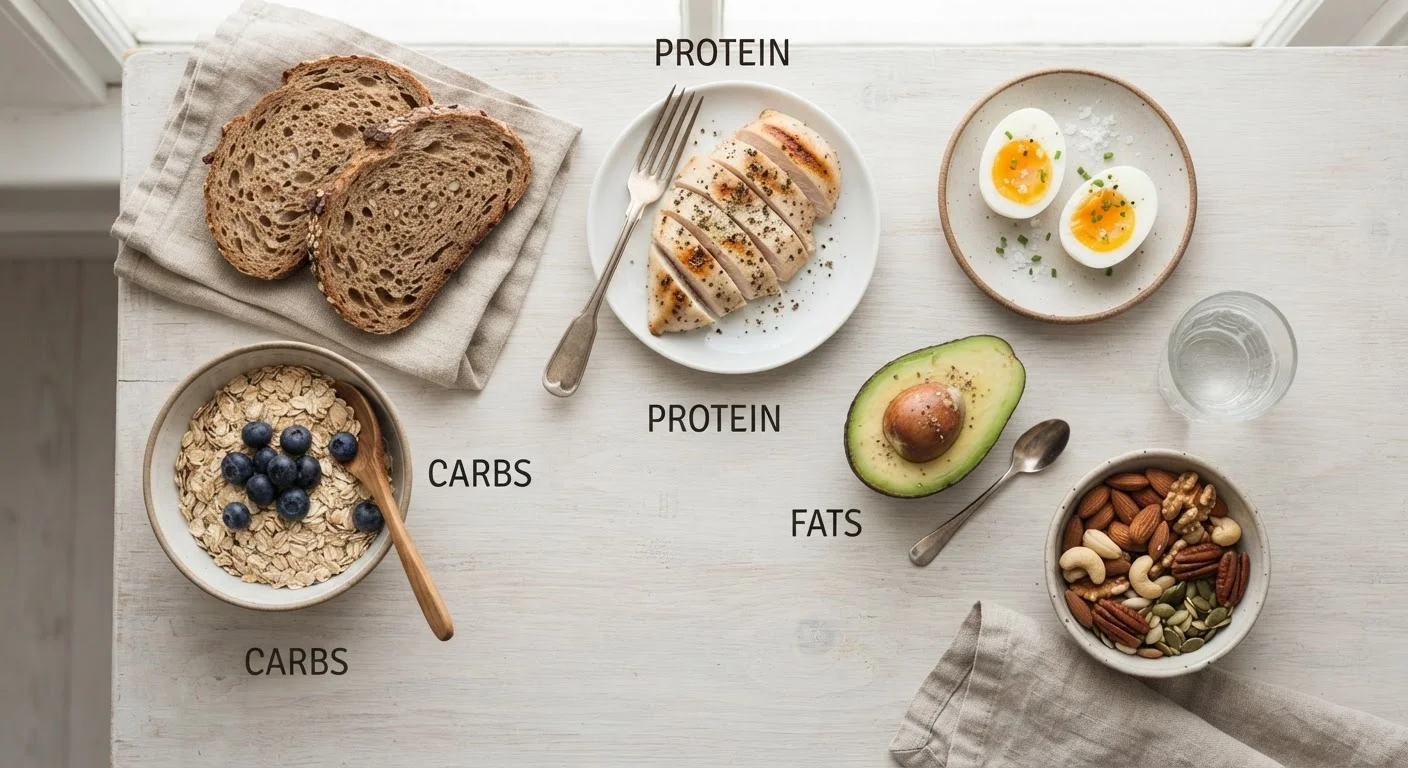
Key Takeaways
- All three macronutrients - carbs, protein, and fat - are essential; none should be eliminated entirely.
- Carbohydrates are your body's preferred primary energy source, especially for the brain and muscles.
- Protein supports muscle repair, immune function, hormone production, and much more.
- Dietary fats are critical for absorbing fat-soluble vitamins and maintaining cell membrane integrity.
- The quality and source of each macronutrient matters as much as the quantity consumed.
- Consult a registered dietitian for personalized guidance on macronutrient balance.
Macronutrients
Macronutrients are the three primary categories of nutrients your body needs in relatively large amounts to function: carbohydrates, proteins, and fats. Unlike vitamins and minerals, macronutrients supply the energy - measured in calories - that fuels everything from breathing to exercise. Each one plays unique roles beyond simply providing fuel, and all three are necessary for long-term health.
In nutritional science, macronutrients are defined by their caloric density: carbohydrates and proteins each yield approximately 4 calories per gram, while fats yield approximately 9 calories per gram.
Carbohydrates: Your Body's First-Choice Fuel
Carbohydrates often take the blame for a range of health concerns, yet they remain the body's preferred and most efficiently used energy source. When you eat carbs, the digestive system breaks them down into glucose, which circulates in the blood and powers your cells - particularly your brain, which relies almost exclusively on glucose under normal conditions.
Not all carbohydrates behave the same way. Whole food sources such as vegetables, legumes, fruits, and whole grains deliver fiber alongside their energy, slowing digestion and providing a steadier blood sugar response. Refined carbohydrates - white bread, sugary beverages, pastries - are stripped of fiber and digest rapidly, producing sharper glucose spikes. For a deeper look at these distinctions, see how fiber, refined carbs, and whole grains differ.
Fiber itself, a form of carbohydrate the body cannot fully digest, supports digestive health, helps regulate cholesterol, and feeds beneficial gut bacteria. Emphasizing carbohydrate quality - rather than categorically eliminating the macronutrient - is the approach most strongly supported by current nutritional research.
45-65%
Recommended share of daily calories from carbohydrates
Per the Dietary Guidelines for Americans, published jointly by the USDA and HHS.
9 kcal/g
Caloric density of dietary fat
Fat provides more than twice the calories per gram compared to carbohydrates or protein, making it highly energy-dense.
~0.8 g/kg
RDA for protein in sedentary adults
According to the National Academies of Medicine; many researchers suggest higher amounts for active adults and older populations.
Protein: Far More Than Muscle Building
Protein is composed of amino acids, often described as the building blocks of the body. Twenty amino acids are involved in human metabolism; nine of these are considered essential because the body cannot synthesize them and must obtain them from food. Complete protein sources - eggs, meat, poultry, fish, dairy, and soy - supply all nine essential amino acids. Many plant foods are incomplete on their own but can complement each other when eaten across a varied diet.
Muscle repair and growth are the roles most people associate with protein, but its functions extend much further. Proteins form enzymes that drive virtually every biochemical reaction, structural components of skin and connective tissue, transport molecules that carry oxygen through the blood, and hormones including insulin. The immune system also depends heavily on proteins - antibodies are specialized proteins.
Distribute Protein Throughout the Day
Research suggests the body can only use a limited amount of protein for muscle synthesis in a single sitting. Spreading protein intake across meals - rather than loading it into one - may support more efficient use by the body. Aim for a protein source at each main meal as a practical starting point.
Protein is also the most satiating macronutrient per calorie, meaning adequate intake can help regulate appetite. This property is one reason higher-protein eating patterns are studied in the context of weight management, though long-term outcomes still depend on overall dietary quality and lifestyle factors.
Dietary Fat: Essential, Not the Enemy
Decades of low-fat dietary advice left many Americans with a lasting, inaccurate impression that fat itself is harmful. The research picture is considerably more nuanced. Fat is essential for absorbing fat-soluble vitamins - A, D, E, and K - without which deficiencies can develop regardless of how much of those vitamins you consume. Fat also forms the structural backbone of every cell membrane in your body and is necessary for producing hormones, including sex hormones and cortisol.
The type of fat matters meaningfully. Unsaturated fats - found in olive oil, avocados, nuts, seeds, and fatty fish - are associated with cardiovascular benefit in a large body of research. Saturated fats, present in red meat and full-fat dairy, appear neutral or mildly adverse depending on the replacement nutrient. Industrially produced trans fats have been strongly linked to heart disease and are now largely banned from the US food supply. For a broader look at nutrition claims that don't hold up to scrutiny, see what evidence-based research actually shows.
Fat and Calorie Density: A Key Consideration
Because fat provides roughly 9 calories per gram - compared to 4 for carbohydrates and protein - fatty foods are calorie-dense even in small portions. This doesn't mean fat should be avoided, but it is a reason why portion awareness matters when consuming even healthy fat sources like nuts or olive oil.
Balance, Quality, and the Bigger Picture
Understanding macronutrients individually is useful, but they work together in ways that make isolated thinking incomplete. A meal rich in fiber slows the absorption of carbohydrates eaten alongside it. Dietary fat consumed with vegetables increases absorption of fat-soluble plant compounds. Protein paired with carbohydrates moderates post-meal blood sugar responses. These interactions underscore why whole-food dietary patterns consistently outperform single-nutrient approaches in long-term health research.
When reviewing food packaging, understanding where macronutrients appear on labels helps you make informed choices. Our guide to reading a nutrition label without getting lost in the numbers walks through each section practically. Beyond macronutrients, vitamins and minerals round out the nutritional picture - explore our micronutrients reference for adults for a complementary overview.
“No single nutrient makes or breaks a diet. It's the overall pattern of eating - emphasizing whole foods, variety, and moderation - that the strongest evidence consistently supports.”
— Walter Willett, Professor of Epidemiology and Nutrition, Harvard T.H. Chan School of Public Health
This article is for general informational and educational purposes only and does not constitute medical or nutritional advice. Individual dietary needs vary. Consult a registered dietitian or qualified healthcare professional before making significant changes to your diet.