

Key Takeaways
- Serving size is the foundation of every number on a nutrition label - always check it first.
- The % Daily Value column tells you whether a nutrient amount is relatively high or low in one serving.
- Prioritize limiting added sugars, saturated fat, and sodium; look to boost fiber, vitamins, and minerals.
- Ingredients are listed by weight, so the first few ingredients dominate the product's composition.
- No single number defines a food's healthfulness - context and overall diet pattern matter most.
What you will need
Why Nutrition Labels Are Worth Your Attention
The Nutrition Facts label, mandated by the U.S. Food and Drug Administration (FDA), underwent its most significant redesign in decades in 2016. The updated format reflects newer research on diet and chronic disease, making it more useful - if you know how to read it. For many shoppers, though, the grid of numbers still triggers more confusion than clarity.
This walkthrough moves through the label top to bottom, explaining what each section actually communicates and which figures tend to matter most for building balanced daily eating habits. If you're also working toward smart, budget-conscious grocery choices, understanding labels is an essential first step - it helps you compare nutrient density, not just price per ounce.
What you will need
The Step-by-Step Label Walkthrough
Work through the label in the order presented below. Each element builds on the one before it, so skipping ahead can lead to misreading the numbers entirely.
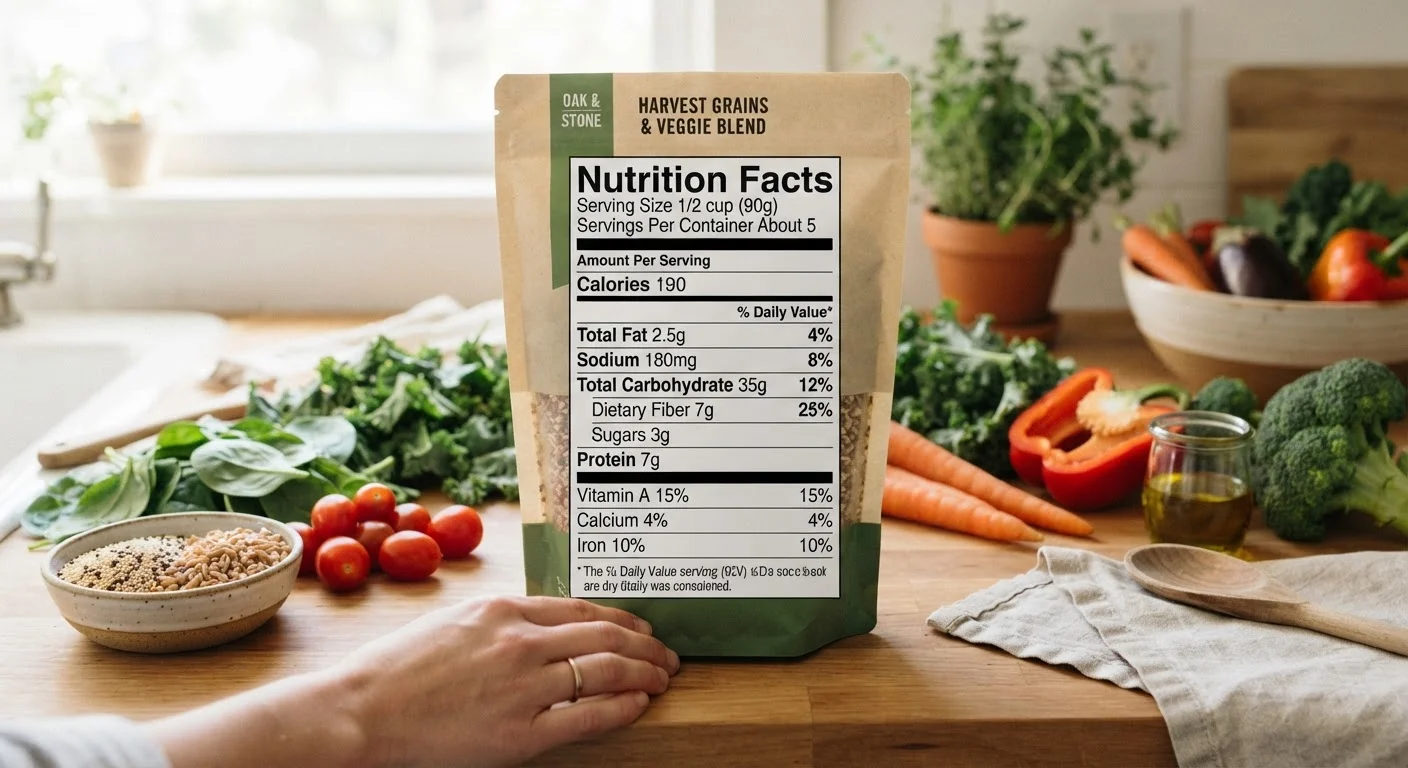
Start with Serving Size and Servings Per Container
The very first lines of the label - serving size and servings per container - anchor every number that follows. All calories, grams, and percentages on the label refer to one serving, not the whole package. A bag listed as containing 3.5 servings means every value must be multiplied by 3.5 if you consume the entire bag.
The FDA now requires serving sizes to reflect amounts people realistically eat rather than idealized portions, which has nudged some serving sizes upward. Always confirm the serving size matches what you're actually planning to eat before reading anything else.
Check the Calories
Calories measure total energy per serving. The updated label displays this number in a larger, bolder font specifically because it's a high-priority data point for many consumers. Neither a high nor low calorie count alone makes a food good or bad - calorie needs vary significantly by age, body size, activity level, and health status. Use calories as one reference point rather than the sole decision-maker.
Understand % Daily Value
The % Daily Value (%DV) column, running down the right side of the label, is one of the most practical tools available. It benchmarks each nutrient against a reference intake for a 2,000-calorie diet. As a general rule of thumb recognized by the FDA: 5% DV or less per serving is considered low for a nutrient, and 20% DV or more is considered high.
Use %DV to quickly answer two practical questions: Is this food a meaningful source of a nutrient I want more of (fiber, calcium, vitamin D, iron, potassium)? Does it deliver a large share of something I'd benefit from moderating (saturated fat, sodium, added sugars)?
Identify Nutrients to Limit
Three nutrients have dedicated prominence on the label because most Americans consume them in excess relative to health guidelines: saturated fat, sodium, and added sugars. Added sugars now appear as a distinct sub-line beneath total sugars - a change introduced specifically because natural sugars (in fruit or dairy) and added sugars have different relationships to health outcomes.
Dietary guidance from health authorities generally supports keeping saturated fat, sodium, and added sugars toward the lower end of daily intake for most adults. High %DV values for these three nutrients, particularly across multiple foods in a day, are worth noting.
Identify Nutrients to Prioritize
Several nutrients appear on the label because many Americans fall short of recommended intakes: dietary fiber, vitamin D, calcium, iron, and potassium. Looking for higher %DV values for these nutrients - especially fiber - is a practical strategy for building a more nutrient-dense diet over time.
Fiber in particular plays a well-documented role in digestive health, blood sugar regulation, and satiety. Products with 10-15% DV or higher for fiber per serving contribute meaningfully to daily totals.
Labels Reflect One Serving - Not the Package
Misreading serving size is the single most common nutrition label error. If a label says 250 calories per serving and the package contains two servings, consuming the entire package means 500 calories - plus double every other nutrient listed. Always confirm servings per container before drawing conclusions from any number on the label.
The Ingredients List: The Label Behind the Label
The Nutrition Facts panel captures quantities, but the ingredients list tells the story of what's actually in the product. Ingredients are required to appear in descending order by weight, meaning the first ingredient is present in the greatest amount. A product that lists sugar, enriched flour, and palm oil in its first three positions is nutritionally very different from one that leads with whole oats, nuts, and dried fruit - even if some nutrient numbers look similar.
Watch for added sugars appearing under multiple names (corn syrup, dextrose, cane juice, maltose) spread throughout the list; collectively they can represent a significant portion of the product. Similarly, partially hydrogenated oils signal the presence of trans fats even when the label reads "0g," because FDA rules allow rounding down from amounts below 0.5g per serving.
Shorter Ingredient Lists Are Often a Useful Signal
Foods with fewer, recognizable ingredients tend to be less processed - though this isn't a universal rule. A whole-grain bread with eight straightforward ingredients (whole wheat flour, water, yeast, salt, oats, honey, sunflower seeds, vinegar) is quite different from a product with forty entries, many of which are stabilizers, emulsifiers, and artificial flavors. Use ingredient list length as a quick orienting cue, not an absolute judgment.
For a deeper look at how vitamins and minerals in your diet fit together, the micronutrients reference guide covers key nutrients, their roles, and common food sources in plain language.
This article is for general informational and educational purposes only and is not a substitute for professional nutrition or medical advice. Consult a registered dietitian or qualified healthcare provider for guidance tailored to your individual health needs.