

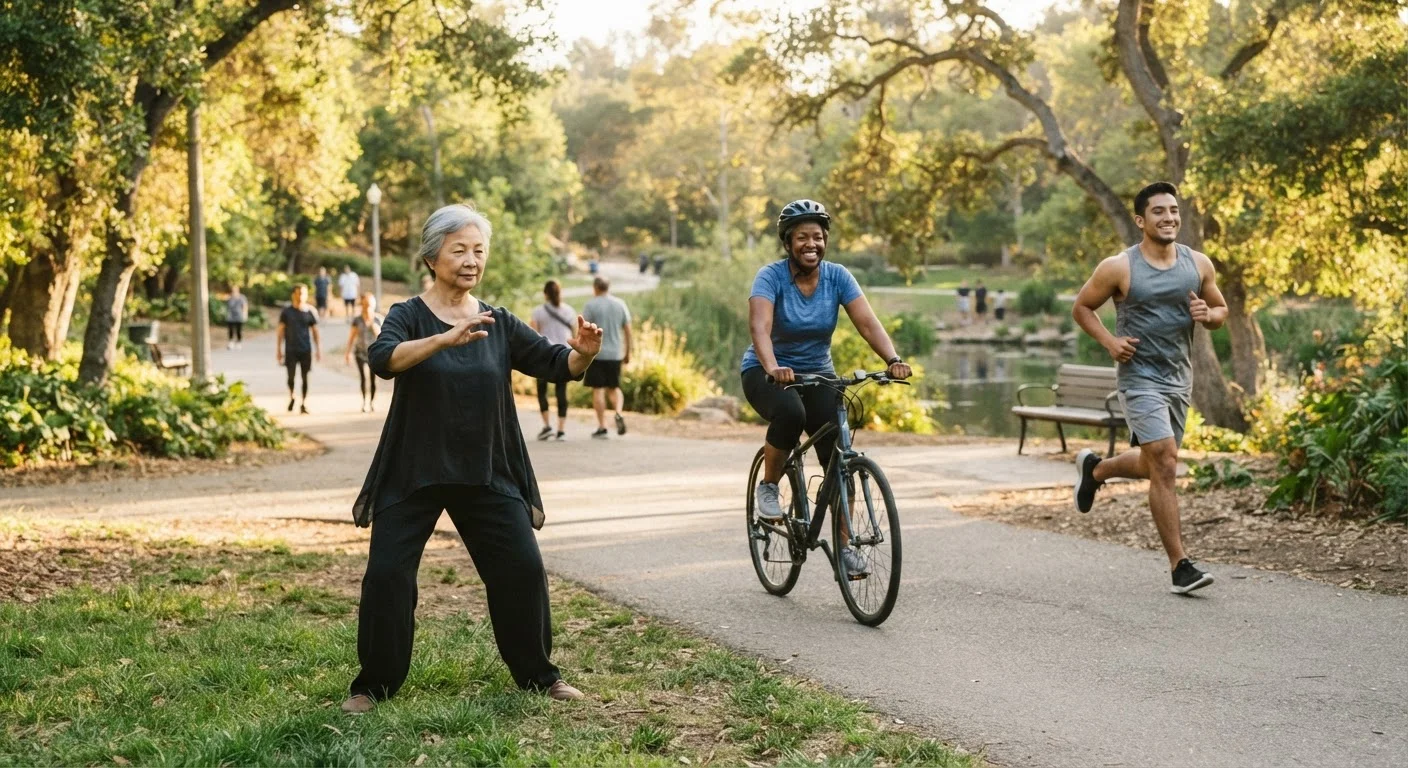
Key Takeaways
- Muscle mass, bone density, and cardiovascular capacity all shift across decades, requiring exercise adjustments.
- Strength training becomes increasingly important from the 40s onward to counter natural muscle loss.
- Balance and mobility work are critical priorities for adults over 60 to reduce fall risk.
- Consistency over intensity is the most evidence-backed principle for lifelong physical health.
- Federal guidelines recommend 150 minutes of moderate aerobic activity weekly for most adults, at any age.
Why Exercise Needs Change Over Time
The human body is not static. From your 20s to your 70s, muscle fiber composition shifts, hormonal profiles change, bone density peaks and gradually declines, and recovery time extends. These are normal biological processes - not signs that activity should slow down, but signals that the type and emphasis of activity should evolve.
Understanding this progression helps adults at every stage make smarter choices about movement rather than defaulting to whatever they did in their 20s or giving up entirely when old routines stop feeling right. The federal physical activity guidelines provide a consistent baseline - 150 minutes of moderate aerobic activity per week, plus muscle-strengthening on two or more days - but how you meet those targets can and should shift with age.
~1%
Annual muscle mass loss starting in mid-30s
Sarcopenia (age-related muscle loss) is well-documented in research and accelerates without resistance training intervention.
36%
Reduction in fall risk with balance training
A Cochrane Review of exercise interventions found balance and functional exercise programs meaningfully reduce fall rates in older adults.
150 min
Weekly moderate aerobic activity recommended
The U.S. Department of Health and Human Services Physical Activity Guidelines for Americans recommend this target for all adults.
Your 20s and 30s: Building the Foundation
These decades represent a physiological window of relative advantage: peak bone density is typically reached in the late 20s, aerobic capacity is at or near its highest, and recovery from training stress is fastest. This is an ideal time to build durable habits and lay a strong physical foundation.
What to prioritize
- Cardiovascular fitness: Running, cycling, swimming, or team sports build aerobic capacity that pays dividends for decades.
- Strength training: Resistance work now helps maximize peak muscle mass - a buffer against the gradual loss that begins in the mid-30s.
- Mobility: Incorporating flexibility and mobility work while joints are resilient sets the stage for lasting range of motion.
The most important priority at this stage isn't any particular activity - it's establishing consistency and enjoyment. Adults who find movement they genuinely like in their 20s and 30s are significantly more likely to remain active into older age.
Treat your 20s and 30s as an investment period: build movement patterns you enjoy enough to sustain, not just the ones that produce the fastest short-term results.
Habit formation research consistently shows that intrinsic motivation - doing something because it feels rewarding - predicts long-term adherence far better than external goals alone.
In your 40s and 50s, shift from judging workouts by intensity or duration to judging them by how well you recover. Soreness that lingers more than 48-72 hours is a signal to scale back.
Recovery capacity declines measurably with age; programming that ignores this leads to cumulative fatigue, overuse injuries, and often abandonment of exercise altogether.
Your 40s and 50s: Protecting What You've Built
Muscle mass begins declining at roughly 1% per year from the mid-30s - a process called sarcopenia - and accelerates around age 50 without intervention. Hormonal shifts, including declining estrogen and testosterone, further affect muscle maintenance, bone density, and fat distribution. Recovery from hard efforts takes longer, and overuse injuries become more common.
What to prioritize
- Resistance training: Two to three sessions per week of strength work become essential, not optional. Compound movements that engage multiple muscle groups - squats, rows, deadlifts - deliver the most return.
- Moderate aerobic activity: Zone 2 cardio (conversational-pace effort) supports cardiovascular health with manageable recovery demands.
- Sleep and recovery: Recovery capacity genuinely decreases; ignoring it leads to cumulative fatigue and injury.
Avoid the All-or-Nothing Trap
Many adults in their 40s and 50s abandon exercise when their bodies stop responding the way they did at 25. This is a normal physiological shift, not a reason to stop. Reducing volume or intensity temporarily is always preferable to stopping entirely. Even ten-minute walks carry measurable cardiovascular benefit when done consistently.
For those returning to exercise after a period of inactivity, this decade often brings anxiety about starting over. Our guide to starting an exercise routine after years of inactivity offers realistic, injury-aware strategies.
Your 60s and Beyond: Moving for Longevity and Independence
Physical activity in later decades serves a distinct and profound purpose: preserving functional independence. Falls are the leading cause of injury among older adults in the US, and maintaining strength, balance, and coordination directly reduces that risk. Aerobic fitness continues to support cardiovascular and cognitive health well into older age.
What to prioritize
- Balance training: Practices like tai chi, single-leg stands, and stability exercises have strong evidence for fall prevention.
- Continued strength work: Resistance training remains beneficial at any age; even adults in their 80s show measurable gains from consistent training.
- Low-impact aerobic activity: Walking, swimming, and cycling protect joints while maintaining cardiovascular health.
- Everyday movement: Small daily movement habits - taking the stairs, walking after meals - accumulate meaningful health benefit between formal sessions.
It's also worth noting that exercise in this age group carries significant benefits for mood and cognitive wellbeing. Research on exercise and mood is nuanced, but regular movement is among the most consistently supported tools for emotional wellbeing at any age.
Individuals managing chronic conditions, joint replacements, or cardiac concerns should consult a healthcare provider or physical therapist before beginning or significantly modifying an exercise program.
Principles That Apply at Every Age
Regardless of decade, a handful of evidence-backed principles hold across the lifespan:
- Consistency beats intensity. Moderate, regular movement produces greater long-term health outcomes than sporadic intense effort.
- Strength training is non-negotiable. Every decade benefits from resistance work; the specifics change, but the need does not.
- Recovery is training. Sleep, rest days, and stress management directly affect how well the body adapts to physical activity.
- Enjoyment drives adherence. The best exercise is the one a person will actually do. Experimentation - group classes, outdoor activities, sport - is not frivolous; it's strategic.
- Movement and mental health are linked. The relationship between movement and mental health is well-documented, making physical activity a meaningful component of whole-person wellbeing.
Physical Activity Guidelines for Americans
The official U.S. Department of Health and Human Services guidelines covering recommended activity levels for adults across all age groups, including older adults and those with chronic conditions.
Go4Life (National Institute on Aging)
A resource from the National Institute on Aging offering evidence-based exercise guidance, sample routines, and motivational tools specifically designed for adults 60 and older.
Everyday Movement Habit Tracker
A simple self-monitoring template to log daily movement - including informal activity like walking and stair use - helping adults build awareness of their baseline and progress.
This article is for general informational and educational purposes only and does not constitute medical advice. Always consult a qualified healthcare professional before making changes to your physical activity routine, particularly if you have existing health conditions.