

Key Takeaways
- Bodyweight exercise builds real strength, endurance, and mobility with zero equipment needed.
- It's highly accessible but has genuine limitations for advanced muscle hypertrophy and heavy strength gains.
- Progression is possible but requires deliberate technique, variation, and load manipulation.
- Bodyweight training works best as a primary or complementary routine, not a universal replacement for all training.
No cost or equipment required
The financial barrier is essentially zero - no gym membership, no gear, and no dedicated space beyond room to move. This removes one of the most common practical obstacles to starting or maintaining a routine.
Can be done anywhere, anytime
A hotel room, a backyard, or a living room floor all work equally well. This flexibility dramatically reduces the friction that causes most people to skip workouts.
Builds functional, transferable strength
Movements like squats, push-ups, and lunges closely mimic real-world physical demands - standing, lifting, climbing - which may translate to better everyday performance and injury resilience.
Scalable for most fitness levels
Modifying a push-up to an incline version, or progressing a squat toward a single-leg variation, allows genuine difficulty scaling without additional equipment.
Supports cardiovascular conditioning
Higher-intensity formats such as circuit training, HIIT-style bodyweight sequences, and plyometrics can elevate heart rate effectively and support aerobic fitness when performed consistently.
Lower injury risk for beginners
Without heavy external loads, there's generally less spinal compression and joint stress for those new to training - though poor form remains a meaningful injury risk regardless of load.
Limited progressive overload for advanced trainees
Progressive overload - incrementally increasing resistance - is fundamental to ongoing strength and muscle gains. Once bodyweight movements become manageable, adding meaningful load without equipment becomes challenging.
Muscle hypertrophy ceiling is real
Research on resistance training consistently finds that external loading allows more precise, greater overload stimulus. For those prioritizing muscle size, bodyweight alone will likely plateau before their genetic potential is reached.
Pulling movements are underrepresented
Pushing patterns (push-ups, dips) are straightforward to perform without equipment, but horizontal and vertical pulling - critical for balanced upper-body development - typically require a bar or rings.
Difficult to isolate specific muscle groups
If rehabilitation, sport-specific development, or a particular muscular imbalance requires targeted isolation work, bodyweight exercise offers limited precision compared to machines or free weights.
Progression can feel ambiguous
Unlike adding a plate to a barbell, advancing in bodyweight training requires learning new movement skills - which some people find less intuitive and harder to track systematically.
Our Verdict
Bodyweight training is a genuinely effective, evidence-supported approach to building fitness - particularly for muscular endurance, functional movement, and cardiovascular conditioning. Its accessibility makes it one of the most sustainable options available. However, those seeking significant muscle mass or maximum strength gains will eventually encounter real physiological ceilings that require added resistance to overcome.
Ideal for adults who prioritize consistency, convenience, and functional fitness, or anyone building or rebuilding a movement habit without gym access.
What Bodyweight Training Actually Is
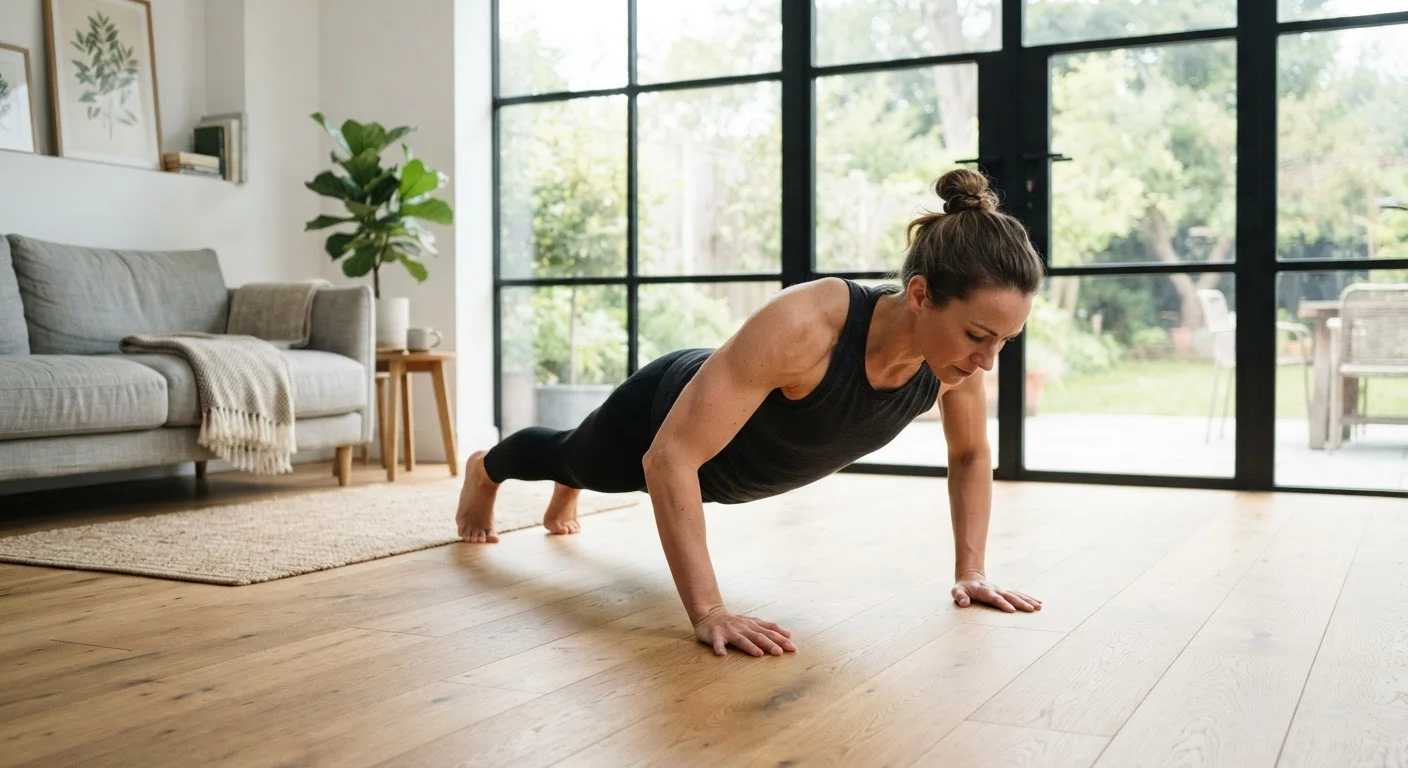
Bodyweight exercise uses your own mass as the primary source of resistance - no barbells, machines, or dumbbells required. Push-ups, squats, lunges, planks, pull-ups, burpees, and dips are among the most recognized forms. The category also includes more advanced skills like single-leg squats (pistols), handstand push-ups, and muscle-ups that demand considerable strength and coordination.
It's worth noting that "bodyweight" isn't synonymous with "easy" or "low-impact." The difficulty is determined by leverage, range of motion, tempo, and the specific movement pattern - variables that can make even familiar exercises genuinely challenging. That said, the modality does have a defined ceiling, which is important context for setting realistic expectations. For a broader look at how this approach compares to gym-based options, see our guide to gym vs. home workouts.
The Real Advantages
Bodyweight training earns its popularity for concrete reasons, not just convenience.
No cost or equipment required
The financial barrier is essentially zero - no gym membership, no gear, and no dedicated space beyond room to move. This removes one of the most common practical obstacles to starting or maintaining a routine.
Can be done anywhere, anytime
A hotel room, a backyard, or a living room floor all work equally well. This flexibility dramatically reduces the friction that causes most people to skip workouts.
Builds functional, transferable strength
Movements like squats, push-ups, and lunges closely mimic real-world physical demands - standing, lifting, climbing - which may translate to better everyday performance and injury resilience.
Scalable for most fitness levels
Modifying a push-up to an incline version, or progressing a squat toward a single-leg variation, allows genuine difficulty scaling without additional equipment.
Supports cardiovascular conditioning
Higher-intensity formats such as circuit training, HIIT-style bodyweight sequences, and plyometrics can elevate heart rate effectively and support aerobic fitness when performed consistently.
Lower injury risk for beginners
Without heavy external loads, there's generally less spinal compression and joint stress for those new to training - though poor form remains a meaningful injury risk regardless of load.
~150 min
Weekly moderate activity recommended by U.S. guidelines
The U.S. Department of Health and Human Services Physical Activity Guidelines for Americans recommend at least 150 minutes of moderate-intensity aerobic activity and two days of muscle-strengthening activity per week - goals bodyweight training can contribute to meeting.
28%
U.S. adults meeting both aerobic and strength guidelines
According to CDC data, only about 28% of U.S. adults meet both the aerobic and muscle-strengthening physical activity guidelines, highlighting the significant room accessible training options like bodyweight exercise can help close.
Beyond the numbers, bodyweight exercise tends to train movement patterns rather than isolated muscles - a distinction that matters for functional daily activity. And because the barrier to entry is essentially zero, many people find it easier to sustain. Consistency, not perfection, is the strongest predictor of long-term fitness outcomes. Our article on building a weekly movement plan explores how to structure this kind of routine sustainably.
The Genuine Limitations
Acknowledging the drawbacks of bodyweight training isn't defeatist - it's essential for designing a program that actually matches your goals.
Limited progressive overload for advanced trainees
Progressive overload - incrementally increasing resistance - is fundamental to ongoing strength and muscle gains. Once bodyweight movements become manageable, adding meaningful load without equipment becomes challenging.
Muscle hypertrophy ceiling is real
Research on resistance training consistently finds that external loading allows more precise, greater overload stimulus. For those prioritizing muscle size, bodyweight alone will likely plateau before their genetic potential is reached.
Pulling movements are underrepresented
Pushing patterns (push-ups, dips) are straightforward to perform without equipment, but horizontal and vertical pulling - critical for balanced upper-body development - typically require a bar or rings.
Difficult to isolate specific muscle groups
If rehabilitation, sport-specific development, or a particular muscular imbalance requires targeted isolation work, bodyweight exercise offers limited precision compared to machines or free weights.
Progression can feel ambiguous
Unlike adding a plate to a barbell, advancing in bodyweight training requires learning new movement skills - which some people find less intuitive and harder to track systematically.
A Note on 'Beginner' vs. 'Advanced' Limits
The ceiling for bodyweight training is not the same for everyone. A beginner can build substantial strength and lean mass for months or years with bodyweight-only programming. The limitations become more pronounced for experienced lifters or those with specific physique or performance goals. Where you fall on that spectrum should meaningfully shape how you use - or supplement - bodyweight work. If you're unsure how to assess your starting point, a certified personal trainer or exercise physiologist can help.
If hypertrophy (muscle size) or maximum strength is your primary goal, research consistently shows that progressive overload with external resistance produces superior results beyond intermediate fitness levels. Bodyweight progressions can delay - but not indefinitely defer - that ceiling for most people.
How It Fits Into a Broader Fitness Picture
Bodyweight training doesn't have to be an all-or-nothing choice. Many well-rounded fitness routines combine it with resistance tools, cardio modalities, or both. Understanding how strength and cardiovascular training interact can sharpen your planning - our explainer on combining strength and cardio covers the evidence in depth.
There's also a meaningful psychological dimension to consider. Regular moderate-intensity exercise - including bodyweight work - is associated with improvements in mood and stress resilience, though the relationship is more nuanced than popular accounts often suggest. See exercise and mood: sorting the evidence for a grounded look at what research supports.
Before beginning any new exercise program, especially if you have an existing health condition, injury history, or are returning after a long break, consult a qualified healthcare professional or certified fitness professional for personalized guidance. This article is for general informational purposes only and does not constitute medical or professional fitness advice.