

Key Takeaways
- Your owner's manual contains the authoritative maintenance schedule for your specific vehicle.
- Schedules are organized by mileage or time intervals - whichever comes first.
- Normal and severe driving conditions have different service frequencies.
- Skipping intervals doesn't save money; it shifts costs to larger repairs later.
- A simple log or app makes tracking service history straightforward.
Vehicle Maintenance Schedule
A vehicle maintenance schedule is a manufacturer-specified timeline of routine service tasks - such as oil changes, fluid checks, and filter replacements - tied to mileage or time intervals. It tells you what needs attention, and when, to keep your car running safely and reliably. Following it helps prevent small issues from developing into expensive mechanical failures.
Schedules are typically divided into 'normal' and 'severe' driving conditions; the latter applies to frequent short trips, extreme temperatures, towing, or stop-and-go traffic and generally requires more frequent service.
How a Maintenance Schedule Is Structured
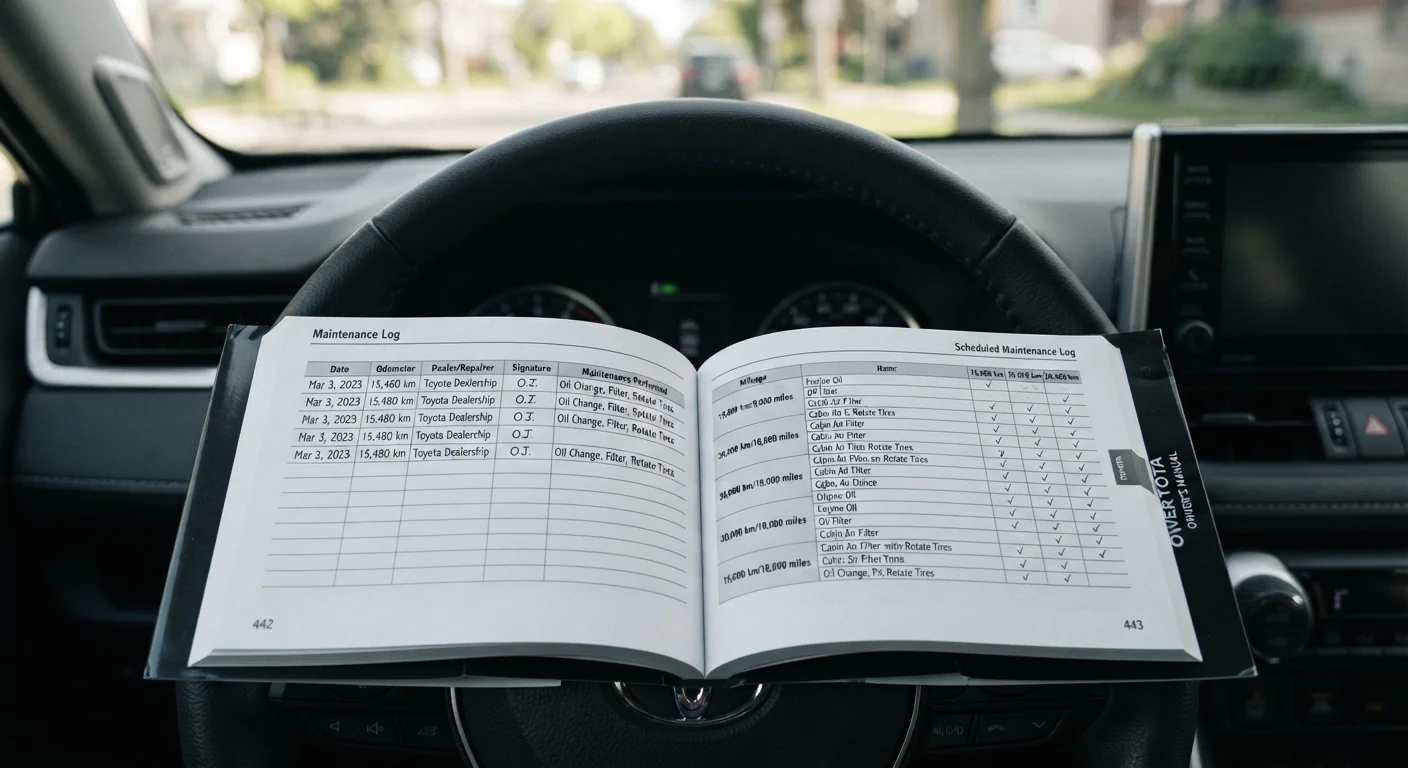
Open your owner's manual to the maintenance section and you'll typically find a table or chart organized around two axes: mileage milestones (every 5,000, 15,000, 30,000 miles, and so on) and time intervals (every six months, annually, every two years). The rule is straightforward: service falls due at whichever threshold arrives first.
Each row in the chart represents a specific task - oil and filter change, tire rotation, cabin air filter inspection, brake fluid check, spark plug replacement. A check mark or bullet in the corresponding column tells you when that task is due. Some tasks appear at every interval; others only surface at major milestones like 60,000 or 90,000 miles.
The two-tier split between normal and severe driving conditions is worth understanding early. If your commute involves extended highway miles in moderate weather, normal intervals almost certainly apply. Frequent short city trips, towing, or operating in extreme heat or cold shifts you into the severe category - meaning tighter service windows.
Time vs. Mileage: Don't Ignore Either
Low-mileage drivers sometimes assume their car needs less service because the odometer hasn't moved much. However, many fluids and components degrade with time regardless of use - brake fluid absorbs moisture, rubber seals dry out, and batteries lose charge capacity. Always apply the time threshold if you haven't reached the mileage milestone first.
The Services That Appear Most Often
A few maintenance items come up repeatedly across nearly every schedule, and knowing what they do helps you understand why the intervals exist:
- Engine oil and filter: Oil lubricates moving parts and carries heat away from the engine. Degraded oil loses viscosity and protective qualities. Interval recommendations vary widely by vehicle and oil type - synthetic vs. conventional oil is one factor that influences how frequently your manual calls for changes.
- Tire rotation: Rotating tires evens out wear patterns, extending their useful life. Most schedules call for rotation every 5,000-7,500 miles, often coinciding with oil changes for convenience.
- Air and cabin filters: Engine air filters protect combustion; cabin filters affect interior air quality. Both are relatively inexpensive but easy to overlook - they're among the neglected tasks that quietly affect long-term reliability.
- Brake inspection: Brake pad thickness and fluid condition are safety-critical checks. Some manuals specify intervals; others call for inspection at every tire rotation.
- Coolant and transmission fluid: These fluids degrade chemically over time regardless of mileage. Intervals can range from 30,000 to over 100,000 miles depending on the fluid type and application.
Align Services to Save Time and Money
When possible, schedule services that share an interval - like an oil change and tire rotation - at the same appointment. This reduces labor time and means fewer trips to the shop. Ask your technician to do a courtesy inspection of due-soon items while the vehicle is already on the lift.
Reading Your Manual Without Getting Lost
Owner's manuals are dense, but the maintenance section is one of the most practical parts to study. A few strategies make it more approachable:
- Find your current mileage's place on the chart. Identify which milestone you're approaching next - that's your immediate priority list.
- Note dual thresholds. If the manual says "every 7,500 miles or 12 months," set a calendar reminder for 12 months even if you haven't hit the mileage, especially for light drivers.
- Distinguish inspection from replacement. Some entries say "inspect" rather than "replace." An inspection might confirm no action is needed, or it might reveal that a component is due for service sooner than the standard interval.
- Keep a service log. Record the date, mileage, and service performed after each visit. A glove-box notebook or a vehicle app works equally well. This becomes valuable when you're building the habits experienced owners rely on - and it supports resale value documentation.
Driving conditions also shift the schedule seasonally. Winter battery strain, summer coolant demands, and wet-weather brake wear are all real factors. A seasonal audit pairs naturally with your mileage-based schedule - see seasonal car care guidance for a structured approach.
~30%
Vehicles overdue for basic maintenance
Industry service data consistently suggests a significant share of vehicles on US roads are past due for at least one routine maintenance item at any given time.
5,000-10,000 mi
Typical modern oil change interval
Modern engines and synthetic oils have extended intervals well beyond the old 3,000-mile rule; exact intervals vary by manufacturer and oil specification.
60,000-100,000 mi
Typical spark plug replacement range
Iridium and platinum spark plugs used in most current vehicles are designed to last far longer than older copper-tip plugs, but are often overlooked until engine performance degrades.
What Happens When You Skip Intervals
Deferred maintenance rarely stays cheap. Oil that runs too long accumulates contaminants; worn brake pads score rotors; old coolant becomes acidic and attacks metal components. Each missed interval compresses the margin between routine upkeep and a repair bill that dwarfs what the service would have cost.
The pattern compounds in predictable ways - an engine that develops sludge from chronic oil neglect faces far greater costs than the sum of skipped oil changes. The real cost of letting maintenance slide examines how this progression typically unfolds and what it means for a vehicle's long-term reliability.
If your vehicle emits unusual sounds or warning lights, those are signals that something has already moved past the preventive stage. Understanding what those sounds mean can help you assess urgency before booking a service appointment.
“The maintenance schedule in your owner's manual isn't a suggestion - it's the engineering team's best guidance on how to protect your investment. Treating it as optional is treating your engine as disposable.”
— Cars & Driving Editorial Team, Automotive maintenance editorial collective