

Key Takeaways
- The 3,000-mile oil change rule is largely outdated for most modern vehicles.
- Synthetic oil typically allows intervals of 7,500 to 10,000 miles or more, depending on the vehicle.
- Your owner's manual - not the quick-lube sticker - is the authoritative source for your car's interval.
- Short trips, towing, and extreme temperatures count as 'severe' driving and shorten safe intervals.
- Many newer vehicles use oil life monitoring systems that calculate the interval dynamically.
Oil Change Interval
An oil change interval is the recommended distance or time period between engine oil replacements. It tells you how long your motor oil can effectively lubricate and protect engine components before it degrades and needs to be swapped out. The right interval depends on your vehicle, the type of oil used, and how and where you drive.
Modern engines with an oil life monitoring system calculate degradation dynamically using sensors and algorithms, rather than relying solely on mileage - making fixed-mileage rules increasingly outdated.
Why the 3,000-Mile Rule Doesn't Apply Anymore
For decades, the standard advice was simple: change your oil every 3,000 miles. That guidance made sense when it was coined - older engines with looser tolerances, conventional oil formulations, and fewer onboard diagnostics meant frequent oil changes were genuinely protective. Today, that blanket rule is largely a relic.
Modern engine manufacturing is far more precise, and oil chemistry has advanced considerably. Most current vehicles require oil changes somewhere between every 5,000 and 10,000 miles, with some full-synthetic specifications allowing intervals up to 15,000 miles under ideal conditions. Sticking to 3,000 miles out of habit wastes money and is no more protective than following the correct interval.
Car maintenance myths like this one persist because they feel cautious - but over-servicing isn't the same as good maintenance.
7,500-10,000 mi
Typical synthetic oil change interval
Most major automakers specify full-synthetic oil change intervals in this range for normal driving conditions, per manufacturer owner's manuals.
~40%
Of US drivers still change oil every 3,000 miles
Industry surveys have consistently found a large share of drivers follow the outdated 3,000-mile rule despite manufacturer guidance recommending longer intervals.
5,000 mi
Common severe-duty interval for many vehicles
Drivers who regularly tow, make short trips, or operate in extreme temperatures are often advised to shorten their intervals to around 5,000 miles.
The Four Factors That Actually Determine Your Interval
No single mileage figure applies universally. Your correct oil change interval is shaped by four interdependent factors:
- Oil type: Conventional oil degrades faster than full synthetic. If your manufacturer specifies synthetic, its extended interval is engineered into the recommendation. Switching to conventional without adjusting your interval is a mistake.
- Engine design and age: High-performance engines, turbocharged engines, and older high-mileage engines all place different demands on oil. Turbos, in particular, run extremely hot and can degrade oil more quickly.
- Driving conditions: The industry distinguishes between "normal" and "severe" driving. Severe conditions - frequent short trips, stop-and-go traffic, towing, extreme temperatures, or dusty roads - accelerate oil breakdown and shorten the safe interval.
- Manufacturer specification: This is the authoritative figure. Your owner's manual lists both normal and severe service intervals specific to your engine and oil type. That's the number to follow.
For a broader picture of how oil changes fit into your vehicle's overall upkeep, see your car's maintenance schedule decoded.
Check Your Manual Before Your Next Service
Before scheduling your next oil change, look up your vehicle's specified interval in the owner's manual. If your car requires full synthetic and you've been changing at 3,000 miles, you may be able to safely extend that - saving both time and money without any trade-off in protection.
Oil Life Monitoring Systems: What They Do and Don't Tell You
Many vehicles built in the past decade include an oil life monitoring (OLM) system. Rather than simply counting miles, these systems use engine speed, temperature, load, and trip length data to estimate how much protective life remains in the oil. When the system calculates that oil quality has dropped to a certain threshold, it alerts the driver - typically via a dashboard message or percentage display.
OLM systems are generally reliable for normal driving, but they have limitations. They measure operating conditions, not the actual chemistry of the oil. If your engine has a slow internal leak, or you're running an oil grade not matched to the system's assumptions, the alert timing can be slightly off. Treat OLM as a useful guide, not an absolute override - and always cross-reference with your owner's manual.
OLM Doesn't Replace Regular Dipstick Checks
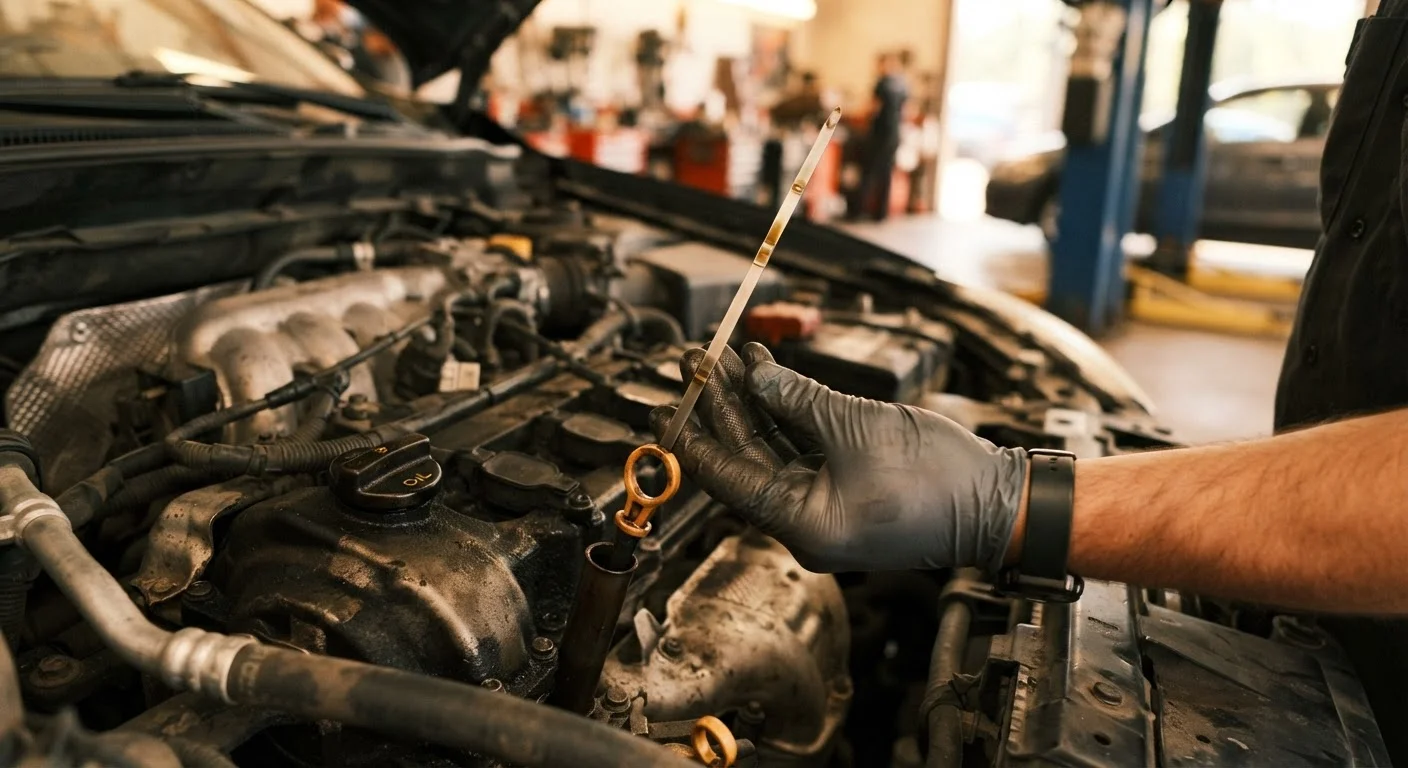
Even if your vehicle has an oil life monitoring system, it won't alert you to a low oil level - only degraded oil quality. Check your oil level with the dipstick every few weeks or before long trips. Keeping oil at the correct level is as important as changing it on schedule.
How to Find - and Stick to - Your Correct Interval
The most reliable step you can take is simple: open your owner's manual and locate the oil change section. It will specify intervals for both normal and severe service, along with the recommended oil viscosity and specification (such as API SN or dexos). If you've lost your manual, the manufacturer's website or a dealer service department can confirm the same information.
Once you know your interval, build a habit around tracking it. Experienced owners rely on consistent record-keeping - noting the mileage and date at each service makes it easy to know exactly where you stand. You can also check your oil level and condition yourself between services: dark but fluid oil is normal; gritty, milky, or foamy oil signals a problem that warrants immediate attention.
Matching your interval to your actual vehicle, oil type, and driving pattern is the single most effective way to protect your engine long-term - without spending a dollar more than necessary.