

Key Takeaways
- Your owner's manual is the most reliable source for your vehicle's specific maintenance intervals.
- Checking five key fluids regularly can prevent the majority of avoidable breakdowns.
- Tire pressure and tread depth directly affect both fuel efficiency and braking safety.
- Keeping written maintenance records protects your investment and simplifies future repairs.
- Many routine checks require no tools and can be done in under ten minutes.
Start here
Why Maintenance Matters From Day One
Next
The Fluids Every Owner Should Know
Then
Tires, Brakes, and Lights: Your Safety Triad
Build your plan
Building a Maintenance Schedule
Avoid pitfalls
Common Beginner Mistakes to Avoid
Why Maintenance Matters From Day One
Owning a car is one of the most significant ongoing financial responsibilities most adults take on. The vehicle purchase itself is just the beginning - what happens after you drive off the lot determines how long that car serves you reliably and safely.
Preventive maintenance is far less expensive than reactive repairs. Neglecting an oil change, for example, can eventually lead to engine wear that costs thousands of dollars to address. Consistent upkeep also preserves resale value, ensures your vehicle passes state inspections, and - most importantly - keeps you and your passengers safe.
If you're still in the buying phase, be sure to read our guide on navigating the car market as a first-time buyer before taking on ownership costs.
Preventive maintenance
Scheduled upkeep performed before a problem develops, intended to extend vehicle life and prevent costly repairs.
PSI
Pounds per square inch - the unit used to measure tire air pressure. Each vehicle has a recommended PSI printed on the driver's door jamb sticker.
Tread depth
The measurement of the grooves in your tire that channel water away from the contact patch. Worn tread reduces grip, especially on wet roads.
Owner's manual
The manufacturer-produced booklet that comes with every vehicle, containing model-specific maintenance schedules, fluid specifications, and warning light explanations.
Service interval
The mileage or time period after which a specific maintenance task - such as an oil change or filter replacement - should be performed.
Brake fluid
A hydraulic fluid that transmits the pressure from your brake pedal through the braking system to slow or stop the vehicle.
The Fluids Every Owner Should Know
Your vehicle relies on several fluids to operate safely. Learning to check each one takes less time than most people expect, and it's one of the most high-value habits a new owner can develop.
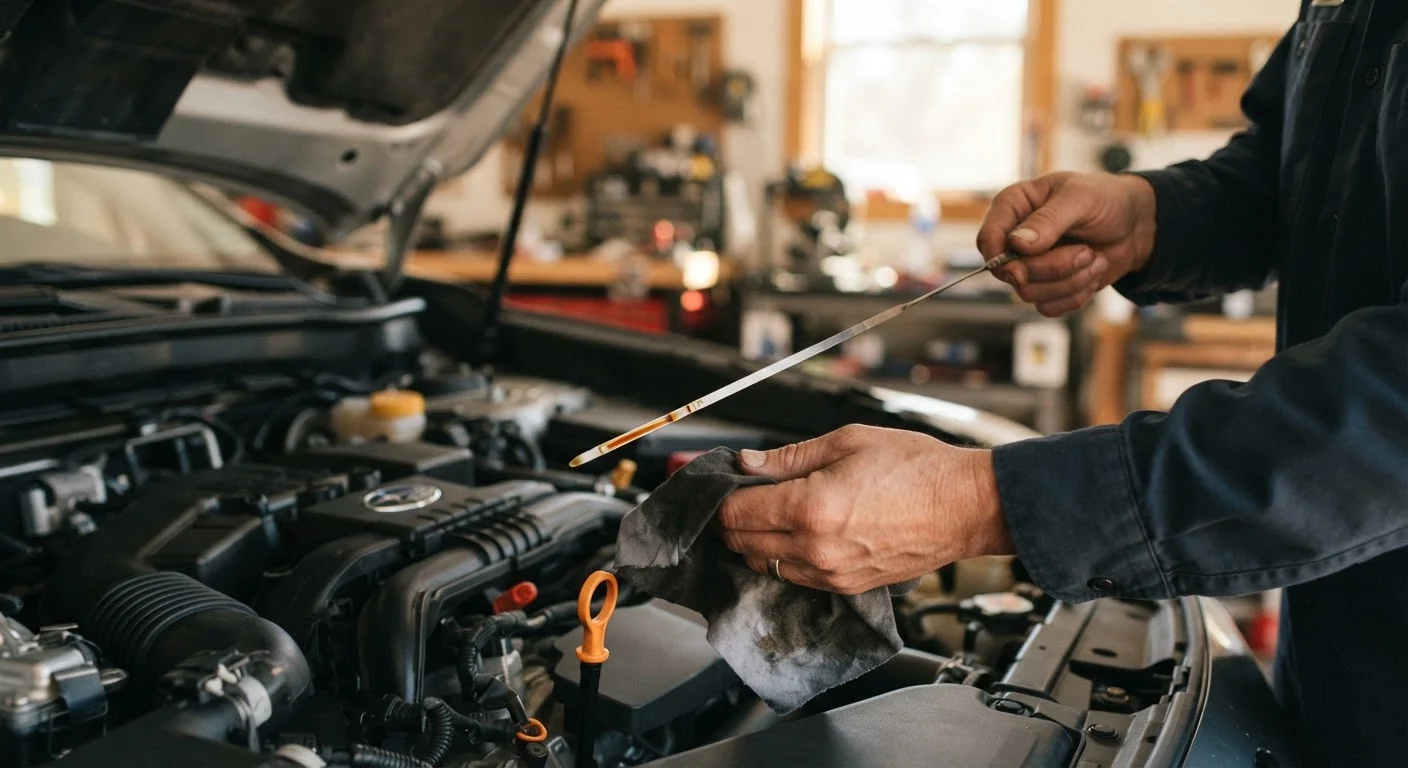
- Engine oil: Lubricates moving engine parts and reduces heat. Check it monthly using the dipstick - the oil should be between the minimum and maximum marks and appear amber, not black and gritty.
- Coolant (antifreeze): Regulates engine temperature. Check the overflow reservoir when the engine is cold. Never open the radiator cap on a hot engine.
- Brake fluid: Transmits the force of your brake pedal to the brakes. It lives in a translucent reservoir near the firewall and should stay within the marked range.
- Power steering fluid: Found on vehicles with traditional hydraulic steering. Low levels can make steering feel stiff or cause whining noises when turning.
- Windshield washer fluid: The only fluid you can safely top off yourself without any technical knowledge - just use a product rated for your climate.
Check Fluids When the Engine Is Cold
For the most accurate readings, check engine oil, coolant, and brake fluid before your first drive of the day or at least 30 minutes after the engine has been off. Hot engines can give misleading fluid level readings and pose a burn risk when opening reservoirs.
Tires, Brakes, and Lights: Your Safety Triad
Three systems account for the vast majority of safety-critical failures on the road: tires, brakes, and lights. A basic monthly inspection of each takes about ten minutes.
Tires
Check tire pressure when the tires are cold - the correct PSI (pounds per square inch) is printed on a sticker inside the driver's door jamb, not on the tire sidewall. Under-inflated tires increase stopping distances and reduce fuel efficiency; over-inflated tires reduce grip. Inspect tread depth using the penny test and look for cracks, bubbles, or embedded objects.
Brakes
Squealing or grinding sounds, a pulsating brake pedal, or a car that pulls to one side when braking are all signals to have your brakes inspected promptly. Many shops will inspect brake pads during an oil change at no extra charge. Never delay on brake concerns - this is one area where a qualified mechanic should always be involved.
Lights
Walk around your parked car periodically with the headlights, taillights, brake lights, and turn signals active. Ask someone to help confirm brake lights from the rear. A burned-out bulb can result in a traffic citation and - more critically - reduces your visibility to other drivers.
Never Ignore Brake Warning Signs
Grinding, squealing, or a soft brake pedal are not symptoms to monitor - they are reasons to stop driving and have the vehicle inspected immediately. Brake failure is one of the most serious safety hazards a driver can face. When in doubt, have a qualified mechanic assess the system before getting back on the road.
Building a Maintenance Schedule
The single best tool for new owners is the vehicle's owner's manual. It contains a factory maintenance schedule specific to your make, model, and engine - covering everything from oil change intervals to when to inspect the timing belt or replace spark plugs.
A practical approach is to organize tasks by interval:
- Monthly: Check all fluid levels, inspect tire pressure and condition, test all exterior lights.
- Every 6 months or per manufacturer guidance: Oil and filter change, tire rotation, visual brake inspection.
- Annually: Replace cabin and engine air filters if due, inspect belts and hoses, test battery condition.
- As needed: Wiper blade replacement, coolant flush, brake fluid replacement - intervals vary significantly by vehicle and driving conditions.
Keep a simple log - even a notes app on your phone - recording the date, mileage, and service performed for each visit. This record becomes valuable when selling the car and helps a mechanic spot patterns. For a deeper look at long-term upkeep habits, see our guide on keeping your car in peak condition.
Vehicle Owner's Manual
The manufacturer-issued manual that came with your car is the most reliable source for service intervals, fluid specifications, and warning light explanations specific to your vehicle.
NHTSA Safety Ratings & Recalls
The National Highway Traffic Safety Administration's website lets you check whether your vehicle has any open safety recalls - a critical step for any new or used car owner.
Maintenance Log Template
A simple printed or digital log for recording each service date, mileage, and task completed - invaluable when selling your vehicle or diagnosing recurring issues.
Common Beginner Mistakes to Avoid
New owners often inherit maintenance habits from family, friends, or outdated advice. Some of those habits are harmless; others can quietly shorten your vehicle's life or compromise safety. Our companion article on car maintenance myths that could actually hurt your vehicle covers several of the most common misconceptions in detail.
A few patterns to watch for early:
- Ignoring warning lights: Dashboard warning indicators exist for a reason. A check engine light doesn't always mean disaster, but it always means something needs attention. Have warning lights diagnosed promptly rather than waiting to see if they go away.
- Skipping tire rotations: Tires wear unevenly based on their position. Rotating them at the recommended interval extends tire life and maintains balanced handling.
- Deferring small repairs: A minor oil leak, a worn wiper blade, or a slightly soft tire may seem manageable, but small issues compound over time. Addressing them early is almost always cheaper than addressing them later.
- Using the wrong fluids: Not all motor oils or coolants are interchangeable. Your owner's manual specifies the correct grades and formulations - using the wrong type can void warranties and cause damage.
Building solid habits in your first year of ownership pays dividends for the entire life of the vehicle. Start simple, stay consistent, and don't hesitate to ask a trusted mechanic when something falls outside your comfort zone.