

Key Takeaways
- Brake pads, rotors, and calipers each play a distinct role in stopping your vehicle safely.
- Brake pads wear down gradually and are the most frequently replaced brake component.
- Squealing, grinding, or a soft brake pedal are reliable signals that inspection is overdue.
- Worn rotors can compromise stopping performance even when pads look acceptable.
- Brake fluid condition directly affects caliper performance and overall system reliability.
- A qualified mechanic should inspect brakes at least once per year or every 12,000 miles.
Disc Brake System
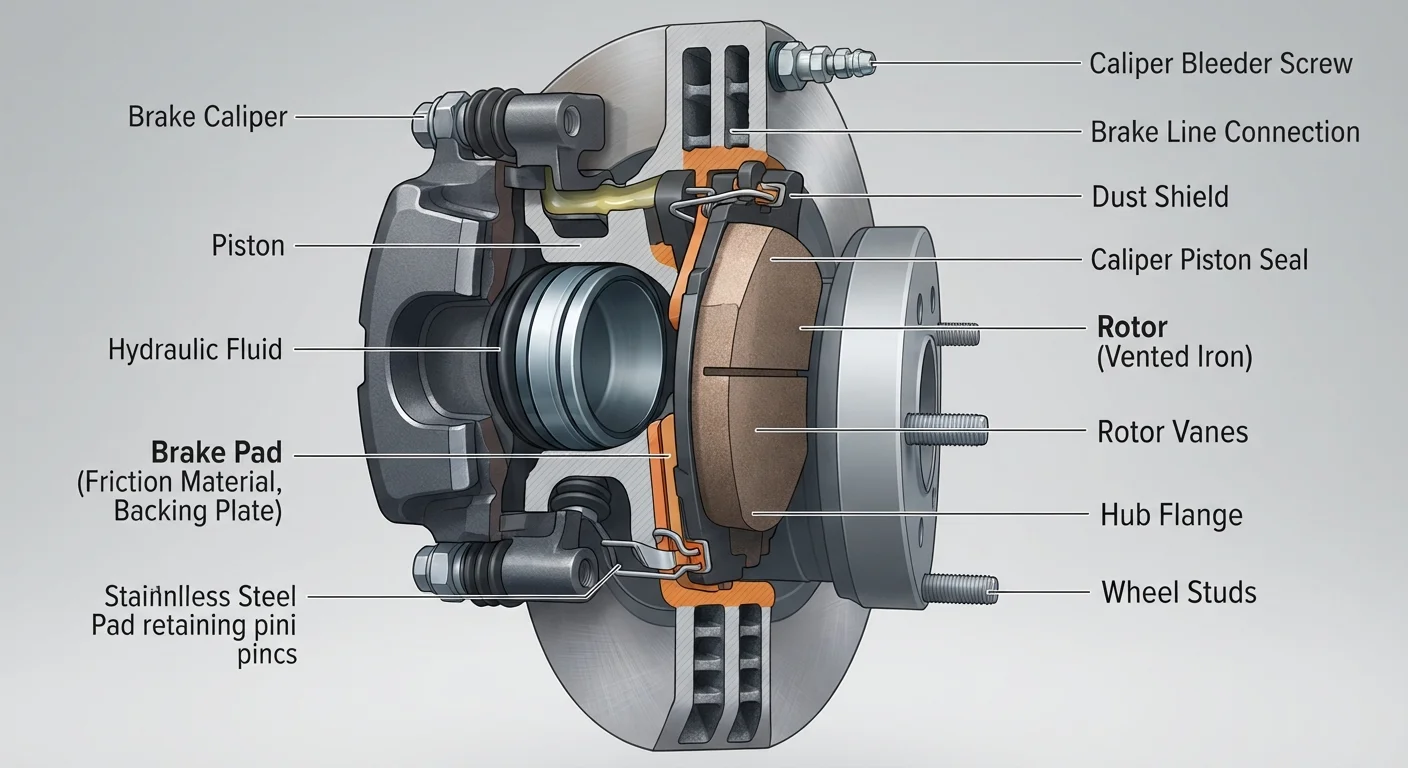
A disc brake system is the most common type of vehicle braking system used on modern cars. It works by pressing friction material (brake pads) against a spinning metal disc (rotor) to slow the wheel. A hydraulic clamp called a caliper holds the pads and squeezes them against the rotor when you press the brake pedal.
Hydraulic pressure transmitted through brake fluid activates the caliper's pistons. Most vehicles use disc brakes on all four wheels, though some still use drum brakes on the rear axle.
The Three Core Components of a Disc Brake
Every time you press the brake pedal, three components work in concert to bring your vehicle to a stop. Understanding what each part does - and how they interact - makes it far easier to recognize when something is wrong.
Brake Pads
Brake pads are flat blocks of friction material mounted inside the caliper. When hydraulic pressure is applied, the pads clamp against the rotor's surface. The resulting friction converts the vehicle's kinetic energy into heat, slowing the wheel. Pads have a steel backing plate bonded to a friction compound layer; it's this friction material that wears away over time.
Rotors
The rotor - also called a brake disc - is a flat metal disc bolted to the wheel hub. It spins with the wheel and provides the surface the pads press against. Most modern rotors are vented, meaning they have internal channels that allow air to circulate and dissipate heat. Rotors wear more slowly than pads but are still consumable components that require inspection and eventual replacement.
Calipers
The caliper is a hydraulic clamp straddling the rotor. When you press the pedal, brake fluid pushes one or more pistons inside the caliper outward, squeezing the pads against both sides of the rotor simultaneously. Floating calipers (the most common type on everyday vehicles) use one or two pistons on one side and slide on guide pins to apply even pressure. Fixed calipers use pistons on both sides for more aggressive braking performance.
Rear Brakes Wear Differently
On most front-wheel-drive and all-wheel-drive vehicles, the front brakes handle significantly more braking load than the rear - often 60-70% of total stopping force. This means front pads typically wear faster. However, rear brakes should still be inspected regularly; vehicles with integrated parking brakes or rear-biased braking calibration may wear rear components more quickly.
Brake Work Requires a Qualified Technician
Unlike some maintenance tasks, brake servicing involves hydraulic systems, precision component tolerances, and direct safety implications. While visual inspections from outside the wheel are something any driver can learn, actual pad replacement, caliper service, or rotor resurfacing should be performed by a qualified mechanic. Incorrect installation can cause brake failure.
How These Parts Wear Over Time
Brake components degrade through normal use - there's no avoiding it. But wear patterns tell a story about both component health and driving habits.
Pad wear is the most predictable. Most pads include a small metal wear indicator tab that contacts the rotor when the friction material gets too thin, producing the familiar high-pitched squeal that signals it's time for service. Ignoring that warning long enough leads to metal-on-metal grinding as the steel backing plate contacts the rotor.
Rotor wear happens in two ways: gradual thinning from pad contact, and surface deterioration such as scoring, grooves, or rust pitting. A rotor that falls below its minimum thickness specification becomes less effective at absorbing and dissipating heat - meaning longer stopping distances under hard braking. Uneven wear or hot spots on the rotor surface can cause the pulsating pedal feel many drivers mistake for warping.
Caliper degradation is slower but important. Rubber seals and boots around the pistons harden and crack over time, allowing moisture into the system. A seized caliper piston can cause one pad to press constantly against the rotor, leading to accelerated wear on one side and noticeable pulling during braking.
25,000-65,000 mi
Typical brake pad lifespan range
Pad longevity varies widely based on driving style, vehicle weight, and friction compound - city driving accelerates wear significantly compared to highway use.
~3 mm
Minimum safe pad thickness
Many mechanics recommend replacing pads at or before 3 mm of remaining friction material; below 2 mm, stopping performance can degrade noticeably.
2-3 years
Recommended brake fluid flush interval
Because brake fluid absorbs atmospheric moisture over time, most manufacturers suggest flushing the system every two to three years to maintain consistent pedal feel and boiling resistance.
For a broader understanding of how brake condition affects stopping distances, see the science behind stopping distance.
Warning Signs That Shouldn't Be Ignored
Your braking system communicates its condition through sound, feel, and smell. Catching these signals early can prevent a manageable service appointment from becoming a safety issue or a costly repair.
- Squealing during normal braking: Usually the wear indicator tab signaling thin pads. Schedule an inspection soon.
- Grinding or metallic scraping: Pad material is likely fully depleted. This can damage rotors rapidly and requires immediate attention.
- Pulsating or vibrating pedal: Often indicates uneven rotor surfaces or thickness variation. A mechanic can measure and confirm.
- Soft or spongy pedal: May indicate air in the brake lines or degraded brake fluid. See how to check brake fluid for baseline guidance, but any sponginess warrants professional inspection.
- Vehicle pulling to one side while braking: Often points to uneven pad wear or a sticking caliper on one side.
- Burning smell after driving: Can signal an overheated caliper or dragging brake. Allow the vehicle to cool and seek inspection.
If you're unsure about any of these signs, this guide to warning sounds covers a broader range of vehicle noises and their likely causes.
Schedule Annual Brake Inspections
Even if no warning signs are present, have a qualified mechanic inspect your brakes at least once a year or every 12,000 miles, whichever comes first. Many shops offer visual inspections as part of routine tire rotations. Early detection of thin pads or scoring rotors is almost always cheaper than reactive repair after a component fails.
Before any long road trip, add a visual brake check to your pre-departure routine. Our mechanical walk-around checklist walks through exactly what to look for.